
Translated material
Library chic
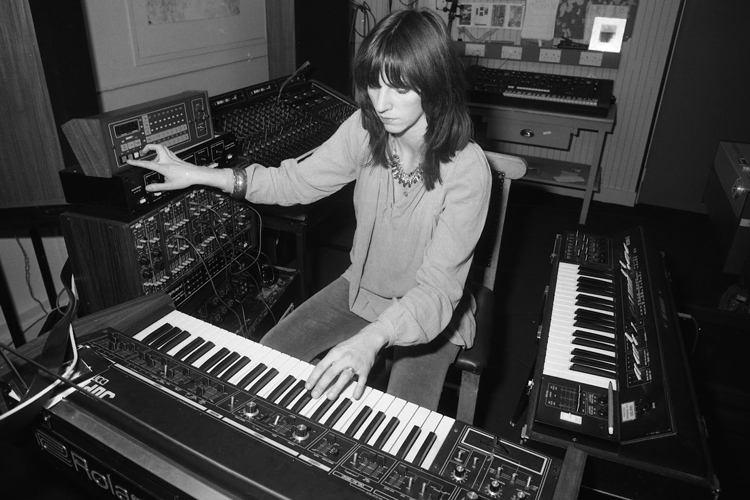
In the electronic living room of the Polytechnic Museum, a series of lectures of the Moscow electronic musician Andrei Orlov, dedicated to undeservedly forgotten electronic masterpieces of the past, continues. Previously, it was about the Japanese group Yellow Magic Orchestra , electronics from the former Yugoslavia and space electronic music of the 70s and 80s . At a lecture planned on August 31, Andrei Orlov will talk about Library-music, that is, about music recorded for the voice acting of radio programs, TV transmission and films. As always, in addition to the review, Andrei Orlov prepared a special mix.
Library -music is a contradictory phenomenon. At first glance, this is a purely functional, design, applied art that refers to “real” music, perhaps the same as design - painting and sculpture. It is not obligatory, it sounds “between business”, is purely functional and, in a certain sense, is designed for one -time consumption, but at the same time, irresistible charm and modest beauty flickers in its best samples. The heyday of L IBRARY -muses fell on the 60s and 70s. In the 80s and 90s, it was almost forgotten, existed in its “ghetto”, but now interest in it is growing-articles about composers who engaged in L IBRARY -music appear, compilations come out, forgotten albums are reprinted. Now, when the time of cultural heroes and the “great” pop music has practically gone, its shadow, the flip side -the modest Library -music -is of increasing interest precisely due to its inability, non -ambitiousness and “background”. At the same time, it is really very talented and free: after all, in addition to artisans, serious composers and artists were engaged in it (though they never really tried to advertise it) - for example, Annio Morricone, Vangelis, Morta Garson and others. And gradually, by the mid-2010s, it turned out that the Library genre had a noticeable effect on mainstream electronics and pop music-both direct and indirect: the influence of the genre is obviously traced in the products of such respected electronic artists as, for example, Legowelt and Alessandro Cortini , not to mention entire labels that specialize in specializing in specializing in Exclusively on the modern reconstruction of Library .
The volume of Library -musions created over the past decades is huge, and composers and producers who worked and continue to work in this direction are hundreds, if not thousands. The soundtracks to programs and films about the cultivation of plants, neurosurgical operations, space flights, mystical occult sound canvases, bold electronic experiments and light lounge motifs are only a very small part of the fabulous and wonderful world of “library” music. In this collection - its 10 wonderful examples that will give an approximate idea of this strange and attractive genre.
1. Delia derbyshire-"Ziwzih ziwzih oo-oo-oo"
BBC Radiophonic Workshop (BBC Radio Enterprises, 1968)
Delia Derbishir is a recognized master of experimental electronics of the 60s, playing a key role in the work of BBC Radiophonic Workshop -a creative association (as they would say in the USSR) of sound engineers and composers, which was created in 1958 for the musical needs of the BBC media holding. During the 60s and 70s, thousands of soundtracks were written in this sound laboratory for television and radio programs, documentary and scientific films, science fiction, and series. One of the most famous is the musical theme for the series “Doctor Who”, just the authorship of Delia Derbishir. Despite the fact that the general public is known almost only on the only musical theme, the influence of derbishir on the British (and means worldwater) electronics is huge: at different times, her work was inspired, and also directly seduced or borrowed from her such superstars as Aphex Twin , Orbital , Sterelab , The KLF . Her heritage continues to be relevant now. One of the recent examples is the track of the South Africans Die Antwoord "Hey Sexy" , entirely built on a sample from a mystical, frightening and slightly vuduist composition Derbishir called Ziwzih Ziwzih Oo-Oo-OO.
2. Mort Garson - "Plantasia"
"Mother Earth's Plantasia" (Homewood Records, 1976)
The creative biography of the incredibly prolific, versatile and inventive American composer of Canadian origin Morta Garson is the best illustration that in the 60s and 70s in music everything was possible and even a little more. During his long career, he composed pop hits, lounge, soundtracks to the television show with equal success; Also among his achievements are accompanying music for television programs about landing on the Apollo 11 Moon, for meditations, horoscopes (as many as 12 albums, one for each zodiac sign), an audio erotic album ( Moog music and a groan) called Music for SensUous Lovers By 'Z " “Black Mass” under the pseudonym Lucifer , as well as an album of MOOG compositions designed to accompany plant growing. And this is far from a complete list. The most amazing thing is that all this diversity was then in demand commercially. It is a pity that this era will never return.
3. Piero Umiliani - "Consumismo"
"Musica dell'era Tecnologica" (Liuto Records, 1972)
According to the stereotypical representation, the experimental avant-garde electronics of the 70s was most widely used in France and Germany. However, in this direction, significant achievements were also in Italy. Just interesting electronic albums were composed there not pop-electrons and rockers, but by respectable composers of middle-aged. One of these composers is Piero Umiliani , who in 1968 wrote the famous funny song “Mah Nà Mah Nà” , which later became the main theme of Muppet Show and the Benny Hill show. In principle, this is already enough to be considered the great, but in addition to composing easy music, Usiliani was also noted as an uncompromising electronic experimenter. Written in 1972 using the Moog album “Musica Dell'era Tecnologica”, it sounds interesting and boldly by current standards. In total, the master left behind more than 190 soundtracks, 40 Library -albums and 35 television musical themes.
4. Vangelis - "Tegos Tapes"
" Edition 5" (1998)
The titanium of electronic symphonism Vangelis, the author of the legendary soundtrack for the film “Bladerunner” Ridley Scott of 1982 - perhaps the most influential and famous electronics in the history - also has a consistent indifference to glory and considerable eccentricity. This eccentricity is most likely explained only by the total focusing focusing for modern people exclusively on music and only music. Apparently, from this point of view, one can also consider the recent story with the discovery of 12 hours of unknown records of the master - the so -called TEGOS TAPES . The material is a sound accompaniment to the training film in micronerosurgery: Vangelis wrote music for video) at the request of his friend, surgeon of Storgos Tigos. This music is still not officially published and was first available only on VHS -videocassets. One of the fans and researchers of Wangelis’s work specially went in search of these cassettes to Greece, where he discovered the only copy in one of the second-hand. This story is strange only at first glance: as you know, Vangelis has always inspired space - both external, natural, and internal microcosm of man. So everything is logical. As for the connection with Library , the muses, here you can just see its deep essence: a harmonious combination of pure functionality and the absence of any ambitions, on the one hand, and incredible self -sufficiency, attractiveness and beauty -on the other.
5. Bernard fèvre - "Space Team"
"Cosmos 2043" (Musax, 1977)
“Better late than ever” - this can be called the story of the French electrician Bernard February . He achieved wide fame only in 2006 with the Horror- Devil Devil Disco Club horror, reprinted 28 years after the debut on the Lo Recordings label. He was already good at that time at that time. But few know that the artist began as like the Library -composer -before the debut as a BDDC in 1978, he managed to release as many as three production albums. Part of this music was reprinted in the late 2000s and continues to be reprinted. A great example of the common truth is that good music will always find its listener, albeit after three decades, and in general, "manuscripts do not burn." The main thing is to survive until the moment when this manuscript is finally discovered by someone.
6. Jean-Pierre Decerf-"Accentration"
"Accélération" (Patchwork, 1981)
Jean-Pierre Desserf is an example of a talented musician who, unfortunately, failed to get out of the framework of the Library genre, although he repeatedly made energetic efforts for this (as he was talking about in an interview). From the late 1970s to the beginning of the 1980s, the artist released 13 albums of the original Library -Electronics, which, despite the retro-down, and now sounds interesting and fresh. Last year alone, justice gradually began to triumph: on the Born Bad Records label called “Space Oddites 1975-1979” , a release was released entirely from the composition of the desserf.
7. Roland Romanelli - "Connecting Flight"
"Connecting Flight" (Polydor, 1982)
The name Romanelli in itself, perhaps little tells the modern listener. Nevertheless, this is the co-founder (together with Didier Maruani) of the French Electro-District Group Space , also known for working with French pop stars, such as Jean- Jacques Goldman. Also, Romanelli, the author of several Library and solo instrumental albums, among which the third - “Connecting Flight” - occupies a special place. Formally, this is an electronic disco outdated by 1982, but the virtuoso game of living musicians - Romanelli’s colleagues in Space : Basist Yannik Top and guitarist Patrice Tison , which sharply allocates this work among similar records of that time. Thanks to the high class of execution, the album carries the seal of the “big” sound of the world class. And the most unexpected is that the information is none other than the legendary Flood producer, aka Mark Ellis (Mark Ellis) , who later worked with Depeche Mode , U2 , Erasure , Smashing PumpKins and a lot of other superlates. It turns out that the background "library" music can be like that.
8. Marc Shreeve - "Storm Column"
"Legion" (Jive Electro, 1985)
The submarine in recent years, the subjoice called Retro Synthwave literally borrows the sound cliches of Shinta Popa of the 1980s, and the start of this fashion, among others, gave the Frenchman Kavinsky (the name of its debut album of 2013 , “Outrun” has become a common napitative and is also used to designate the direction). But if you sort it out more closely, the parallel is only in the scrupulous copying of modern producers exclusively the sound of that era. The main properties of Sinty-Pop-music of the 80s are bright charisma of frontmen and no less vivid melodies-in 2016 are often absent as such. Therefore, another comparison is more appropriate -it is with Library -the musical of that time. Although even those compositions that at one time went completely unnoticed can now be considered outstanding samples of composer skills and musical thought.
9. Vladimir Kuklin - "Neon Autoretime" (1985)
Continuing the research in the Library Synthwave area, it can be found that in the 80s there was no shortage of such music in the USSR. Moreover, its best samples sound relevant today. In fairness, we recall that the most memorable screensavers of the Soviet television programs of the 70s and 80s still come from abroad- the “Manchester and Liverpool” of the Frenchman Andre Popp ), “In the World of Animals” ( “La Peregrinación” by the Argentine composer Ariel Ramirez ), “International Panorama” (International Panorama ”(International Panorama "Vibrations" of The Ventures group ). But there was also enough of their talents in the country: to take at least an unfairly forgotten electronic duet “New Collection”. In the late 80s-early 90s, almost the entire debut album of the team was molested on the design of television and radio programs , so that this music still sits in a subcortex of a generation whose youth has hit that period. One of the confirmations that the Soviet Union produced a truly competitive electronic musical product is the 1985 neon autostrospector's composition, which can now well claim the inclusion of Nicholas Winding Refne in the soundtrack (at least because of its name).
10. Belbury Poly - "Remember Tomorrow"
"From Ancient Star" (Ghost Box Records, 2009)
The aesthetics and sound of the Library -gang continues to live today: several labels regularly release releases that reliably preserve the spirit of this direction. Among them stands out the British Ghost Box Records , describing its mission as “the study of the musical history of the ghostly parallel world” (a wonderful definition). One of the co -founders of the label Jim Jupp (Jim Jupp) simultaneously plays in a project called Belbury Poly Which is considered one of the leaders of the neo- Library genre. It is interesting that this movement has existed for a long time, at least from the beginning of the 2000s, in parallel with the coming and leaving fashion retro-tracks and practically does not depend on them. Among other groups worthy of attention, we can call The Advisory Circle , The Focus Group and The EcCentronic Research Council .