
Translated material
The missing novel about the seventies
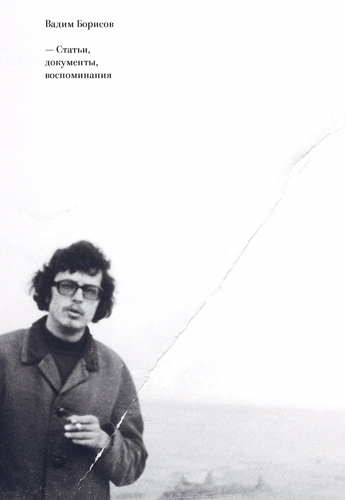
Incredible thing. Incredible - because, in principle, this is a everyday book. There are many such memorial projects - first the texts of the one to whom the publication is dedicated, then a selection of memories of it. But something turns this volume about Vadim Borisov into a thing, on the contrary, completely non -pod. Namely - in the same novel about the seventies - early eighties, about the time between the dog and the wolf, which is so lacking today, despite a couple of available approaches.
This is “something” - of course, the personality of Vadim Borisov himself. With his amazing charm, the living memory of which was not erased twenty years after his death. With him - obvious only from the written articles by him - the depth of judgments and the time due to time. With his separate drama, which enters his drama of the era into the drama of the broken eras.
There is nothing new to call Vadim Borisov a “hero of his time” - in any case, for those who knew him. So, for example, the article of Zoe Sveta is called, written on the first anniversary of his death, and indeed this formulation surfaced then in conversations - during the funeral, the priest Boris Mikhailov, who was friends with Borisov, said: "Together with Dima, time is leaving." But now, on the pages of this volume, crystallized by texts, composed and most often written today, this figure acquires significance to the already literary - the power of the image and sign.
Akhmatova’s poetic observation “When a person dies, his portraits change”, if he treated him practically, suggests that the portrait of the deceased incorporates the feelings of the one who looks at him - guilt, sadness, irritation. The portrait of Vadim Borisov gains new features, or rather, a new brightness in a series of memoirs, most authors are torn by the contradiction: on the one hand, the time they talk about is the time of Soviet melancholy and lack of freedom, on the other, the time of exceptional intellectual fullness and unique cheerful unloading. The main mark, the difference between the seventies for the intelligentsia is their claustrophobic comfort, the opportunity to leave for what the newspapers were called “internal emigration”, and get to the literal sense there in the literal sense (and often completely poor), but with taste. The memories of the works and days of Vadim Borisov and his company, which included the brightest artists, writers and intellectuals of his and “neighboring” generations, are full of descriptions of drinks, dancing, reading poetry and philosophical conversations - and intensity, the energy of that life breaks even a thirty -year thickness. Yes, all this happened under the surveillance of the KGB, under the threat (often touching) landing or expulsion, but it was these compressive vice of the outside world that made the common private world of these people so rich. And in the center of this world, it was he who, Dima Borisov, stood for many, - with his ease, fidelity, the ability to have fun and compassion, with his, according to Lyudmila Ulitskaya, the “talent of communication”, with his voice (about how he sang - romances, thieves, table songs, every memoir writes).
Nostalgia, breaking through almost all the memoirs that entered in this volume, is related, first of all, to that surprisingly complete, albeit limited, narrowed life, involuntarily concentrated on a highlighted patch, and only then to the obvious fact that the storytellers were young then.
These memoirs make up the body of this “novel” - so, as, for example, comments on the poem turn out to be a novel in the Nabokovsky “Pale Fire”. The texts of Borisov himself (I repeat them a little) contain the prooferens of ideas and facts, and the attached memories of friends (sometimes they, in the spirit of postmodern prose, contradict each other) are already developing the plot itself.
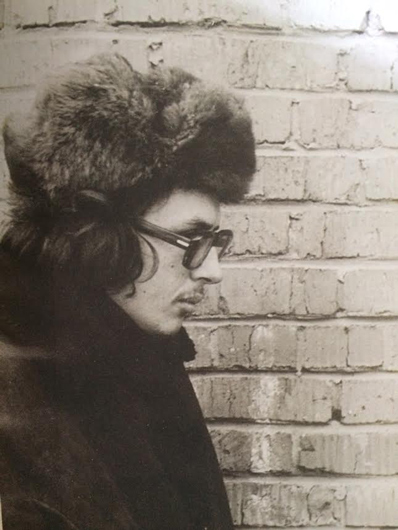 © from personal archive
Vadim Borisov (friends called him Dima, and this was often confused) was born in 1945 in the very center of Moscow in a prosperous family of Soviet engineers. Back in school, he and classmates organized a literary circle, where they read poetry of the Silver Age poets and the American and European “advanced” prose. Later, studying in the third year of the Faculty of History of Moscow State University, he took part in the first evening of Mandelstam's memory in the USSR - he read several poems aloud. The Nadezhda Yakovlevna Mandelstam, who was present in the hall, wrote to Ilya Ehrenburg, who led the evening, a note: “In my opinion, such a level and such a reading as this boy read is a thousand times higher than all the writers could be in the unions.” Borisov met Nadezhda Yakovlevna, was friends with her, helped to disassemble the archive, commented on Mandelstam's notebooks. (He was generally a subtle textologist - later this was manifested in the work on the first publication in Russia “Dr. Zhivago”, which he prepared.)
In 1972, he finished the dissertation on the history of the Russian Church, but at that time he already cooperated quite closely with Solzhenitsyn, helping in working on the Red Wheel - so he was not allowed to defend him. Since then, he had only a couple of publications in Soviet publications and a number of articles in Russian foreign periodicals. His most significant text, perhaps, is “Personality and National Self-Consciousness”, he was published in 1974 in the famous Parisian collection “From the Flows” compiled by Solzhenitsyn back in Russia. In it, Borisov occupies a rather rare one for the then, for today's intellectual, as it were, “half -hearted”, but in fact an independent position. Conducting the “general humanistic values” (“the freedom of personalities and their unification in universalism is the formula of the progressive development of the history of the human race”), he defends the value of the “national” as a certain merging of the individuals of the people, its “moral personality”. That is, speaking very rudely and simplified, also referring to subsequent events - nations and peoples differ, like individual people, they need the same freedoms, but they cannot be treated “under a carbon car”. The truth, which then only had to be convinced.
But Borisov did not engage in the detailed development of these ideas. Not only because of Soviet prohibitions, but also because from the beginning of 70-x to the beginning of the 90-10s he was occupied by one-cooperation with Solzhenitsyn and his help to him and his family. It was not just a job - it was rather a ministry, the conscious overcoming of your own “I” for the sake of what seems the most important. “He once told how he read the first phrases of“ Denisych ”about the wake -up of the hammer on the rails at five in the morning, the ice on the glass in two fingers, pure darkness outside the window and three yellow lanterns,” writes Anatoly Nayman. - The sound of the rail passed through it physically, he raised his head from the page and felt that he had become completely different, and the fact that he had just had no more. ” And he continues: “It is now difficult to convey adequately how then the appearance of Solzhenitsyn was experienced by people, tormented by the Bolshevik regime, no longer believed that their fate, inextricable with the fate of the country, could change.” Working with the author of the Gulag Archipelago was a work to promote this fate, and besides, which is especially important for such a person as Vadim Borisov - this was working with a person of literature, with a writer “Big” on the scale that includes Tolstoy and Dostoevsky, who considered the word to act.
In the early nineties, their relationship ended with a disgusting scandal. Solzhenitsyn, who completely did not understand the Russian perestroika reality, presented Borisov, who was engaged in the publication and distribution of Solzhenitsyn works, absurd and insulting monetary accusations. This public gap was a terrible blow for Borisov. Most of his friends believe that it was this injustice and the suffering associated with it that brought his death.
In the summer of 1997, Vadim Borisov with part of the family went to the Riga seaside, to the village of Apshucems, in which they and many of their friends went for many years and the significance of which has yet to be evaluated for Russian culture. On July 29, he drowned, bathing in the cold Baltic Sea. He was 52 years old.
His daughter Masha recalls ... Here, probably, it would be necessary to make a retreat of Borisov children, who opened cafes and clubs in Moscow, in different ways, but at the same time quite accurately reproducing the atmosphere of the parental house-but such a story would pull on a separate romance. So, Masha recalls how about a year before her father’s death she entered her parental apartment and saw “Dad was sitting at the table, somehow dramatically lowering her shoulders, in a bathrobe, with a papyrosa in his mouth. "What's happened?" - I don’t even remember whether I asked or not. Dad looked at me carefully on top of his glasses, lit a cigarette and suddenly began to read: “And he could have whistled with a starling all his life, to eat with a walnut pie, yes, apparently, it was impossible”. ”
It was impossible. The grip of Soviet power weakened, so that, along with the first changes, which everyone was waiting for, to let in disorder and suspicion, always following the introduction of new, incomprehensible rules. The idols failed, friends changed. The space of inner freedom was replaced by the space of external freedom. Time changed, and the hero remained unchanged. While he remained at all.
In the end, probably, I must say that in childhood and early youth I knew well and loved Dima very much. I do not think that my individual memories of him are somehow valuable. Of course, I remember that all, only much less. I remember, of course, how he sang-and the truth with some amazing combination of strength and intimacy. How quietly I read poetry. As seriously, without any condescension and Susyuk, he talked with children. As I read at the age of 14, “Dr. Zhivago” and he is a commentator and expert on this text, which I did not know, ”he listened carefully and with interest and quietly directed my reasoning. Well, or perhaps here: I was eight years old, and we left Apshuciems last. We lived there the whole summer, I had a one -year -old brother - so there were tons of baggage. Parents agreed that Dima would meet us in Moscow at the station. He met - he stood at the station with a large bouquet and, when we left the train, handed it to his mother. It was strange. The meters were then perceived as a dragging force, and the flowers in our lives were roads. In my opinion, this was the first image of the “man on the platform with a bouquet”, which I saw. It was something from the past life, from the life of those very lieutenant Golitsyn, Kornet Obolensky, about which he, according to the countless requests of friends, so often sang. I then thought that he was a real hero of the novel. And then he finally became him.
Vadim Borisov. Articles, documents, memories. Comp. Anna Karelskaya, Marina Alkhazova. - M.: New Publishing House, 2017. 476 p.