
Translated material
With whom are you, masters of culture?
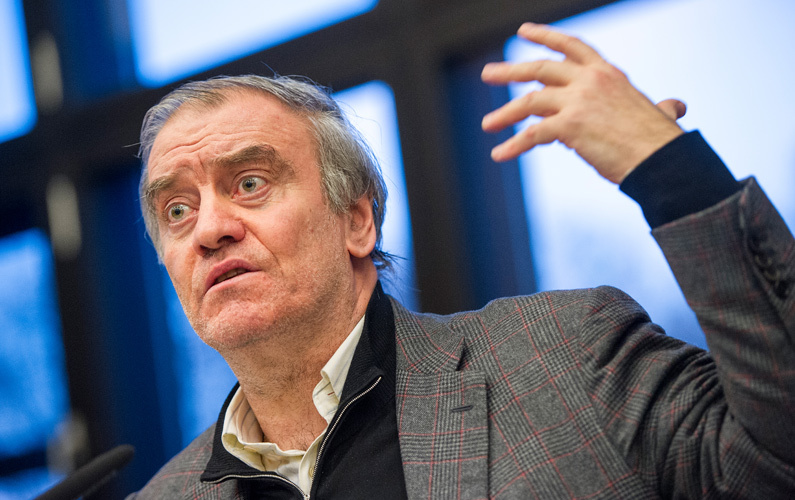
The escalation is the only staircase along which upwards to rise faster than to go down, the old diplomat, former Foreign Minister Hans-Ditrich Gensher, recently reminded the public of Germany.
It is difficult to say at what speed the cultural world of Germany, which is in an extremely inflated state, will calm the nerves. A characteristic feature of the situation is that everyone suddenly had an opinion. Including about the topics, more recently, there are enough peripheral ones, as the formation of the Ukrainian nation or the relationship of stars of Russian culture with the authorities of the same remote country. Scald by history with the Crimea, public opinion throws from side to side. The case of Valery Gergiev is a single, but rather characteristic manifestation of this process.
When Valery Gergiev a little over a year ago, on February 1 of the 2013 Peace, signed an agreement at a heavy oak table, according to which he has become a chef of the city Philharmonic Orchestra since 2015, this was met with restrained approval . Although even then the commentators of the newspapers were malicious about the famous eternal overload of the master of musical multitasking 'a. Further, in the fall of 2013, when a package of well -known low -democratic laws was adopted in Russia, the authors of central newspapers, and especially bloggers began to draw their readers to the excessive proximity of the new Munich generalmusic director with the Moscow Despot.
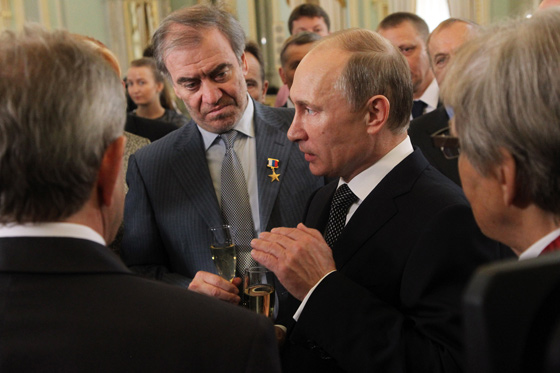 © Getty Images / Fotobank.ru
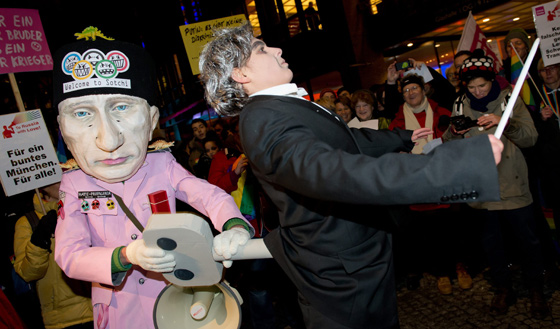
In December 2013, the next arrival of Gergieva (already very tightly and successfully cooperating with the orchestra) in Munich was not accompanied by the most pleasant incident for the maestro: before the concert he was met by a chorus of gays and lesbians Munich, who was conducted by the amusing Gergiev and a very unsymphasized mummage with Putin's features. A solidly presented in the city parliament, a party of sexual minorities demanded that the city council of termination of the contract with a friend of the Gomofobsky regime in Moscow. Gergiev had to make excuses, speaking into lenses and microphones, that he does not at all condemn the “homosexual lifestyle”, has a lot of friends and colleagues in this environment, the law on homosexual propaganda as such did not want to engage in music without interfering in politics .
But before this story, this story was noisy, as the signature of almost Munich maestro appeared under the notorious letter in support of Putin’s policy in Crimea. There is no longer only blogs and the left press was spent with slogans such as “Hergiev wants to say“ yes ”to Putin? And we want to say “no” to him! ”
On the pages of Frankfurter Allgemeine , the most influential of the daily publications of Germany, appeared an article by the venerable critic Eleanor Buning called " ER Hat Seinen Pakt MIT Der Macht Geschlossen ” (“ He concluded his pact with the authorities ”). “Each person of art has the right to express his attitude to certain political issues. Or not to do this, ”writes the author. - But if this person is Valery Gergiev, the chief of the brilliant Mariinsky Theater in St. Petersburg, to the renewal of which and the transformation of the area into Gergiev Music City , his friend Vladimir Putin dumped half a billion euros, who in 2015 should head the Munich Philharmonic orchestra, it is impossible to be silent, lowering the eyes of the Dole and pretending that everything that happened is not happening that all that was happening is not happening that everything that was happening is not happening concerns. "
 © EPA / ITAR-TASS
Then the author recalls the demonstrations before Gergiev’s concerts in London and Munich, whose participants openly criticized human rights violations in Russia, and the participation of the maestro, so to speak, the election campaign of Vladimir Putin, calls him “the musical king by the mercy of Tsar Putin” and, turning directly to the letter, asks: “And could he remain silent? Or say something like “the main thing is that the blood does not spill”, or “sit down at the table and talk,” or “I hope for political settlement,” as the main conductor of the Bavarian opera Kirill Petrenko formulated. <...>
The question of the day says: can Munich still afford Gergiev as a conductor of the city orchestra? Munich should take a clear position now. For Gergiev took his position. "
“We are not going to comment on the political and personal position of Valery Gergiev” - this is the official response of Munich authorities to Deutsche's request Welle about whether the municipality is going to in any way to react to newspaper criticism. “We do not see the reason to revise relations with the maestro,” they answered the corresponding request in the guide of the orchestra.
Therefore, when asked whether this whole story will lead to Gergiev’s resignation, we can answer: no. At least not yet. Firstly, they are satisfied with them as a musician. Secondly, both parties signed by both parties in the column “Disorder Conditions” does not contain the subparagraph “support of the bloody regime” or “the mismatch of political views of the conductor with the public opinion of Germany”.
In general, the honest conservatism of the Munich, who are in no hurry to satisfy any challenge of the political conjuncture, causes respect and is a source of prosperity of the Bavarian nation. Valery Gergiev was very lucky that he signed an agreement with Munich, and not with a rootless Berlin or some cowardly Dusseldorf. However, he, of course, was not accidentally opted for this city and his orchestra.
But what seems possible to me personally is the refusal of Gergiev himself from the post in Munich. And not because of some backstage games, but because the nerves will not stand. Already the last story with the rebellious blue community, which was more likely to be carnival in nature, very touched the maestro. He was clearly on the verge of a nervous breakdown .
It is not very pleasant when the audience is trying to penetrate your concert not with flowers or what, but with whistles and tomatoes. But it was a civilized and loving beautiful pink-blue community of Munich. What will happen when Ukrainian activists begin to go to symphonic concerts?