
Translated material
Dreams of Ombudsman
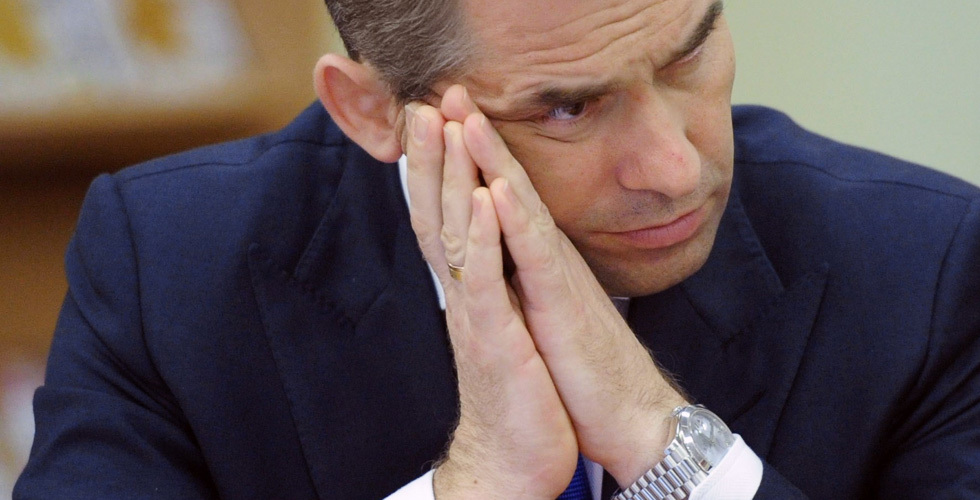
Last week, Pavel Astakhov, the Commissioner for the President of the Russian Federation for Children's Rights, announced that the international adoption of Russian children will be practically discontinued. In the list of countries that can still do this, there were two.
Sometimes I think about how hard it is to have to live to the one whom everyone hate. Who, having opened the Internet, cannot find a single good word to himself, except for his own press releases. To whom they contact in case of emergency, holding the nose. From hopelessness. Not really hoping for help.
When I imagine the private life of such a person, I feel scared. Okay at work: order, salary, thoughts about the cloudless future of their own children. But how at home?
After this recent, or those past, his press conferences, Astakhov Pavel comes home. He takes off his boots, eats-down, looks at the TV. Then - a long look out the window. Then he brushes his teeth and lies in the bed. He lowers his head on the pillow. It falls into a dream.
I sometimes try to imagine these dreams: here, say, there is Astakhov Pavel alone in the square. In a black translucent T -shirt with a mesh in which he loved to give an interview to television at the beginning of his career. He looks around, fertilizing, puts one of the best and cheerful smiles on his face. Looks around. Waiting for television cameras. But instead of journalists from all sides, people in strollers and crawling suddenly approach him. They come closer. And he can already find out someone, although it is difficult. No children compressing the ring around it: after all, unstoppable disabled people after a special orphanage first get into the nursing home and only then to paradise. And Astakhov Pavel, of course, knows about it. And so he feels the smell - the same smell of the house of official mercy for the most unhappy and helpless. (Believe me, a person who once inspired this smell will not forget him to the coffin.) People with cerebral palsy and Down syndrome go to Astakhov, with bullous epidermolysis or mental retardation, with autism, Hunter's disease, Dyushen syndrome, imperfect osteogenesis, or God knows what kind of illness ... ultimately he screams. And wakes up. Outside the window is an ordinary working morning. He still leaves the nightmare. But he is no longer scared. After all, there is an ordinary working day ahead, and everything is again in his hands.
Having washed and shaved, he, of course, goes to work. It may not go, but go to the airport and fly to the very beautiful house on the seashore, about which they wrote so much and enthusiastically in glossy magazines and so bewildered - in blogs. Honestly, I don't care. Well, he has a house - and is. In the end, for the sake of something, he agreed to this work.
And so he comes there: the old square, a passing, elevator in which the dining room smells. Live by a light tree, like a sauna, a corridor. Frightened secretary. Children's drawings and crafts in a specially designated “red corner”: “Dear Pavel Alekseevich”. Multiple "thank you" from children's institutions. When looking at them, it was Astakhov that Pavel Alekseevich assured, smiling dazzlingly: the guys from the Reutov orphanage were satisfied that their house was disbanded behind them, and they were given two hours for fees and moving to a new place of residence. And they ran away ... Well, they just ran away - and that’s all. And it was he, Astakhov Pavel Alekseevich, in April 2010, holding the orphan, returned from America , Artyom Savelyev , again smiling charmingly, said to the television cameras: “This is my Artemka. And now I will not give it to anyone. ” And four days later he added: until the end of the week, Artem will adopt a family of Russian diplomats, and two more Russian families claim to adopt him ...
Okay at work: order, salary. But how at home?
I am embarrassed to remember all this. But I recall somehow by itself, while I stomp in the dressing room of the Astakhov cabinet in the fall of 2012. Because Artem Savelyev was never adopted by anyone, but lived in a family -type orphanage, a children's village SOS in Tomilin near Moscow ... Finally we are asked for an interview with the Ombudsman. The Commissioner for Child Rights Pavel Alekseevich Astakhov.
A huge but empty office. The view from the window is to the old square. On the wall is a beautiful photograph of a cheerful boy on strong male hands. "Whose?" With pride: "Of course, mine." No read detective novels of his own authorship on the book shelf: "Do you want, give it?" He somehow immediately switches to "you." And it confuses. Both I, and many of my colleagues, remembers very well: for ten years we all believed that Pavel Alekseevich is, in general, a good person. He once even helped someone. He told how he gets tired at work. And it was clear that he was tired. He could always get through. He willingly gave an interview. And still willingly gives.
... We are starting an interview. Pavel Astakhov swears that the state has already invented the law, according to which, for its state, the account will ensure the proper treatment (“And if we have no such opportunities in Russia, then abroad”) of all children who involuntarily fall under this moment the not adopted “cannibal” law. I ask again: "Do you understand that this can be incredibly expensive treatment?" - "We have a rich country." He says that all children who have already met their parents will not suffer from the future law and will be able to leave for their adoptive parents. He also says that “no one has forbidden and prohibits foreign adoption”: “We are talking about the restriction and introduction of a procedure that gives the opportunity to choose the very parents, the best of the best who will come and take this child.” The camera writes. Pavel Alekseevich talks about how the Russian adoption will now stimulate, says that the government has already adopted the law on simplifying the adoption procedure in Russia (then the secretary will ask Pavel Alekseevich and “deliver” this moment, but not in the form about which Pavel Alekseevich told about the camera only in February 2013) ... in the twentieth minute of the Astakhi interview He will say: “As for foreigners, today they take almost three times less children with disabilities, children with disabilities than Russians, Russian sympolitors. This is a fact. " And then he will repeat several more times the amazing own statistics on adoptions, violence and killings of adopted children in the United States, which is very different even from the one that the Department of State Politics in the field of protection of children's rights gives. I will be embarrassed. And I will swallow the question about Nastya Jallul, a little Russian girl, illegally taken to Syria and abandoned there to the arbitrariness of the Syrian father, one in the epicenter of hostilities. The very girl that Astakhov publicly promised to save, made a statement with smiles that he was ready to go on a rescue expedition to the zone of military conflict. But, of course, he did not go anywhere .
Live by a light tree, like a sauna, a corridor. Frightened secretary.
I will swallow this question from my idiotic unwillingness to listen to this perfectly posed speech, boil inside from indignation and do not be able to do anything with all this. Well, what will I do? I will suddenly jump in an interview and say: “You are by the rights of the child, Pavel Alekseevich! Yes, do something for disenfranchised children in this country ”? Then, of course, I will scold myself that I was silent. I will, like everyone else, gritting my teeth, invent a hundred million strange ways to help those children who, contrary to Astakhov’s statements, remained in their orphanages, although they met potential foreign adoptive parents. I will look for at least one of a million ways to find and return Nastya to Russia. And of course, I will think about what dreams dream of Nicholas, a boy with a “butterfly disease”, that is, almost without a skin who lives with constant pain, but could now, like another boy, Antosha, his predecessor, live in a country where there is a treatment of his ailment, have brothers and sisters, worthy of care, mother and papa. Or that Vitalik dreams, a kid with a Down syndrome, who for many weeks in a row showed an album of his American dad and mother for the night and he spoke with them in a dream. And then they took the album and hid it, because not a single opportunity to connect with these dad and mother Vitalik no more.
And I will, of course, think that the Commissioner for the Rights of the Child, Pavel Alekseevich Astakhov, said at his press conference on September 18. Namely: “In order for the international adoption to continue, with the state with which it was conducted, we have about 20 such states - a contract is required. We have it today with Italy and France. That is only two countries. In fact, international adoption in the courts of the Russian Federation will be almost terminated. ” And then he will come home, lie down and see in a dream all those children and parents whom he again deprived of a chance, from whom he again took hope. And I will still hope, of course, that in this dream he will try to dodge the direct gaze of these children's and adult eyes, try to say something that it was not he or that they misunderstood him.
But in fact, I think all this is not so. He will usually return home. Puy, you will watch the news with him on the TV, then - a long look out the window. And he will go to bed. And he will drink calmly and happily, without dreams. Then it will wait for the weekend. And will spend them in joy and comfort with his family, at home. In the foreign sea or in the Russian capital - it is not so important. And terrible dreams dream to someone else.