
Translated material
The crows learned to wait
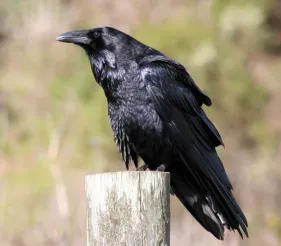
A bird in the hand is worth two in the bush. Most people realize this idea, although many understand that you can get a crane if you wait for it to go down to the ground. True, in order to grab the prey, the hands should be free from the towd. Until recently, experts believed that only large humanoid monkeys are capable of a conscious abandonment of real benefits for the expected greater benefit. But recently, an employee of the University of Strasbourg, ethologist Valerie Dufour, and her colleagues from France, Austria and Scotland established that targeted expectation is also characteristic of vulgar birds.
The ability to wait, i.e. To anticipate certain events for the enemy in their way of life is extremely important. Birds are forced to patiently wait for someone to throw something valuable for them or leave, leaving him unattended. No one, however, tried to find out how much time the birds are ready to spend on the expectation, for what and what they can sacrifice. Researchers worked with six black crows Corvus Corone Corone and six Corvus Corax crows. Among the birds were both males and females, the raven of the raven varied from a year to two, and the crows were older, the most venerable bird Manon passed 19 years (just in case we clarify that raven and crow are different species of birds).
Typically, in such studies, the so -called choice of choice is used in which the animal needs to prefer either an immediate, but small reward, or more significant, but issued later. Such a task was set to the vitality.
First of all, the researchers revealed the food preferences of each bird, offering them bread, grapes, cheese and sausage in different combinations. The bread turned out to be for all the “participants” the least desired treat, the grapes and cheese followed it, and the title of the most delicious goodness won the sausage, with a huge margin. If I.A. Krylov sent a piece of sausage to Vorone, she would never let him out.
At first, birds were taught to gently lower the pebble in the palm of the experimenter or throw a wand in a certain place and get a tidbit for this. After 25-30 days, when crows and crows learned this lesson, they were given the opportunity to exchange one piece of food for another, more tasty. The experimenter approached the window of the cage where the bird lived and gave it from the hand of the bread. At the same time, in the second palm, in the zone of visibility of the bird, but outside its reach, there was another treat, sometimes more viapass, sometimes equivalent. Then the experimenter moved away from the cage, but the bird still saw food in his hand. After a certain time, the researcher again approached the cage and held out the bird empty palm. If she put bread in her, she received a treat from another hand in return: grapes, cheese or sausage. But if the bird eaten bread or tried to return it too early, the session ended. The tests passed sessions from several tests, and scientists increased the exchange time from the session to the session, bringing it from 2 to 640 seconds.
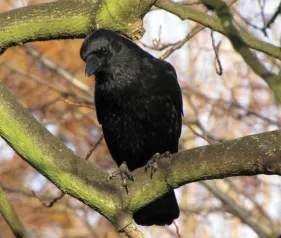
The longer the expectation lasted, the smaller the number of birds maintained a pause. Half could have endured 40 seconds, two crows sometimes waited for a treat for 320 seconds, and 640 seconds were a sloggy long, even if in the future for such a wait they could get the desired sausage.
Interestingly, the birds from the first seconds of the test decided whether they should wait or not. Their motivation is not always easy to explain. Sometimes the refusal followed immediately after a successful attempt or immediately in front of it. If the reward was not very attractive, then the birds refused to exchange earlier than in the case of a more delicious piece. The vounters exchanged bread for sausage more often than for less tasty things, regardless of waiting time.
The exchange may not take place for various reasons. In 63.6 % of cases, birds eat their bread, in 19.7 % try to exchange it ahead of schedule, put it somewhere and cannot give it when a term comes (15.1 %), or simply refuse to take bread from the experimenter (1.6 %) from the very beginning). In case of successful exchange, if the bird had to wait 160 seconds or more, it walks around the cage and plays with its piece all the time: it will take, then put it, then hide, then get it. These classes, according to researchers, help ravens to pass the time and distract from thoughts about food. In addition, a hidden piece can then be eaten if it cannot be exchanged.
Valerie Dufur's work with colleagues is the first study on the exchange tasks performed by birds. Its results show that the vows are able to suppress a natural impulse to immediately eat prey in order to later get something more tasty. And they can wait for a long time, about 5 minutes. The behavior of birds is affected by the significance of the award and the time required to receive it. Therefore, they are able to assess the expected benefit and compare its value with the efforts necessary for its receipt. It was previously believed that only primates are capable of such feats of will and intelligence. Dufur herself is a primatologist. But it turned out that by the ability to assess the expected benefits and necessary efforts of the raven and raven are quite comparable to monkeys. For example, kapucins (Cebus Apella) expect a minute to exchange food for more tasty, although monkeys can endure longer if they allow them to try the initial piece. However, most monkeys are pure pragmatists, they are not ready to wait a few seconds and grab what is available right now. And the medical, it turns out, may even refuse to prey, which they have already taken possession, if they believe that this refusal will be beneficial for them.
It is difficult to say when during evolution the ability to solve metabolic problems arose and how it correlates with success in animal communities. But the researchers note that it is characteristic of social species - vulgar birds and chimpanzees.
Natalia Reznik
Valerie Dufour, Claudia Af Wascher, Anna Braun, Rachael Miller and Thomas Bugnyar “Corvids Can Decide EXCHANGE IS WORTH WATING FOR”, BIOLOGY Letters, Biologi DOI: 10.1098/ RSBL 2011.0726