
Translated material
Why is she not a modernist
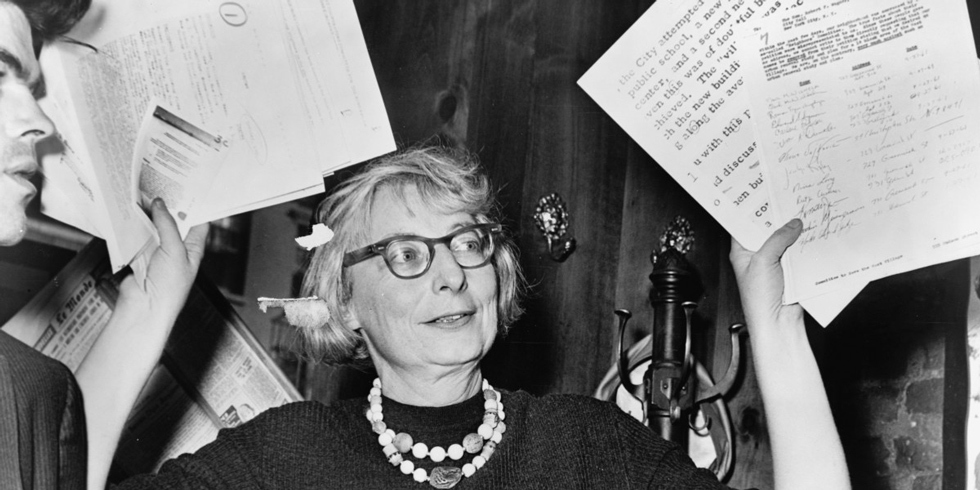
The Beat Film Festival program, which is held in Moscow from May 25 to June 4, is the enthusiastic dock “Citizen Jane: The Battle of New York” about the holy figure of urbanism Jane Jackobs, the author of Death and the Life of Big American Cities. Anna Shevchenko - about the important thing that remains behind the scenes in the "citizen Jane."
Jane Jacobs has long been “St. Jane” for several generations of urban activists, and her book “Death and Life of Big American Cities” plays the role of the Bible, which is required to read in architectural schools around the world. Jackobs ideas gave rise to a lot of followers and formed the basis of modern approaches to urbanism. But the main source of today's charm by the figure of Jacobs is precisely its activist side: a journalist and self-taught theoretician who writes the language accessible to the public and withstanding the image of “his aunt” living in the neighborhood. The persuasiveness of the pathos of Jackobs texts is explained by either her special gaze of a simple city dweller, or experience as a propagandist in the American military information department.
It is curious that Jackobs's views in a sense were formed thanks to her post-war work in America magazine-the publication of the State Department spreading in the USSR. In a recent book about Jacobs “Eyes on the Street” there is a story about how the Soviet architect Vasily Kusakov criticized the articles of Jackobs for lack of attention to the housing issue and the problem of drilling in the United States. Jane, on behalf of the American government, was forced to respond with texts about the need to get rid of slums and the construction of residential high -rise buildings in their place - these are the very decisions that she will harshly criticize later.
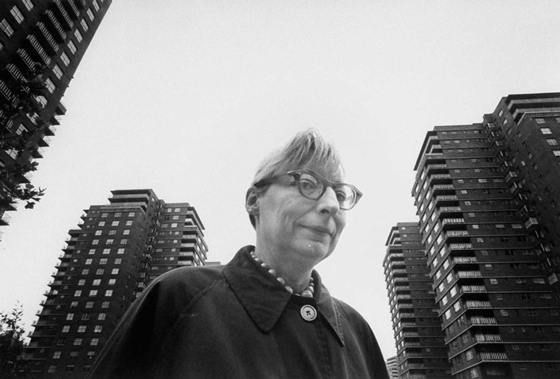
Since the 1950s, Jackobs's work has been based on counteracting the ideas of modernism in urban planning. Her criticism is focused on the monotony of the development of American cities, and Robert Moshes, an ambitious politician of the Great Depression and the following decades, whose violent activity formed the appearance of modern New York, acts as the embodiment of evil. Moses (largely thanks to Jacobs) is now considered the fascination of the urbanist hell, who manically exterminated the slums and the residential towers with the highway erected in their place. In fairness, it is worth noting that in addition to Khaveev and towers, on his initiative, numerous city parks, beaches, open pools, sports grounds, zoos, squares and public buildings were created.
 © Altimeter Films
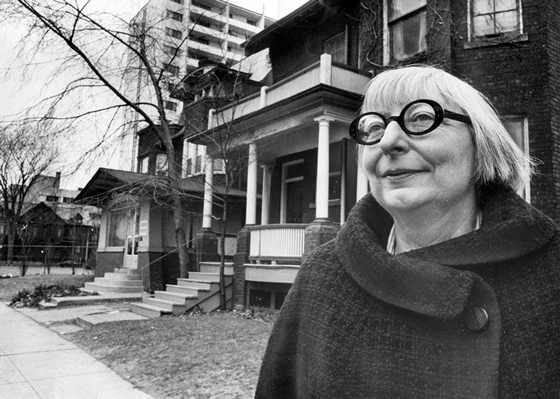
In parallel to the war with the concerned Highweaks, the Moses Jacobs is in the invention of alternative methods of organizing the urban environment - its result is its program book “Death and Life of large American cities” (1961). Having no relation to the academic environment, Jacobs built her theory not on the collection of facts and data, but on the basis of personal observations, stories and generalizations that formed her ideas about the ideal residential area. Despite the fact that the principles she brought out were purely empirical, later they were never called into question and became something like obvious truths suitable for any city. The recipe for a correctly planned area included four mandatory ingredients: functionally mixed development, a frequent mesh of pedestrian quarters, a combination of old and new buildings, and high density. This model was a copy of her own place of residence-Bohemian Greenwich Willidge with the predominant development of the 19th century.
The book caused active debate, and many approaches indicated in it are relevant to this day: for example, Jacobs introduced the theory of complex systems into a conversation about the city, considering it as a place of imposition of various processes that make up everyday life. However, a number of problems associated with its ideas are often overlooked when transferring to modern soil.
So, in the framework of the struggle “for all the good and against all the bad,” Jacobs considered the physical environment as the main factor that defines human behavior. This led to ignoring serious socio-economic aspects affecting the functioning of the city. The common criticism of this approach is associated with the use of Jacobs ideas when creating quarters for the local residents, the so -called dressing, well described and has become a common place. Modern areas created according to Jane's patterns, no matter how doll the puppet, often become closed elite enclaves, devoid of diversity declared, and shops designed to revive the quarter are mainly aimed at tourists.
 © Altimeter Films
Considering the principles of modernism by the whims of planners and bureaucrats that had flown from the coils, Jacobs did not at all consider the social basis of the modernist project, namely, ensuring equal opportunities for the majority, which streamed the desire to quickly and massively solve the acute housing problem that arose as a result of industrialization and the Second World War. Maybe today new buildings look sad, but in the post -war period they were a timely response to overpopulation and monstrous housing conditions and at least provided water supply and heating. The issues of mass resettlement belonging to the middle class did not occupy issues of mass resettlement. Her devastating criticism of social housing provided to the state is largely fair - untied the hands of the authorities: since social housing is not good, you can not build it at all, while the housing crisis becomes a variety of norms.
The film by Matt Tirnauer leaves these contradictions behind the scenes, telling the canonical story of the struggle of good Jane with a bad brainwashing, from which she emerged the winner. Since then, state planners have been supplanted by developers, and the urbanization released has reached a cosmic scale. Who knows whether Jane Jackobs will correspond to the life of the future, but her interest in the city and the tenant's tenacious look, of course, enrich urbanism. As for the social agenda, it will still have to be lended from the modernists.