
Translated material
In anticipation of deadly injection
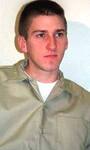
“When an American plane or rocket sow death in other states, the nation applauds and admires. But, do you like it or not, when you approve of the bombing of other people's cities, you approve of actions similar to the explosion in Oklahoma City,” the prisoner Timothy McAVE wrote in an essay dated March 1998. Three years earlier, on April 19, 1995, he fitted a truck filled by explosives to the federal building in the city of Oklahoma-City. As a result of the explosion, 168 people died, about 500 were injured. Four years before, Timothy received a reward for participating in the Operation "Storm in the desert" and was proud to kill Iraqis.
Makwey was detained an hour after the explosion, and in June 1997 he was sentenced to death. The motives of the crime, which are considered the most terrible terrorist attack in the entire history of the United States, cause disputes today. It is known that McVe studied well, according to the results of school exams, he was provided with a scholarship at the local college, but he did not go there. He was interested in survival technologies and weapons - in the basement of his house, he kept pistols, rifles, cartridges. “In my opinion, he thought that one day an atomic war or something like that,” his father, William McVain, believes. “He was ready for anything.” “He did not know what would happen - catastrophe, hunger, the fall of the government,” the army colleague Timothy William Dilly echoes him. “But he believed that something would happen.” And apparently, he was preparing for this: in the evenings, when other soldiers spent time for his pleasure, Timothy remained in the barracks, studying Soldier of Fortune and Turner's Diaries , a novel about the "patriots" that overthrew the American government.
Mcakeda quickly climbed the service stairs and became a sergeant when everyone with whom he started was still ordinary. After the war in the Persian Gulf, he cherished the dream of green beret and even received an order to go through special training. But it turned out that he did not pass according to physical data, and two days later he was sent back. “This completely changed his attitude to the army,” says John Kelso, one of Makwei's friends. “He was simply crushed.”
As a result, McVe quit the army and got a job in the Burns Security Security Service. He was a guard of the defense research institute Calspan Research, where he was considered an exemplary guard and master of his craft. His only strangeness was the inability to get along with people. Usually silent, apathetic, without a gleam in his eyes, he broke, began to scream, became aggressive if someone contradicted him. It was easy to infuriate him. Nevertheless, his former colleagues are convinced that the idea of an explosion in Oklahoma City did not belong to Makwei.
“Timmy was not such a person to come up with something. He was very good if he was told“ Tim, guard this door, don’t let anyone here. ”Tim, whom I knew, was not able to come up with and carry out like that alone. Someone had to tell him:“ Tim, we must do this and that. You will lead a truck. "
So says Linda Hayner-Mil, former inspector of Burns International Security. However, the track record of Makwei recorded that he is “one of the best” potential leaders, capable of “inspiring young soldiers”. The former Macwegan Co -worker Chris Barner claims that he was a "born leader with a strong faith in himself." In addition, a friend and fellow soldier Timothy named Terry Nichols, who took part in the preparation of the explosion, was at the time of the crime hundreds of kilometers from Oklahom-City.
For three years, McVe and his lawyers sought to soften the sentence, but the court rejected the appeal. The last of them was rejected in October 2000, after which Mcakeda could only count on the presidential pardon. But on December 11, he appealed to the court with a request to bring the sentence. Timothy did not give explanations to this, but insisted that since the examination recognized him as sane, he could be executed. Judge Richard Match gave him a month to think, but Mcwway said that he would not change his mind. In February, the date of execution was announced - the deadly injection will be made to Makweu on May 16. In order to satisfy the interest in this event of relatives of the dead, the procedure will be broadcast on prison television. The room where the execution would take place turned out to be too small to accommodate everyone who wanted to see the execution with their own eyes.