
Translated material
Two logic
"Medusa" studied the main claims of the Federal Air Transport Agency to the Dutch report on Boeing
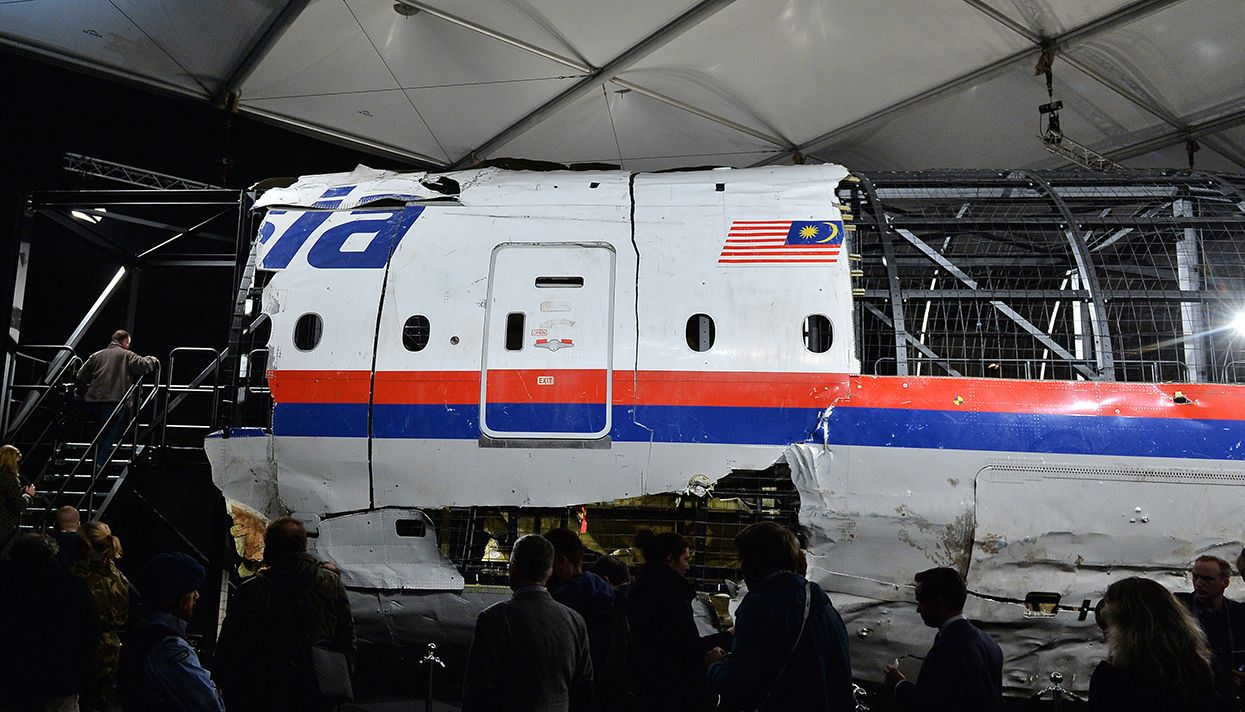
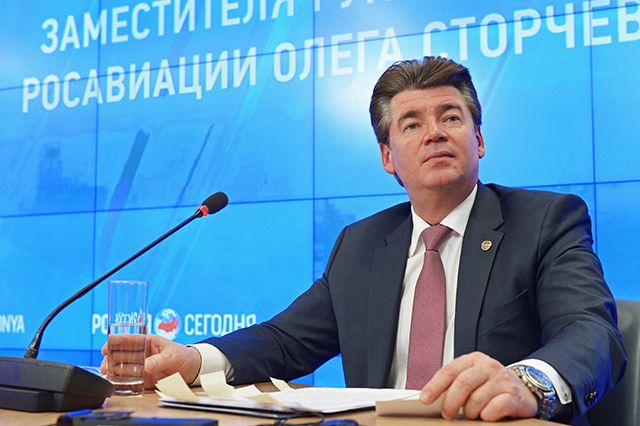
The Russian authorities criticized the report of the Netherlands Security Council on the investigation of the Boeing MH17 crash in eastern Ukraine. The work of Dutch experts in the Federal Air Transport Agency was called illogical, biased and inconsistent. They were also directly accused of forgery of the main evidence. Medusa listened to the briefing of the deputy head of the Federal Air Transport Agency Oleg Storchevoy and tried to find answers to all his claims in the text of the Dutch report and applications.
Claim number 1
Rosavision: There was no consistent analysis - evidence was collected to a specific version.
Report: the commission examined in detail many different versions of what happened - from a shot from a portable anti -aircraft complex to a collision of an aircraft with a meteorite or cosmic garbage. The commission also considered the version of the lightning stroke; explosion on board the aircraft; fuel or baggage; engine breakdown; a shot from an aviation machine gun; Air-to-air missile damage; damage to a rocket released from MANPADS or from a ground missile complex. Each version is accompanied in a report by a description of the research method and arguments for or against.
It follows from the text that even the researchers reacted quite seriously to unlikely hypotheses. For example, in order to exclude a version with a meteorite, experts turned to the Royal Astronomical Society of the Netherlands. They reported that they did not record a characteristic noise in the area of the crash that accompanies the fall of the meteorite. Features of damage also did not confirm this hypothesis. As for cosmic garbage, the database of the American aerospace corporation shows that from July 10 to 19, 2014 (Boeing’s disaster occurred on July 17), no fragments from the space were part of the atmosphere.
Claim number 2
Rosavision : The investigation does not meet the norms of ICAO - the International Civil Aviation Organization.
Report: in the Federal Air Transport Agency they did not specify what exactly the investigation violated the norms of ICAO. Meanwhile, the report contains a claim of the international commission to the Russian side. According to ICAO, Russia was supposed to maintain “raw” data from radars. The commission requested these data, but received a refusal: the Russian authorities said that the crash did not occur in the territory of the Russian Federation, therefore, internal aviation rules were taken into account, which allow not to store “raw” data for so long. The commission ultimately handed over the cassette with a video of the radar screen, which, according to the Dutch, cannot be verified. Russia insisted that the claim was excluded from the report on the investigation of the crash.
As a result, members of the Netherlands Security Council applied directly to ICAO and received support: the organization confirmed that Russia was obliged to provide “raw” data, or even before the incident, to warn that in such cases it would not provide such information.
See: Pages 42-43 in the report , page 2 in Appendix V
Claim number 3
Rosavias: some striking elements were “discovered” only in order to give the investigation the right direction - from the very beginning, the commission wanted to convince everyone from the fact that the Boeing shot down a rocket, which was in the service of the Russian army. In fact, the Federal Air Transport Agency accused the commission of the forgery of the most important evidence.
Explanation: in missiles of the air defense system "Buk", different warheads are used; They differ, in particular, with the composition of the damaging elements. In newer models (9N314M), there are damaging elements of a certain shape - the so -called I -Taurus ("butterflies"). They are in service with both the Russian and Ukrainian army. Warrior warheads (9N314) are used only in the Ukrainian army.
In the Federal Air Transport Agency, it is hinted that the I -beams were thrown so that it could not be unequivocally excluded by the involvement of Russian technology in the crash. The department says that the losers were discovered suspiciously little (only two), and their detection was not documented in the right way. Earlier, the Russian side demanded that the report clearly record how many defeating elements of all types are found - and where exactly. The department stated that during the explosion of the warhead 9N314M, about a quarter of the damaging elements falls on the I -Taurus.
Report: Experts have no doubt that in the rocket that shot down the Boeing, a modern warhead model (9H314M) was used - with the content of the I -Taurus. The report does not say about two, but at least four such elements found in the wreckage of the cabin and bodies of crew members. The report describes in detail where, when, and what amazing elements were found. It is noted there: since the explosion occurred in the air at an altitude of 10 kilometers, it is simply impossible to find all the striking elements of the warhead. Accordingly, the data on the ratio of different elements (henchmen and the rest) will still be incomplete. In addition, the report states that in this warhead model the number of double-heads changes from the sample to the sample-such information was provided in the Almaz-Antei concern, which is produced by Buki.
See: Detection and study of the damaging elements- pages 84-85 and 88-95 ; Images of all found elements-pages 8-9; Appendix V - page 5
Claim number 4
Rosavias: the shape, chemical composition and mass of the I -beams found at the crash site do not correspond to the composition of the elements that remain after the warhead is undermined by 9H314M. Dutch researchers did not conduct examinations of the steel brand, from which amazing elements were produced.
Report: The members of the commission insist that the detected double -rotors - taking into account all the changes after the explosion - corresponds to the fact that they are contained in the warheads of 9H314M. Regarding the chemical composition, the report says that the amazing elements in warheads of this type are made from a large number of different alloys - so it is impossible to determine the warhead model on this basis.
See: Appendix V - Pages 3 and 4
Claim number 5
Rosavision: Dutch researchers did not take into account the comments of Russia to the intermediate version of the report. The members of the commission did not explain why they did not agree with this or that remark, but simply stated a refusal. Also, the results of the experiments of the concern "Almaz-Antei", developers of the air defense system "Buk" were not taken into account. Almaz-Antei undermined the warhead 9H314M at the stand, which showed that the losers leave characteristic holes. There were no such holes on the Boeing’s sheathing.
Report: comments of representatives of different countries are collected in Appendix V - The Dutch side responds to every remark and argues its position. The members of the commission really refused to take into account the results of the Almaz-Antei experiment, because, in their opinion, the tests were incorrect. In particular, the testers did not take into account the properties of the damaging elements widely known in ballistics: when passing through obstacles, these elements change the direction of movement. Some other tests conducted by the Russian concern were not taken into account by the Dutch, since these tests were not controlled by representatives of other countries. The possibility of defining the form of a damaging element in the report is not said about the possibility of defining.
Claim number 6
Rosavision: The alleged start zone is designed from the wrong interpretation of the conditions for the meeting of the missile with the aircraft. Almaz-Antei conducted tests and found out that if Boeing was shot down from the Buk air defense system, then the launch could only be made from the area of the village of Zarashchenskoye.
Explanation: Zarashchenskoye is far from the area from which, according to the Dutch, a rocket could be launched. The Russian authorities claimed that in Zarashchensk in July 2014 there were Ukrainian "beechs".
Report: In response to this claim, members of the Dutch commission noted that Russian researchers did not take into account many factors that could affect the missile flight path. According to experts, if the rocket had been launched from Zarashchensky, she would have shot down the plane in another place, or damage would be of a different nature. In the application to the report, it is noted: the Almaz-Antei specialists first first calculated the alleged launch zone on the basis of Dutch data on the probable point of the meeting of the Boeing rocket. Then the results coincided with the conclusions of experts from the Netherlands - there was no question of the emergency. (After the publication of the report at Almaz-Antee, they said that they had never tried to calculate the launch area on the basis of Dutch experts).