
Translated material
Second lesson for Georgia
Around Russia
 Second lesson for Georgia
October 3, 2012 Sergey Shkludov
The connoisseurs of the Georgian model of democracy had no time to discuss the results of the parliamentary elections and admire the subtle calculation of Mikhail Saakashvili, who, although he lost the elections with a neat maneuver, but still won the total amount of points, as the culprit of the celebration for the second time after the closing of polling stations appeared in front of the people and announced his defeat the second time.
If at first the leader of Georgia recognized the defeat of his party “Unified National Movement” on party lists, which still left him the minimum majority in parliament, now Mikhail Saakashvili announced his defeat in single -member districts, as well as the transition to the opposition.
Although, on the one hand, it seems that the “Georgian project” is completed and the “Rose Revolution” unexpectedly went into the past, I do not exclude that Mr. President is corny nervous, does not want to appear openly clinging to power or hurries to admit defeat in order to prevent violent actions by the united opposition. After all, words and statements are one thing, and tough figures of the results are completely different. I do not exclude that after two weeks, when the counting of votes ends, after all the repentant words about defeat, care and join the opposition, it turns out that the party in power was still able to restrain 50% + 1 vote. The parliamentary bargaining and an attempt to split a very motley “Georgian Dream”, which has neither a program, an ideology, or a plan of action that is full of contradictions and which, as it seems from the side, is shocked by its own victory and quick surrender of Saakashvili, which has no reigning heights.
Information and figures of voting results continue to arrive. The final results of the elections will be summed up only on October 20. In more than two dozen single -mandate districts, the counting of votes has not yet begun; Some districts are likely to hold the second round of voting, and in conditions when the two opposing parties risk almost equally divided the parliament, the value of each of the 150 deputies increases sharply.
It is possible that when calculating the votes, everything can turn upside down and several times, forcing new to nurses around the world to write refutations on their own texts.
In the meantime, we are forced to proceed from the announced script. What to expect if the Operational Party "Georgian Dream" can still form the majority in parliament?
A few strokes to the landscape.
Firstly, it all depends on the behavior of the parties. If Ivanishvili will not be guided by the logic “Elections on which I won the last” and will give the “national movement” to exist normally in the opposition, it is quite possible that through one electoral cycle the former party of power will return to itself. So far, in many ways a conditional, “bicepartican model” that has developed in Georgia, is not viable. The opposition does not have a clear understanding of what it came to power for. Most of her theses are negative. “Georgian dream” is a dream in many ways “against”, not “for”. There are Saakashvili in Georgia and those who are “against Saakashvili”. Not like the third, and the second is not too given!
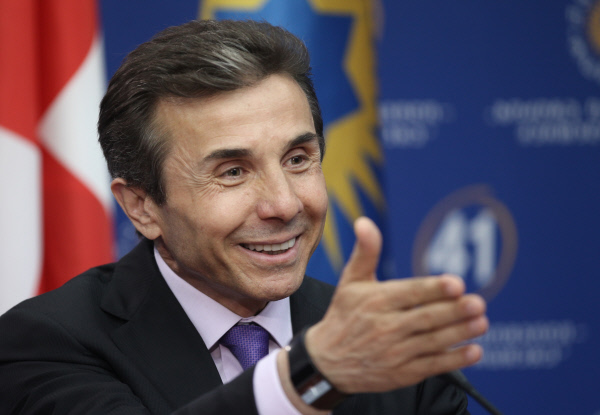
Secondly, the candidacy of the future prime minister is unclear. The fact that they will not be the head of the list of “Georgian Dream”, football player Kakha Kaladze or the wife of Comrade Ivanishvili Ekaterina Khvedelidze, who represented his interests during the past campaign, obviously. Bidzina Ivanishvili himself was deprived of the Georgian passport, and although the law allows him to restore citizenship, the businessman defiantly refused “such a handout”. Regardless of whether it was a pre-election move or not, I suspect, now Ivanishvili will be happy to receive a passport and will try to apply for the post of prime minister of the country.
The following follows from the foregoing. Vano Merabishvili will have to leave the premier post and also go to the opposition. This will happen either now or a year later, when Mikhail Saakashvili will cease to be the president of the country and will no longer be able to put pressure on the opposition parliament. At the same time, the duration of Merrabishvili’s stay as prime minister depends on the patience of Ivanishvili. Can an oligarch not to conflict with the presidential palace and agree on a “transition period” to the presidential election to a compromise or want to get to the authorities as soon as possible? In the latter case, the leader of the “Georgian Dream” can turn the newly elected parliament and provoke new parliamentary elections. One thing is clear so far: the social program of Merrabishvili, which was presented in the summer, most likely for lack of its own and will be adopted by the new government of Georgia.
Thirdly, the period of time that remained before the 2013 presidential elections will be very tense and interesting for Georgia. If the “national movement” has turned into an opposition, then, having still a solid break of the parliament, it will try to complicate the life of the Georgian Dream as much as possible, try to split it into several parts and form a coalition without Ivanishvili’s participation. It will be fun if you recall that the still current President Saakashvili has tools that allow you to dissolve a new parliament (of course, not by force, but voluntarily - to get out of the dead end of the future political crisis), and the “Georgian dream” will have tools to initiate impeachment against President Saakashvili.
Let me remind you that the constitutional reform, which turns Georgia into a parliamentary republic, will enter into force only after the presidential election, in October 2013. And until that time, Georgia will continue to exist in the “weak parliament is a strong president”. Moreover, Saakashvili can easily provoke a political crisis, offering a prime minister of a deliberately impenetrable or objectionable “Georgian dream” of a candidate, the same Merabishvili. If the compromise is not achieved, then after three attempts the president with a calm soul dissolves the parliament and appoints early parliamentary elections. Will the “Georgian Dream” be able to repeat its result? Whether Saakashvili will include an administrative resource to the whole coil, trying to regain control of parliament is not yet clear. It all depends on the behavior of the winning side. And the most reasonable behavior would be expectant tactics. The “national movement” will no longer be able to change the constitution, and in general its legislative initiative will most likely be paralyzed. So the introduction of the prime minister is the last instrument of pressure from the president on a rebellious parliament. Now, “dreamers” would reasonably agree to the extension of the powers of Vano Merabishvili and wait for the moment when Saakashvili leaves his post in a year. It was then that all power will move to parliament and Ivanishvili will be able to become the undivided master of the country. Everything will become clear after October 20: is the opposition ready to wait or wants to get to power immediately? If the political crisis is nevertheless provoked, then the Georgian Dream in early elections may not repeat the success of Monday.
Fourth, the new government is already waiting for the temptations of the winners. Georgia (either now, or a year later) may threaten a rabid redistribution of property, the stream of criminal cases of “new leaders” against “old leaders”. Revision of many “large projects”, for example, such as the construction of a new city of Lazik, which was a favorite brainchild of Saakashvili. The vast businesses of Ivanishvili in Russia are suggested that the proposal of “Come and buy us”, as it was already in 2004, when the same Messid came from the new President Saakashvili. In general, an exciting game may begin, which will combine the warming of relations with Russia, and the emergence of anti -American rhetoric, and the continuation of the course on integration into the European Union, and all this is seasoned with attempts to return Abkhazia and South Ossetia, if not by military means, then by political bargaining. At least with Ivanishvili, Russian President Vladimir Putin has no reason to “not talk”.
***
One is insulting. We did not inspect the development of the Georgian Project to the end. The fact that he was so unexpectedly interrupted is forced to expect that Georgia will soon begin to crawl from the first lines in world ratings according to the indicators of the level of democracy, etc., where it climbed after the "Revolution of Roses". Reforms will be rolled up or stained in the mud of political crises and re -election.
Although, maybe it is worth sharing the admiration of many political scientists, agreeing that the “peaceful transfer of power” through the election is one of the stages of development of young emerging democracy and that everything should be like that.
So or not, we will find out in the next election. If the Ivanishvili team again does not drive Georgia into the coffin of Failed state, then in the next election the population will again provide them with confidence and extend their mandate for power. If the country under the blows of populism, redistribution of property and the rampant of the new oligarchy will again get off the rails, then in the next elections a “national movement” will win a convincing victory, which can appeal to a simple slogan “as it was with us and as it became with them”. The main thing is that the new government does not include an administrative resource to the whole coil. And most importantly, that power, as in 2003, would not have to be returned by force.
So today, Georgian democracy has learned only the first lesson. The second is ahead, and it will be more important than the first.