
Translated material
In the field is a warrior
In society
 In the field is a warrior
January 23, 2008 Alexander Cherkasov
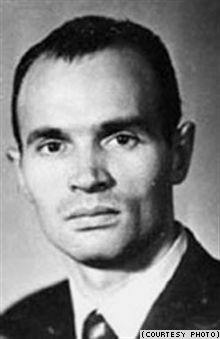 On January 23, 1938, Anatoly Marchenko was born. Worker. Zek. Human rights activist - in those years when they planted for it. The dissident is not only a dissenting (why, in fact, "different"? Just "thinking!"), But the dissenting one. The person who made himself. The writer, author of "My testimonies", "From Tarus to Chuna", "Live like everyone else." If Marchenko followed the name of the last book, then he would have turned seventy. It would have been fulfilled, but Anatoly Tikhonovich did not live up to fifty.
He died on December 8, 1986 in Chistopol Prison. The official version of death is an acute heart-and-butter deficiency. A few days earlier, on November 28, Marchenko stopped the hunger strike lasting almost four months. He began to starve on August 4, demanding the liberation of all political prisoners in the Soviet Union. He had no other way to struggle for his rights, "for your and our freedom." A year earlier, in October 1985, Anatoly Tikhonovich was transferred from the camp to prison mode-this meant almost complete isolation. Marchenko “took off” the hunger strike, but it got worse than twelve days later, he was transferred to the hospital, but - late ...
Has his last fight ended with defeat?
A week later, on December 15, Mikhail Gorbachev called Gorky exile Andrei Dmitrievich Sakharov, the conversation was primarily about political prisoners. And soon the mass liberation of the political zones began.
Marchenko won - and this time.
Someone may say: "History." If...
In 1958, twenty years old, the first time falls behind bars-for a fight in which he did not participate. He fled from the camp - shortly before the paper came there about the release with the removal of criminal record.
He wandered around the country, interrupted by random earnings. In 1960, he tried to flee, was caught on the border, convicted a second time-"for treason"-for six years of maximum security camps.
The camps were clogged with such "escapers." And what else could a person who understood, in which country does he live in? What to do if there is nothing to do? Run. And after all, many convicts, having gone free, tried to leave the Fatherland.
After all, nothing can be changed.
Do not fight with the Bolsheviks, in fact? There were also a lot of such people who fought in the camps - not only Lithuanian and Ukrainian rebels, but also those who served the Nazis ...
Marchenko tried to escape from the camp. He is transferred to a prison regime, he is in Vladimir. Cold, hunger and most importantly - isolation from the outside world. You can do anything, you can die, you can kill yourself - they will not know anything about you. For some reason, the country is convinced that we have ended with the camps under Khrushchev. There is nothing to do, because nothing is impossible to do ...
And why, in fact, "nothing"?
Even in the camp, Anatoly Marchenko decides to write a book about camps. By his own admission, this goal helped him to survive - not to go to the "prohibition" so that the overseer from the tower would kill him ...
But there was also a counter movement - after the process of Sinyavsky and Daniel, Moscow suddenly remembered the prisoners. Indeed, should they plant them somewhere? Relatives come on dates and see the whole country for barbed wire-Dubravlag, the control of the LH-385. Anatoly Marchenko, who returned from Vladimir, meets Julius Daniel, and soon goes free.
In fact, the other person - the camp was freed, replaced higher education for Marchenko. And the fact that among the collections of Lenin's works in the library of the “state -owned house” he had read could hardly benefit the Soviet regime.
At large, Anatoly carries out the plan - writes a book about camps. This book is not written by the metropolitan intellectual, as it seemed, but a worker from Siberia. In general, the very fact that the book is written is a miracle and a feat. It’s one thing to sit in the camp and think about the will and the book. And quite another - to write a book and think about an inevitable return to the camp ...
Anatoly Marchenko is helped by his friend's friends, Julia Daniel. First of all, they find a doctor. In general, the miracle that Marchenko lived to the release, did not die of meningitis. But he would hardly have been able to fulfill the conceived without the help of friends - they looked after the released from the political camp, he could only live "over the hundred and the first kilometer." The wife of Daniel, Larisa Bogoraz (then Larisa Iosifovna will become his wife), helped Anatoly edit the book.
The result was not just a certificate. “My testimonies,” the book was called, went to Samizdat in the fall of 1967. He was not thirty ...
If my will, I would include Marchenko’s book in the school curriculum. Not for the content - although for the content too - where else will you find such an unlucky hero? This book is a rare quality Russian prose. It would seem that the text should overflow excellent degrees, invectives to the authorities, reasoning on general topics. But no - this is really the testimony of what he saw and experienced, without a tear, where each simple word has its own meaning and burns the soul.
For reading and thinking intelligentsia, Marchenko’s book changed the picture of the world. Now it was no longer possible to hide behind the camps under Stalin. In fact, Anatoly Tikhonovich laid the canon of the future "chronicle of current events" - the section "in prisons and camps" ...
Marchenko took the instance of "my testimonies" in the editorial office of "thick" magazines. Not because he hoped to be printed - he just now acted underground, but threw an open call.
Already in the nineties, when party archives opened, it turned out that in April 1968, the draft decree of the Presidium of the Supreme Soviet of the USSR on the deprivation of Anatoly Marchenko of Soviet citizenship was approved.
But he himself did not just choose another - to be a free person in our not free country. Marchenko partly created this other opportunity.
There is something to listen and take a closer look, isn't it?
He was offered to hide, sit out, either in the Caucasus, or in the north. He refused. He wrote several articles in Samizdat. The latter is about the threat of military suppression of the Prague Spring - July 22, 1968, exactly a month before the invasion.
The authorities answered ... Anatoly Marchenko was arrested on the day of the input of the troops - August 21 - was convicted for a year "for violation of the passport regime." In the camp, they added two more years, now honestly, according to the "slanderous" article 190 "Note".
After the liberation, Anatoly Marchenko settled in Tarusa with his wife, Larisa Bogoraz.
Marchenko stood out from a number of dissidents ... what? He was, according to Alexander Daniel, "a single wolf, never went to the pack."
Once in the Moscow intelligent environment, people did not escape, but did not try to be the "soul of the company." He knew how to hold a tool in his hands - the board, say, could be sawn off evenly, but did not stick out this skill. Intelligence and education are not the same ...
Marchenko - it seems, the political prisoner, a participant in the resistance - did not demand sympathy from all sides and did not expect universal admiration.
 Probably so ... not a hero, not a sacrifice, but a person responsible for himself, for his words and actions.
In the seventies, Anatoly Tikhonovich did not claim leadership, but tried to formulate this position of his free person, to translate it into the language of international relations. Is it possible, except on the one hand, the Cold War (on the verge of war of the “hot”, thermonuclear), and, on the other, is an unprincipled compromise? According to Marchenko, trying to weaken the mutual military confrontation, the West during the discharge unilaterally turned the ideological confrontation, and hence one step to the surrender of the military. Is there any other way? “Tertum Datur”, “The Third Don,” was the name of the article written by Marchenko and Bogoraz: “An alternative to war is not a discharge in Moskovsky, but a consistent confrontation of the communist dictatorship at all points of the globe. ... Such a policy would remove the responsibility for complicity in crimes against the world and against people.”
Somehow it sounds too much ...
The authorities still tried to get rid of Marchenko, suggested: either to the west or east. He refused to emigrate "on the Israeli line" - it would be a lie, complicity in the game according to other people's rules. On February 26, 1975, Anatoly Marchenko was arrested for the fifth time, he was serving a link in the village of Chuna of the Irkutsk region.
Returning, he settled again for the hundred first kilometers, in Karabanovo, Vladimir Region, worked as a stoker. Anatoly Tikhonovich built a house, raised his son. He still did not strive for publicity, for social activity and spoke only when he could not be silent.
Only when the authorities began an attack on the Moscow Helsinki group, confirmed his membership in the organization - Marchenko was skeptical of the final act. And then he drew up one of the groups of the group - an appeal to the heads of state, in which he proposed to create a commission to verify the implementation of agreements in the humanitarian region.
When Sakharov was sent to Gorky in January 1980, Anatoly Tikhonovich wrote an open letter to Peter Kapitsa. According to Marchenko, unwillingness to publicly act in defense of persecuted, silence and civil passivity make a person, an intellectual, not only an accomplice in today's crimes, but also the culprit of subsequent shocks.
Who will say that this statement is unfair and not modern?
For the sixth time, Anatoly Marchenko was arrested on March 17, 1981. On September 4, he was sentenced to ten years of the camp and five - links.
Anatoly Tikhonovich then worked on the manuscript of the third book of memoirs "Live Like All." Before the arrest, I managed to release the article "Whether the Soviet tanks will enter into Poland?"
Twelve years passed - a full cycle of the calendar. As if the story was repeated - only another country was torn to the "ban", to freedom ...
And life is different. In “Live Like All”, we are talking about the end of the sixties, then the circle of sympathetic and assistants was wider. Among those who took part in the fate of Anatoly, there was, for example, Vyacheslav Vsevolodovich and new. In the book he is encrypted. Like a "famous scientist." Like "I." Yves and Novo wanted to help Marchenko hide from Moscow after the publication of the "testimony ...", found him housing and work in the north-west. He - "K.I.", K about Ma Iv and new - was sitting on August 21 at the trial until six in the evening. Then he went home: birthday, guests will come, inconveniently ...
Now there was no such wide circle. It was different: Marchenko, and behind him, the “chronicle” turned over the attitude of people to the topic of political camps, political prisoners, and the political thief in the USSR - from “this cannot be” to “who does not know this”. Half of the work was done ...
But at the same time, Marchenko created himself as a writer. Reading “Live like everyone else”, it’s hard to believe that it was almost a draft: it was winter, he wrote several pages and hid in the snow. When they came with a search and asked: “Where”, Anatoly Tikhonovich led the Chekists in the surroundings until they froze ... And in the spring, packets with sheets of paper began to be pulled out of the snow-they were gathered by a friend Marchenko and Bogoraz, Boris Stepanovich Kulaev. “There is a tide in people's affairs,” the circle narrowed, few remained, but faithful. The manuscript was collected, and a wonderful book saw the light when the author was in the camp.
After the arrest, Marchenko said that he considers the Communist Party and the State Security Committee by criminal organizations and will not cooperate with the investigation. The enemy had absolute physical superiority. And what did Anatoly Tikhonovich have? ..
In the camp, he was a stoker in the boiler room. And for the holiday, he opened the valve and gave heat to the punishment cell, but torture by cold was no less important component of "re -education" than torture by hunger (according to normal 9 "b" - Balanda in a day). He could not help but know what would follow. It was followed - the deprivation of correspondence, the parcels, finally, the transfer to the prison mode.
But Anatoly Tikhonovich always set big goals and went to them. He decided to tell the world about Soviet political camps. And he did it.
In the summer of 1986, Anatoly Marchenko begins his last mortal hunger strike-with a seemingly crazy and impossible requirement for the liberation of all political prisoners. The last battle in which he will win at the cost of life.
Now he would have turned seventy. Today in Russia there are not enough such free people. Anatoly Tikhonovich Marchenko did not expect the call of the "leaders" and he himself was not a "leader" - he answered only for himself, to the end. This is how they get freedom.
Author - Member of the Board of the Society "Memorial"