
Translated material
Nine months
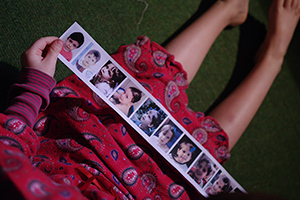
In Russia, more than 100,000 children are growing in institutions, in orphanages, boarding schools and hospitals. These are mainly the so -called social orphans - children who remained orphans with living parents. In February 2014, two sisters crossed the threshold of two children's institutions. They were not familiar with each other and almost knew nothing about the world outside the brick walls of the institutions where they grew. One girl was eight years old, the other for three and a half years. Both of them were born and lived in the Caucasus. Both had to start a new life in our family. From the first days, I led a detailed photo day, combining portrait pictures with still lifes, details, photos of the home environment and the city in which we live. This book is a documentary story about the first nine months of our common new life.
The sisters should not only get used to the new city, to the new house, to the members of our family and to pets, but also to recognize each other again. They were unknown the simplest concepts. At first, the eldest called the rooms in our house "chambers", as in the hospital. At eight years, she only approached how food was preparing, and was convinced that carrots were growing on trees. The three -year -old youngest almost did not speak, was passive and seemed to reconcile in advance with everything that could happen to her. When she hit, she did not cry, but only silently rubbed her head against the wall somewhere in the corner. But barely realizing that now she has a house, mother and sisters, she began to change in her eyes, as if she had taken her out of the freezer. Now, in a cheerful, funny, sociable bilingual girl, it is already difficult to find out the old creature. There were tragicomic moments in our life. So, when the oldest of the sisters fell out the first tooth, it turned out that, unlike ordinary home children who believe in the tooth fairy, she was sure that, like everything else in this world, Putin brought her gift under the pillow.
One of our mother’s favorite quotes from Brodsky’s Venetian essay: “A person is what he is looking at. At least partly. The medieval belief that a pregnant woman who wants a beautiful child should look at beautiful objects is not so naive, given the quality of dreams that you see in this city ... ”In the first nine months that our new sisters live with us in Venice, it seemed to me that - at least partly - this is true.