Date
Author
Source

Preserved copy
Translated material
Repressive country
In society
 Repressive country
September 6, 2011 Mikhail Berg
Where is the crisis of culture. Igor Yakovenko
This is called differently. The civilizational lag, a historical impasse, movement in a vicious circle, incomplete modernization, unable liberal reforms, an archaic traditional society. And it is meant that Russia, unlike most European countries, remains a country of class-automatic (before that feudal, then totalitarian), which is not able to turn into what is called a modern dynamic state with a modern social system.
Why? What kind of curse does not allow us to say goodbye to the disgusting past, which holds us in the arms, not allowing you to step into modernity, pregnant with the future? After all, we all want to understand how much it will continue, is there a way out of this situation, for what reasons it has developed in such a peculiar structure? Therefore, when I discovered that the participants of the seminar “where the crisis of culture” offers different and, most importantly, interesting answers to our eternal Russian damned questions, it seemed to me that the cycle of essays about the most relevant intellectual systems would be interesting to the readers of the “hedgehog” .
The most radical and at the same time, alas, pessimistic in relation to our present and the future seemed to me the position of Igor Yakovenko . As he calls our beloved Russia-and “yesterday’s country”, and archaic, and traditional, and not capable of modernization, and generally some backward. But we are interested in something else: the answer to a simple and reasonable question, why are we in the ass? Let's try to figure it out.
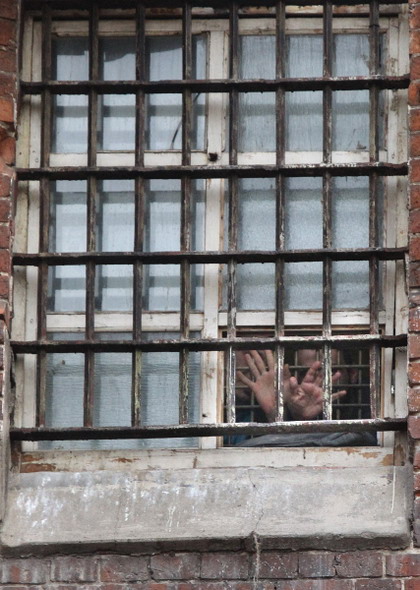
Yakovenko shares all countries by the methods of organization. Some are built on a reward - both material and symbolic. Others on repression, which is a synonym for punishment, then violence. Most are in the middle. Our Russia, of course, a country with a uniquely repressive culture, in which liberal reforms do not take root, because it opposes the culture of the traditional majority. I can’t help but mention that the majority of the author sometimes calls this cattle , and this sociocultural group is devoted to a whole article written by Yakovenko in collaboration with our other potential client - Andrei Pelipenko.
But back to repression. It is clear that repression, one way or another, is present in the culture of various societies, but our author rightly notes that repression of repression is discord. Repression can be personal in nature, as in Russia, and impersonal, as in the rotten West, when anyone who violates the law is subjected to repression, and not the one to whom the High Russian Power is indicated. The world of impersonal violence is legal, the world of personal violence is unclaimed. For the authorities, it is important to demonstrate to the population the ability to highly level violence, subjecting it to all those unfortunate intellectuals in the world of cattle that would like to see our common poor country dynamically developing and westernized, that is, more similar to modern and modernized. It is clear that for the cattle - power is sacred and appreciated because it can carry out violence against the ubiquitous boyars, when and how it wants. But the common people always satisfied the alien troubles in UP (“You can’t do it otherwise, otherwise we’ll have fun”). For which, by the way, our great Russian people love cruel power, because it knows that when the power weakens, the chaos begins. The chaos really began after the abolition of serfdom, and after the first attempts to liberalize in 1905, and after exposing the personality cult, and after perestroika, and now, when people simply dream and fantasize about the level of public discontent.
The reason that our God -bearer loves his tyrants, say, Grozny and Stalin, that is, the power that exercises severe violence against him is very worried about Igor Yakovenko. He is looking for an answer and rests on the manifestation of the global Stockholm syndrome, in which the victim loves the tormentor, because suffering is more easily tolerated. Like, he torments me, and I fly him with my love, by the way, because I myself like to suffer.
The author talks a lot not only of imperious violence, but also about the violence of the basics, which, as we recall, is growing all the increases when the power repression is weakening. One of the types of grassroots violence on which the emphasis is on is rudeness - a patented way of suppressing the personal principle in a person. The fact is that the authorities in such an estate-poisoning state as Russia are much easier to deal with an undivided mass, and not with a person. And that is why it turns out that the suppression of personality itself has become the fundamental task of Russian culture. Because repressiveness without the support of culture is too expensive, Pierre Burdier also mentioned this.
However, we still do not leave the feeling that we did not receive an exhaustive answer to the question, why is everything so bad in our Russian kingdom? Why in some societies, the center of culture is Kama Sutra and poses for sexual pleasure, in others - hedonism and the joy of life and consumption, and we have a whip, which did not put things in order by Peter. Yes, the proverbs “the whip doesn’t torment, but it teaches good”, “the whip is not flour, but the science”, “not to beat, and there is no good to see”, yes, the ideal of “whipping” and “whip-like” (forever quoted by Pavel Soldatov), but why is everything like that, while others do it more human?
No, says Igor Yakovenko, and other eastern and class-traditional societies, such as Muslim or African, also have big problems with modernization, which also opposes culture. Alas, this is the situation with modern modernization that complex and high-tech processes require a personal principle, a system of achievable values, and not the charms of a whip that can reproduce only a silent and relatively wordless aggressive-auditual majority, which, of course, can manually build a white-minor, but for new technology, not very suitable. That is why all the attempts of modernization, starting with Peter I and ending with “perestroika” attempts, were doomed to failure and really failed. Modernization requires personality, requires not repression, but encouragement - both symbolic and material. Of course, we also have this a little, but how the system slows down when trying to reform it at least a little, indicates that the object of modernization is, as it were, we have no such culture from our ancestors. And how to get out of this closed circle is incomprehensible.
At least, Igor Yakovenko, as befits a great scientist, does not even try to find a way out of a hopeless situation. Indicate the disease. He seems to consider culture a kind of natural education, and with calm cruelty states that all cultures are born and die sooner or later. Especially if they cannot fit into the process of creating modern society. As the poet said on another reason, the look, of course, is barbaric, but true. Barbarian - not because archaic, but on the contrary, but the sentence from this does not become less merciless. Or Russian culture will change and will cease to be based on repression (which is unlikely), or-forgive-sorry-new and amazing people will live on our land, poorly remembering what the Troika of Gogol and the people of Dostoevsky are.
Something tells me that Igor Yakovenko does not have any special hopes for our generation and looks at him with Lermontian sadness; The most unpleasant, he seems to be right.
Photo by RIA Novosti