
Translated material
Auto-calendar: May 2-8
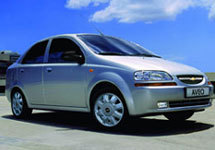
On May 2, 1918, Chevrolet Motor became part of General Motors. William Duran contributed a lot to this. The founder of GM, Duran in 1910, under pressure from shareholders, lost control of the company, and a year later founded together with the Swiss racer Louis Chevrolet, a Chevrolet company named after the latter, which for a relatively small execution of time became very successful in the market of inexpensive cars.
Chevrolet brought Duran enough income, and since he owned a certain share in General Motors, he decided to exchange the Chevrolet shares for GM shares at the rate of five to one, and returned control over the company that he once owned. And Chevrolet has become one of the many brands of the General Motors concern.
Nowadays, the Chevrolet brand has become international: the company's nameplate is on the hood of both American SUVs (for example, Tahoe) and Korean small -leafs (Aveo, Matiz) and Russian Niva.
In May 1935, a road worker from Nottingham Persi show patented road reflectors - "cat eyes", which made a significant contribution to the safety of the road. The idea of creating reflectors occurred to him when, passing at night along an unlit road, he noticed that the cat's cat's eyes on the sidelines reflect the light of the headlights. Thus, reflectors were created, which were marble bars in the rubber frame (now they were replaced by reflecting plastic), the deputy minister of British transport, James Callagan, appreciated the importance of the invention, and in 1947 the "cat eyes" appeared on the roads. For his invention, the show in 1965 was awarded the Order of the British Empire.
On May 4, 1920, American Harry Miller patented his inventions, which had a great influence on the racing industry of the XX century. Among the technical innovations of Miller were aluminum pistons and cylinder blocks, carburetor, turbocharged.
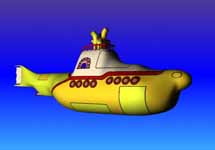
In 1916, he began to develop a car for the famous racer Barney Oldfield. His brainchild, named Golden Submarine ("Golden submarine"), was the fastest racing car for his time. The Golden submarine became the first American all -wheel drive racing machine.
Inspired by the victories of the "submarines", on which Oldfield won everything in a row, Miller went into racing cars with his head and became the first in the USA to build racing cars for sale. The prices for a car of Miller reached 15 thousand dollars - a huge price at that time.
The most serious achievement of the car designer was Miller 91 1926. Its engine developed a power of 230 horsepower at 7 thousand revolutions per minute. In terms of power for a cubic centimeter, the Miller 91 engine is comparable to modern Formula 1 car. It must be borne in mind that the materials from which Miller built his cars were incomparable with the current. The Miller engine, if it was built using modern technology, would be three times more powerful. Miller's design remained relevant until the mid-70s.
On May 7, 1998, the German concern Mercedes-Benz announced the acquisition of American Chrysler for $ 40 billion. This deal became the largest in history, the new company received the name Daimlerchrysler. The concern owns the brands Mercedes-Benz, Chrysler, Smart, Dodge, Jeep, and also has a share in the Japanese company Mitsubishi and Korean Hyundai. Until 2002, the companies produced a completely independent model range, but already in 2003, Chrysler Crossfire appeared with some Mercedes and Dodge Sprinter details (in fact, the same Mercedes-Benz Sprinter. From that moment on, Mercedes-Benz and Chrysler are built on common platforms.
In general, the merger cannot be called successful - he was accompanied by large scandals, including the lawsuit by the Chrysler shareholder Kirk Kerkoryan, who believes that his interests during the transaction were infringed. Only in April 2005, the American court rejected Kerkoryan's lawsuit.
The current drivers are largely owe to the Scottish engineer Robert Thomson, who, on May 8, 1845, patented the first pneumatic tire - it could be pumped up with air. Until that time, the tires were free. A tarpaulin tube (camera) was inside the leather tire. The new tire provided good driving qualities, but was very difficult to manufacture. Pneumatic tires entered the massive use in the 20th century . In addition to the pneumatic tire, Thomson also patented the feathered fountain pen in 1849.
On May 8, 1933, the first police radio system installed on patrol cars was commissioned in New York. It included a 20 W transmitter installed in the site, and two transmitters in cars with a capacity of 4.5 watts each. Car walkways on police cars firmly rooted in the mass culture of the 20th century, in particular, they became one of the central "characters" of the famous film "Pitty" with Marlon Brando, Jane Fund and Robert Redford.