
Translated material
Save Memorial*
On November 14, the Trada-Hawk held an emergency four-hour marathon in support of the Memorial*, in which more than 40 Russian researchers and enlighteners who work both in Russia and abroad took part. The video recording of the marathon is published on the YouTube channel of the TRV-hobby . We publish separate performances in the author’s version.
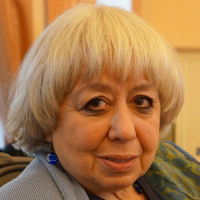
Nina Braginskaya , anti -people, translator, professor of the Institute of Eastern Cultures and Antiquities of the RSU:
Exactly 34 years ago, on November 14, 1987, I did not come to the Memorial*, but he came to me. It was the day of entering the street for collecting signatures, ending in the police and in court. And after all these events, Samodurov, Skubko, Kuzin, Leonov, Ponomarev-in general, everyone who was there was necessary to warm up somewhere, recover, discuss what had happened. And they showed up home with Leonov, and from then until the spring, when the Memorial* began to grow in a terrible pace, so we were placed in this apartment. Ironically, on the same landing, lived (and died in 1987) George Demidov, a writer, author of the story "Dubar". But when we were noisy there, I did not know that he lived next door. This was not known to anyone and interesting at that time.
I will not talk about my relatives. Interest in repressions of the past among those who have been repressed, killed, shot, shot, rotted, admitted by legal: “Well, of course, it is necessary for their own, excusable.” Therefore, I do not want to talk about loved ones.
I am interested in the Memorial*, in which I spent five of its first years in the quality of, so to speak, activist, creator of the educational seminar. Then she left - in particular, because the work began to take a professional, not activist character and required complete immersion. Oleg Orlov was a successful biologist, Sasha Cherkasov was a physicist, but they devoted themselves to the “memorial”* and they had to leave science. I did not.
Why can't a person of science only proceed from the fact that his grandfather was shot from him? Because he is worried about the general. There is an installation of the ruling: “If your grandfather was shot - okay, go, put the flowers. And everything else is human rights regarding today, that is, politics. And politics is such a dirty thing that only we can do it. ” But if I am a citizen, then I am engaged in politics. I am πολίτης. And my life is also a policy. Of course, our elections are usurped. Any human rights activity is political simply because the right is destroyed, there are no courts, there is no justice. Therefore, everything that you do if you try to protect yourself, protect another, express your point of view - it all becomes automatically “politics”. When the authorities canceled the law, human rights becomes politics.
What they say: “state” is a big trouble, because the word “state” has a “sovereign”. He belongs to the state. “Do not rush to power. To break to power is shameful behavior. Whoever has it - let it have. ” Well, as if we lived in the monarchy, where the “natural sovereign” inherits her ... and the desire to make her hereditary or quasi -investigative is visible all the time. "It is impossible if citizens decide who rule." Therefore, the "memorial"* is destroyed.
Repressions do not go back, they can only expand. They have gaseous nature. They do not fluctuate, they only expand. And we are now brought up in a non -violent paradigm. We believe that you can’t take up weapons, you cannot arrange terrorist attacks. Everything is prohibited, nothing should be. And they can. "Everything is allowed." Those who act against the "memorial"*are allowed. They draw on this the sign “Law”, “Law”. But this is pure hypocrisy. They know very well that this is not right or law. It is impossible for repeated administrative violations for which millionth fines are paid to close the organization. This is not in the law. “Memorial”* paid these fines - unscrupulous, illegal, huge. For this "crime" is paid. Why should it be eliminated? There is no such law.
“Memorial”* is the first and only organization that arose in the territory of the entire Soviet Union, and actually arose from below, and I was in this bottom, so I know that there were people with higher education, let's say, but did not occupy any posts. Then, after the party conference, where we transferred the signatures collected by us from all over the country through Yu. N. Afanasyev by Gorbachev. Oh, a signal from above! And members of creative unions connected to the topic of memory. And in November, every exit to the street of this group ended with detention and arrest ... But the authorities rolled down then. She crumbled around the edges. And therefore, even those fines that were written out did not charge.
Of course, it seems to me that everything rolled into asphalt. All the best that was created, everything that was created, created, grew - all this is destroyed. I was at the birth of the Memorial*. When it came to the Memorial* - it is especially painful and unbearably tolerate. Moreover, I do not understand what means, except for conversations, we have. We do not take our weapon. We will not take up weapons. We know what this leads to. And what remains, except for conversations, I do not understand. There are lawyers - they will do their job. But what lawyers, when there is no right? We know that it is destroyed. No arguments, no documents, no evidence have a legal meaning, if it is not about the division of garden plots, about the inheritance. Private is please. They want to make us purely private, divided into individual creatures. They want to make us people who do not have solidarity, there is no community, there is no way to perform together. Of course, you need to say, sign letters. But this is not enough. And I do not know what to do in the paradigm of non -violent resistance when banning exiting the streets under the pretext of a pandemic.
Why was our Society "Memorial"* was so wide? So comprehensive? Could you capture the whole country? It was as democratic as a pandemic. Why? Because terror itself was the only "democratic" action. He captured absolutely all layers. When in the days of memory we listen to the lists of executed in Moscow, we see that there are not many poets, because there are few of them. There is a laundry worker, the guard of the bakery. Total terror leads a multimillion people to a state of accumulates of individual intimidated people. And we are now being turned - in less cruel ways - into atomized units, powerless to resist.
We have ideas about the advantages of non -violent resistance, but for him there are no means.
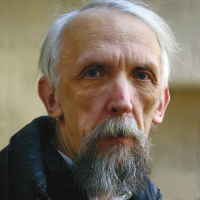
Viktor Vasiliev , Mathematician, Academician of the Russian Academy of Sciences:
I will start with the history of my family, with a rather typical story, because of which we got acquainted with the “memorial”*from the very beginning.
My grandfather is a military man, killed in 1937, when Stalin broke the Red Army ridge due to its independence and authority. Now I relate to his fate more calmly, because my grandfather himself valiantly fought for this power in the civil war and, therefore, he himself sought this fate for himself and others. I perceive it as if he had died on that very civilian.
I am more concerned about the fate of the great -grandmother, who was already killed in old age in 1938 simply to fulfill the execution plan in order to reach the control figures of this prudent state terrorist act, an act of popular paralyzing intimidation. The crazy of her affairs, which we managed to get out of the archives with the help of the Memorial*in the best of times, leaves no other motivation.
My mother -in -law's mother is the Crimean Bulgarian. After her military doctor was shot by the Germans, her daughter - my future mother -in -law - lived far from the Crimea and was not deported. But their family, the family killed by the Nazis, the daughter and sister, was deported to Kuzbass by ethnicity in 1944 under the pretext of complication to the Germans - and so there was dissolved there.
For me, “Memorial”* is a rare word of truth and a scientific approach in such a dubious matter as a political story. They try to convince us that history is a continuous ideology in which there are only the interests of the arguing parties, and there is no objective truth in principle. This is a slander of historical science, immediately issuing professional crooks, while the basis of this story is precisely the responsible, Popper statements and their evidence. In particular, the “Memorial”* is not subjective opinions, not chatter, but these are facts, documents, names and photographs, these are terrible objective evidence of Katyn and Sandarmokh, Kommunarka and Kolpashev. It is impossible to argue with them in a conscientious way, so the honest voice of the “memorial”* shuts up in this way.
I am very worried about the implacable position of the authorities in relation to the affairs of past years, which does not have such a direct significance for the present. This is the path to the new artificial split of society, it is a test that divides the society into those who will be ready to assent in the case of any obvious lies and injustice, and to those suspicious and unreliable for the weak power of subjects who have other life motivations, such as the desire for objective truth, a sense of self -esteem, a sense of justice and compassion. In addition, it is clear that the descendants of the tortured, planted, deported will never come to terms with the fate of their relatives. The course for the split of the company means the rejection of joint creative work in national interests, the movement towards the new extraordinary and exacerbation.
I think this is a very dangerous path, including because it involves a bet on a rotten part of society.
In addition, it is undoubted that a policy based on the denial of facts or the prohibition of their publication has no future and sooner or later will gain well -deserved contempt and ridicule.
I hope that our version of the law on “foreign agents” will still be included in the textbooks as a textbook technique of deriving legal proceedings from the field of legality in favor of the arbitrariness of the executive branch.
I express my deep gratitude and respect to the Memorial Society*, now persecuted for the truth, and I wish him many more successes in his noble cause.
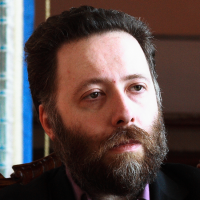
Boris Dolgin , specialist in scientific and expert communication, scientific editor:
For more than 30 years, the “International Memorial” is one of the most important and most authoritative public institutions of our country, a kind of tuning forces of public life, which many other organizations and people are oriented to a large extent.
I learned about the appearance of the initiative group “for perpetuating the memory of the victims of repressions”. I monitored the processes of designing the initiative, at seminars and conferences I came across activists of the movement. Of the most memorable ones - a meeting with Andrze Vaida and Adam Mikhnik, who came to the Moscow International Film Festival in the summer of 1989.
1990: The first conference on the history of the dissident and informal movement, held by the Center for the documentation "People's Archive" with the active participation of the "Memorial"* (in those years I actively collaborated with the "People's Archive"). The “People’s Archive” is no longer there, and the “Memorial”* has long been the largest center for research on the history of the social movement in the USSR.
1991: Finally, archives are opened. The task is to study, publish, and at the same time collect: to record memories, collect letters, diaries, books - primarily about the history of political repressions, but far from not only. In the Soviet era, political repression is not the periphery, but one of the key parts of the management mechanism; This is especially true for the Stalinist period, but not only for him. So the “Memorial”* becomes the largest center for the study and publication of documents and research on domestic history of the 20th century: sometimes as an institution, sometimes as individual researchers, including third -party specialists constantly interacting with it.
At the turn of the XXI century, the “Memorial”* creates and constantly replenishes the base of “victims of political terror in the USSR” [ 1 ].
When annual international conferences on the history of Stalinism began in 2008, one of their leading roles in their design and organization finds himself with the Memorial*. Under the auspices of society, a series of books “History of Stalinism” is published [ 2 ]. And the "memorial"* conducts constant educational activities - exhibitions, discussions; launches the site "History Lessons" [ 3 ].
A wonderful mention of the historical research work of high school students “Man in history. Russia is the XX century ”[ 4 ]. Schoolchildren from different regions received an incentive to talk with relatives and unfamiliar people, work with documents, conduct their own research and tell others about what they figured out themselves (with the help of enthusiast teachers). The competition arouses interest in history through its closest part - family and regional.
* * *
There are attempts to divide the “useful” and “harmful” “memorials”* - historical and human rights. They are inseparable. The historical comes from a person and from the right, which in some cases may be higher than the unlawful law. Human rights is no less scrupulous in detail and support for the source, in an attempt to listen to different voices, to understand different truths.
In September-October 1993, I remember discussing how and where to be civil society in a situation of difficult political confrontation. And before and after - neat work in hot spots: it is impossible to imagine a thoughtful historian of conflicts in the post -Soviet space that could pass by the reports of the Memorial*, publications of its employees.
It was not by chance that I remembered 1993. “Memorial”* always tried to be as accurate as possible in the description of any conflicts, not to choose a prime to one side, but to analyze human rights and violations of law from any side, and to study the events of October 1993, “Memorials” did an unusually a few.
“Memorial”* consciously did not go into politics as a struggle for power, but was ready to cooperate with a variety of forces - left -wing and religious organizations, the leadership of the country and business - when it was about perpetuating the memory of the victims of political repression, about the actual protection of human rights at the level of specific cases or more general decisions.
* * *
“Memorial”* began largely among dissidents, other former political prisoners, intelligentsia and youth, inspired by perestroika, but was not limited to it, integrated various people. Today's events of the Company are combined by fairly age -related participants and very active youth.
The network of regional "memorials"* unites the country, and "memorials"* of different countries - bridges of real civil international diplomacy.
"Memorial"* has more than once nominated to the Nobel Prize of the World; This award, however, is not yet received by the Memorial*, unlike many others, more than authoritative. The opinion of the "memorial"* is valued in civilian society and political elites of different countries.
* * *
My experience of interacting with the Memorial* was not limited to random seminars, conferences and help in loading humanitarian aid, or unexpectedly brought books. Then there were joint plans, texts and events, and many more people who, as I want to hope, I can call friends. And among them, a long -term chairman of the board of the “International Memorial”*, a wonderful person, researcher and public figure Arseny Roginsky, who had died four years ago. A person who is very lacking all these years. However, I have no illusions that if Arseniy Borisovich were alive, all the further would not have happened.
* * *
I do not understand whether the scale of the “memorial”* and the consequences of its possible liquidation are fully aware of those who started this story. Maybe this is such a strange way to perpetuate your name in it? In this part, the plan will probably be successful: textbooks and monographs, documentaries and jokes are guaranteed. But only no one has yet managed to make the former unprecedented - too much has already been found and published, too many people faced the real activity of the Memorial*, the explanations of those who are trying to destroy it look too helpless.
2. Rosspen.su/katalog/istoriya-stalinizma-/
4. Memo.ru/ru-ru/projects/men-in-history
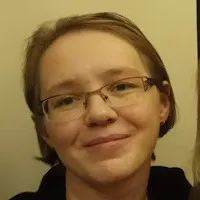
Maria Molina , scientific journalist, teacher, linguist:
My ancestors were not shot and did not get into the Gulag - in any case, as far as we know. Unfortunately, nothing is known about the fate of most of my large family: in the 1930s, they, Siberian peasants, were dispossessed by the whole village. There was a large village of Molino, with strong farms; They were poor, but they were working people, and they lived happily in their village.
My grandfather Grigory Stepanovich Molina, the youngest of a large family (he was then six years old), was sent to the camp with his mother. The rest of the family - father, numerous brothers - were sent to labor camps, and the grandfather could not find almost any of them later. The whole village where the relatives lived in fact disappeared. Дед пытался позже искать братьев, потратил на это годы, нашел двоих или троих — им удалось выжить. Про остальных нам ничего не известно.
Моя бабушка Соня, Софья Иосифовна Поппель, поступила в МГУ на журфак — или должна была поступать, во всяком случае, у нее уже были публикации в газете, она писала стихи. Ее брат, Станислав Иосифович, учился на физфаке МГУ, жил в Москве, и она приехала к нему как раз перед войной. Брат был на четвертом курсе. Их обоих выслали из Москвы в Свердловск, когда началась война, потому что они были поляками. Они оказались перед началом зимы фактически бездомными. Брат поступил в свердловский Политех, занялся металлургией, потом стал доктором технических наук, профессором, получил звание заслуженного деятеля науки и техники. Но всю свою жизнь он провел в Свердловске, а не в Москве и никогда не вернулся в МГУ. А моей бабушке Соне пришлось стать не журналистом, а химиком — потому что это было единственное место, где давали общежитие.
О том, что бабушка полька, мой папа узнал совершенно случайно: пошел получать паспорт, и ему предложили выбрать национальность. Когда бабушка узнала, что такое случилось, она охнула и присела в страхе: «Какую национальность ты выбрал?» — и облегченно вздохнула, узнав, что папа не стал оригинальничать. Я узнала о ее национальности после краха Союза — до этого момента бабушка и папа об этом не говорили. Всю свою жизнь бабушка боялась, что ее национальность принесет семье беду, поэтому скрывала самые естественные факты о своей жизни.
Этот страх, и эти потери, и эта попытка бороться с памятью — психологическая травма нескольких поколений в России. Мы боимся за себя и за близких, мы знаем, что в любой момент на любом непредсказуемом основании с тобой могут сделать что-нибудь, что разрушит твою жизнь. Казалось, что это всё осталось в прошлом, но последние годы, на фоне всей этой истории с иностранными агентами, мы понимаем, что нет, это всё по-прежнему с нами.
Единственный путь лечить эту травму — вспоминать, называть вещи своими именами, осознавать и помнить свое прошлое. «Мемориал»* фактически выполняет работу врача для нас, для нашего больного, покореженного прошлым столетием народа, заставляя нас вспоминать, повторять и помнить. Нам ни в коем случае нельзя его потерять.
Благодарим за участие в марафоне: сотрудника Архива Международного «Мемориала»* историка Алексея Макарова ; социолога, продюсера, музейного консультанта канд. искусствоведения Анатолия Голубовского ; социолога (Свободный университет) Любовь Борусяк ; историка (ЕУСПб) Бориса Колоницкого ; психолога Марию Фаликман ; Prof. факультета химии и химической биологии Гарвардского университета Евгения Шахновича ; философа (Свободный университет) Виктора Горбатова ; писателя и автора документальных фильмов Александра Архангельского ; историка науки Дмитрия Баюка ; историка-античника чл.- кор. РАН Аскольда Иванчика , культурологов Марию Майофис и Илью Кукулина ; научного журналиста Ольгу Орлову ; физика акад. РАН Владимира Захарова ; фармацевтического химика проф. Университета Северной Каролины (США), чл.- кор. РАН Александра Кабанова ; филолога-классика и антиковеда чл.- кор. РАН Николая Гринцера ; Vedas. scientific. sore. Института здравоохранения США акад. Национальной академии наук США, иностранного члена РАН Евгения Кунина ; политолога проф. Шанинки Владимира Малахова ; биолога чл.- кор. РАН Елизавету Бонч-Осмоловскую ; математика акад. РАН Виктора Васильева ; биофизика Андрея Цатуряна ; scientific. sore. ИППИ РАН и LIRMM CNRS (Франция, Монпелье) математика Александра Шеня ; доцента кафедры проблем конвергенции естественных и гуманитарных наук докт. Philos. наук Андрея Родина ; преподавателя высшей математики и программирования Илью Щурова ; филолога-классика и античника докт. Filol. наук Бориса Никольского ; популяризатора науки, публициста Бориса Долгина ; историка, политолога канд. East. наук Дмитрия Дубровского ; учителя географии Леонида Перлова ; ботаника (ЮАР и Санкт-Петербург) Алексея Оскольского ; историка-востоковеда, религиоведа Алексея Муравьёва ; doct. East. наук проф. Адриана Селина ; doct. Biol. наук проф. Алексея Семёнова ; научного журналиста, лингвиста (Институт языкознания РАН) Марию Молину ; историка культуры, антиковеда, переводчика докт. East. наук Нину Брагинскую ; руководителя Научного центра по изучению церковнославянского языка (Институт русского языка РАН) лингвиста Александра Кравецкого ; историка (Институт российской истории РАН) Игоря Курляндского ; лингвиста чл.- кор. РАН Анну Пичхадзе ; этнолингвиста чл.- кор. РАН Елену Березович ; scientific. sore. Института европейских, российских и евразийских исследований (IERES) Университета Джорджа Вашингтона политолога Марию Снеговую ; doct. Biol. наук Александра Апта ; политолога, специалиста по странам Латинской Америки, Татьяну Ворожейкину ; Head. лабораторией Института физики полупроводников СО РАН акад. РАН Александра Чаплика ; муниципального депутата, главу Гагаринского муниципального округа Москвы Елену Русакову ; doct. East. наук профессора зав. отделом новейшей истории и политики Института истории Украины (Киев) Георгия Касьянова ; культуролога, историка (Институт всеобщей истории РАН) Екатерину Гранцеву; астрофизика, главного редактора ТрВ-Наука Бориса Штерна .
Видеозаписи (модератор Наталия Демина, видеомонтаж Алексея Кудря)
Часть 1: youtu.be/watch?v=UBpXDsciyHA ;
Часть 2: youtu.be/watch?v=izwGcXeH83c ;
Часть 3: youtu.be/watch?v=ctu1_tCpdR0 ;
Часть 4: youtu.be/watch?v=FtAnISwg1_Q
Подробнее см. trv-science.ru/chrezvychajnyj-marafon-v-zashhitu-memoriala/
* In the register of "foreign Agents" the Ministry of Justice of the Russian Federation.