
Translated material
Games with death
“Domestic Notes”: Alexander Vladimirovich, why did you become a pathologist?
Alexander Ediger [1] : Patanatomy, or rather, general pathology, is the most interesting area not only in medicine. This is generally the most interesting field of knowledge. I think so. And after thirty years, the result is the result in patho and seven thousand autopsy: if you watched the American film Alien, there is a certain character there ... So, I’m afraid that I am alien from the so -called universal human point of view.
But believe me, if I bring you to the sectional hall, put you nearby and start telling everything that I see - from the first section to the last - you will forget about everything in the world, you will be infinitely interesting, you will immediately get rid of a number of delusions ... However, I have not practiced for the past few years.
Oz: What are you doing now?
A.E.: Research work. Experimental and clinical pharmacology.
OZ: What exactly do you study?
A.E.: Several directions. First of all, tests of antitumor drugs, in the second - games with pain.
OZ: What do you call "games with pain"? Do you mean the psychological aspect of pain?
A.E.: In no case, I mean the fundamental physiological aspects and pharmacology of pain and pain relief. Any pharmacology is a game, samples and errors. The model as a whole resembles (not I invented this) pulse therapy: they gave the medicine-they waited, Dali-waited. Experiments with doses, intervals, routes of introduction are difficult and insanely interesting work.
OZ: Does the fact that you are a master of the Masonic lodge somehow affect your attitude to death?
A.E.: In Masons, it is customary to treat death as an ethical category. The death that should occur is associated with the concept of “high”, it is highly ethical.
About ten years ago in autobiography, I described my own funerals. Ritual, of course. It was in Israel in 1993. I passed the art on the third, workshop, the degree of the Scottish box. The workshop is a tremendous honor, it means your recognition, you are already admitted to almost everything. I learned the lesson and roughly imagined what they would ask me what to do, but something impossible came out. Unexpected. I come to our secluded house - a bed, excuse me, not like a booth from which theaters peek out. The bed is a house. So, I’m entering, and the brothers on the move say: "undress!" "At all?" "At all". OK. They put me on a stretcher, wrapped in a shroud, physiognomy is closed with a flap and say: "Now close your eyes and relax." They carry me, load me into a car and take me somewhere. About an hour passed. They are being taken. I sleep. Think. I sleep again. And now they take me out of there carefully-and immerse me somewhere. They throw me a flap from my face, and I see that I ... in the grave. Summer night. And I see the landscape: olives, huge, almost two -meter girth. And around the grave - brothers - 13 knights with blades. They tell me about death, and everyone applies a slight injection - the tip of the blade - in the forehead, in the bindings, in the heart ... Each of them speaks with me about death - about the Gosten, about the messenger, about the friend. In old English. Then they swaddle me again, raise and take me. I dress, we are all in tuxedos, we have a celebration - the new master is initiated. I can’t convey what is going on, dozens of guests from England, from America, from everywhere, high degrees came - the bed was a high level. White table, everything is wonderful, wine, meat, toasts, and suddenly my cartridge and friend, the venerable master Kate Gardner, says:
-Are you not wondering where the grave was? - I, completely stunned from what is happening, languidly answer: - It is very interesting, - and I get an unthinkable, impossible: - in the Garden of Gethsemane!
Here is such a story. It turns out that the Great Lodge agreed with the Arab part of Jerusalem - and I saw olives, which may have grown back in the time of the Savior.
OZ: Do Masons have special posthumous rituals? Are they equally escorted on the last path of simple Mason and the “most initiated”, the elite?
A.E.: In the fraternity, death equalizes everyone. The brother remains a brother - in life and in death. Prince Vyazemsky, Broke Pushkin, put a white glove in his coffin - he said goodbye to his brother.
OZ: You somehow defined the attitude of the Masons to death as a supervalgive. Is this such a Masonic innovation?
A.E.: I will carefully assume that any innovations in relation to death are hardly possible, over the past two thousand years, a lot has already been invented and made about it - including the creative processing of what has been said earlier. Masons use, as they say, “selected places”, a metatheoretic combination of different views on death. The main idea is that death from an ethical point of view is good, expected. There is no evil in death. Long live death! This means that there is no horror in relation to her, there is no avoidance, which is quite logical, given the direction of Freemasonry to improve oneself.
OZ: Why is it important to somehow relate to death and is it necessary at all? Most people are trying to avoid this attitude in principle. The man says: "I'm still young, why should I think about death?" It is interesting that older people - 50-60 years - say: “No, I don’t think about it, I’m still going to live.” Is this an infantile departure from reflection on the topic of death?
A.E.: No, there is no infantilism. The desire to get away from the thoughts of death is quite physiological and normal. Is death known? No, apparently.
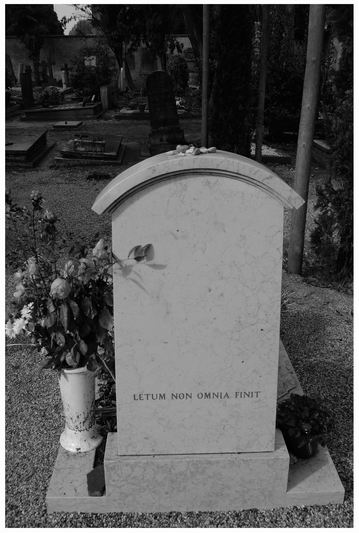
One of my familiar psychologist told me: "You swim in death." “That's why I live,” I answered. It is extremely interesting to live when you are absorbed in the study of death. We live antitheses, and this antithesis is simply amazing. The rose smells, and it is covered with droplets of dew, and it is completely special after you, for example, opened twelve corpses during the day.
You can talk about death endlessly. Death, among other things, is an amazing material for knowing life. Death is the result of a mass of biological processes that cannot be known without knowing the final result. Outstalling the film back in time or by the sequence of events, almost everything can tell a pathologist about a person.
OZ: Is there a certain aesthetics in this? Aesthetics of death for you personally?
A.E.: Aesthetics of death? Difficult. I am deeply convinced that the aesthetization of death or, rather, the search for aesthetics of death is a protective reaction. None of the people of the so -called civilized world with the presence of death, with its neighborhood, with its routine cannot reconcile. Death is a fact, or a concept that no one can be indifferent to. A person will always have some kind of reaction to the idea of his own death. This may be a reaction of crowding out, it can be a Valsingam reaction in the Pushkin’s “Feast during the Plague” ... (“Praise to you, plague!”). The reaction and attitude entail actions that sometimes turn into rituals. Games with death. Aesthetics arises here. Attempts to aesthetize death are inevitable and, apparently, natural. Most of these attempts are based on a misunderstanding mixed with fear. These two things - misunderstanding and fear - feed each other well.
Death is a significant component of culture, and everyday culture, constant and permeating our whole life. First of all, religion is designed to engage in the development of attitude to death. But even when and if religion creates a paradigm of a person’s personality to death as a concept, society is still forced to adapt itself to the idea of ordinary mortality, to the daily, indispensable statistical loss of its members.
What is happening in modern society in relations with death, here and now, in my opinion, is something paradoxical and strange. This ridiculous situation in relations with death, in my opinion, is possible just now, when personal freedom is a dominant, absolute value. This is a value from which no one is risking even a tiny part. Meanwhile, a person with realized personal freedom has much more chances to die than a person squeezed by some framework. Freedom today is based on consumption. The Muscovite walking “in the center”, who can overeat with lobsters or pour several liters of twenty -year -old whiskey, the chances to die exactly from this (that is, as a result of the implementation of consumption capabilities) is much more than in a modestly feeding worker in the Cast a castle. Today we are talking about freedom not as a romantic postulate, but as about the opportunities realized, including the possibilities of self -overlap.
Oz: It turns out curious. In the archaic world, partly in the world of people living in forced, death, according to Galen, is a part of life. There is life, and there is its logical part - death. As we now know, apoptosis begins quite early. And now death is not a part of life, but a part of freedom.
A.E.: Perhaps yes. Such is the evolution of our relations with death: death as part of freedom. In this regard, the attitude to suicide and the attitude to euthanasia are very important. A few years ago, I became one of the co -authors of the bill on euthanasia in Russia.
Oz: And what do you think about euthanasia?
A.E.: I am deeply convinced that this is an absolutely integral right of a person.
Oz: But the law on euthanasia is unlikely to be adopted?
A.E.: This is the political situation. The adoption of such laws in modern Russia is impossible. Today's Russia is a country under powerful clerical influence, and I mean not only Orthodoxy, but also other faiths.
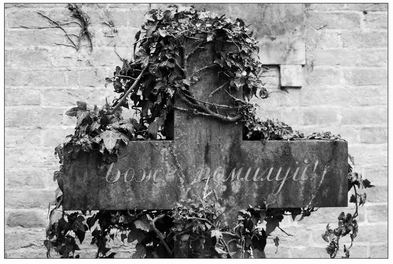
Today we - in view of the great social and religious variegation and, due to the lack of tradition, to negotiate - we simply will not be able to develop a view of death, acceptable for the vast majority of people. Personally, I believe that the right to euthanasia is an integral right of a person, that in a number of medical situations he needs help - precisely in this type of assistance.
Before the face of death, everyone is equal. Alas, in most cases we die in the same way as our ancestors died. In torment, tormenting at the same time relatives, extremely unaesthetic, extremely at the wrong time. What could be better than sudden death?
OZ: The most important problem is this: what is called “termination of the terminal state”, where the boundary of what is called Assisted Death? And who determines this border?
A.E. Regarding the second, I once had a demonstrative dialogue with Deacon Andrei Kuraev on the BBC radio. Mr. Kuraev began to reason in the usual spirit: if you turn off the life support apparatus, then this is called "euthanasia." This is a widespread opinion of many people unfamiliar with the problem. The word "euthanasia" itself means "good death." And if the terminal patient simply disconnect the device, then in many cases he will die for a week, and it will be godparents, possibly in combination with the sensations of Jeanne d'Arc. There is no question of any worthy death, painless, without torment, in this case. In this case, it is about the fact that the patient begins to gradually fall in life indicators, and doctors blessed with priests simply cease to treat him. From an ethical point of view, this is complete nonsense, contemplative Palace. An alternative to this is active euthanasia strictly as the execution of the patient’s personal will with a pre-transgus vehicle. In this context, in my opinion, it is difficult not to admit that euthanasia is the most important possibility of realizing personal freedom.
OZ: This is all good from the point of view of neutral social ethics. But it is clear that for a religious person or person who has at least quasi -religious beliefs, this personal freedom has very serious limiters in the form of religious postulates, norms, etc. As a result, it is approximately clear that Kuraev wants to say. It means the following. If a person said: “I will die, turn off”, he violates God's fishing, commits a sin (in itself) murder. And in cases where he did not say this, it turns out that this sin is committed by a doctor. Here, of course, there is some problem.
A.E.: For the people of the Church, this is quite expected, they are based on dogmas. And at the slightest attempt to discuss this topic, they are forced to adhere to them hard. At the same time, the same type of questions inevitably pop up. Example: in Christianity there is a concept of the Providence of God. Does this mean that purulent peritonitis is the Providence of God? And do I need to fight with peritonitis in this case? Does any suffering mean a disease, a symptom, an injury is God's Providence? That any fragile and godlessness struggling with this fishing? After all, then it turns out that any attempt by medical intervention violates the divine plan. This is complete madness, complete, but no one is trying to understand the problem for real. Imagine that you get into the hospital with abdominal pain. And God (or God's Providence) suddenly focuses on the tips of the fingers of the resident that palpates your stomach. If he does not have something and at the same time does not think, your life is over: missed peritonitis is fatal. Or, on the contrary, it will be frightened and climbed into a neutral stomach with a knife - it will also be very bad. If you seriously talk about the hands of your stomach, a small resident as an instrument of the Providence of God, then for me it is a level of discussion, where it is pointless to climb - I am simply weak.
Oz: Yes, you will not agree here.
A.E.: You will not agree - this is softly said ... However, it is possible that any system of dogma is better than its absence.
OZ: There is a large cultural theme: death is a birth on the contrary.
A.E.: This is an extremely interesting topic. It is known that when you are approaching the time of death, nature helps a little, or something, to man. It becomes easier for him. A treasurer occurs, especially often this happens in cardiac patients or in the same terminal cancer patients. It happens that at some point there is a real relief of suffering. For example, with cancer of the pancreatic head. After all, there is not just pain, but pain in combination with vomiting, jaundice and terrible itching throughout the body. This is a nightmare, you can’t get around with one morphine. Opiates, the same morphine, in this case are of little use - it is difficult to relieve vomiting with a drug, which in itself causes vomiting. It is necessary to turn off consciousness and hold a person on a controlled breathing. This is unrealistic, no hospice can afford it. Usually, when withdrawing from this condition, patients, waking up, live very shortly and in agony. But about six hours before death, itching and pain suddenly pass, this is called self -training to death.
OZ : Is this a mechanism embedded in the body itself for such terminal conditions?
A.E.: The so -called state of health consists of a huge number of so -called dominant. And then these dominants fading and disappear. There is a central car exhaust. Such patients are rarely blessed, because the symptoms never go completely completely. But indifference comes - from monstrous fatigue. You can even say that a good dying cancer patient is very tired. Forgetting in sleep, he is waiting for his last sleep. I endlessly respect the doctors working in the hospice, I had the honor of being familiar with Vera Millionshchikova, the head of the first Moscow hospice, and I will never forget her phrase: "We are obstetricians, only from this light to that." What they do is obstetrics without exemptions, where there are a lot of rituals, a lot of ethics, psychology and much more. Another aspect: there is a dying, and there is death. We are afraid of both.
OZ: We are afraid of pain and suffering.
A.E.: The pain consists of two components: of pain as such and fear of her. This means that the maximum knowledge of pain promises removal, to some extent, fear of it and means partial, and possibly complete anesthesia. An example is your humble servant. I do not accept analgesics. For many years. I have less pain than most people. The pain goes away if you turn to her and say to her: "Pain, you are not evil."
OZ: How and when to educate the attitude to death in children, and is it necessary?
A.E. Therefore, to educate it, creating a system of views on death, is necessary as early as possible. If the child needs to know that life is valuable, beautiful, the real gift of God, then everything that is associated with death should be equally equivalent to him. Is there a danger that a child in this situation from childhood curiosity will try to know death? I think that this should not be afraid - as unlikely. A child, like no one else, replaces death from his consciousness, this is normal. Theoretically, children are really further from death than elderly adults. But, nevertheless, the attitude to death is necessary for the child. Because this is a certain important side of the attitude to life. And not only to human. To kill a bird or crushing a kitten is actions comparable to children's murders, which are now talked about now.
Oz: Yes, but we observe that a person grows and enters into a stage, as a rule, this is a teenage age when he begins to experiment with pain, with death.
A.E.: This is already a matter of relations between adults, parents with children or with adolescents. Если вы отодвинете начало осмысления феномена смерти детьми и подростками на более поздний период, то вас могут ждать чудовищные сюрпризы. Потому что познание смерти, как и секса, как и вообще всего, произошедшее без вашего внимания, участия и помощи, может катастрофически сказаться на будущем ребенка.
ОЗ : С другой стороны, родитель не может во всем участвовать, у ребенка должен быть собственный опыт.
А. Э.: Собственный опыт должен быть, но есть масса вещей, которые вы должны контролировать. Я полагаю, что смерть и жизнь — это два понятия, которые вряд ли можно давать детям в одинаковых объемах, но давать их придется. Не стоит забывать о незрелости нашего общества, да и всего человечества в целом. Нынешняя массовая культура пронизана смертью и насилием. Возьмите хоть образы ужаса в мультиках и массе фильмов. Если всмотреться в видеоряд, мы увидим, что зарисовки 10—30-летней давности — это образы страха, почерпнутые из измененного сознания психотиков или галлюцинирующих людей. Там есть образ смерти без прикрас, в тех видах, в каких ее рисовали психические больные. Баба Яга, кстати, это не злая старуха в лесу, а просто смерть, таково первичное значение образа Бабы Яги в языческой мифологии. Обратите внимание, как она эволюционировала, во что она превратилась. Над ней начали посмеиваться. Хеллоуин и дурацкие маскарадные костюмы — это попытки как-то адаптироваться к наличию смерти, сосуществовать с ее образом. Готы, эмо — то же самое.
ОЗ: Как вы относитесь к идее бессмертия? Сейчас группа так называемых трансгуманистов работает над изобретением лекарства от смерти.
А. Э. : Это или очень испуганные, или очень лицемерные люди. Есть еще явление пострашнее — креоника, замораживание мозгов или трупов в целом — великолепный способ отъема денег у населения. Юридически безупречный вдобавок. По поводу отношения к мертвому телу я исповедую очень простой подход: мертвое тело — это постбиологический материал, от которого надо избавиться. Слово «хоронить» этимологически означает куда-то прятать, с глаз долой. Все связанное с современным производством человеческих мумий, что, в сущности, есть разновидность деятельности, извините за выражение, таксидермистов, то есть чучельников, — непристойно.
[1] Александр Эдигер — врач-патологоанатом, фармацевт, звезда телевизионного шоу «Своя игра».