
Translated material
General Career
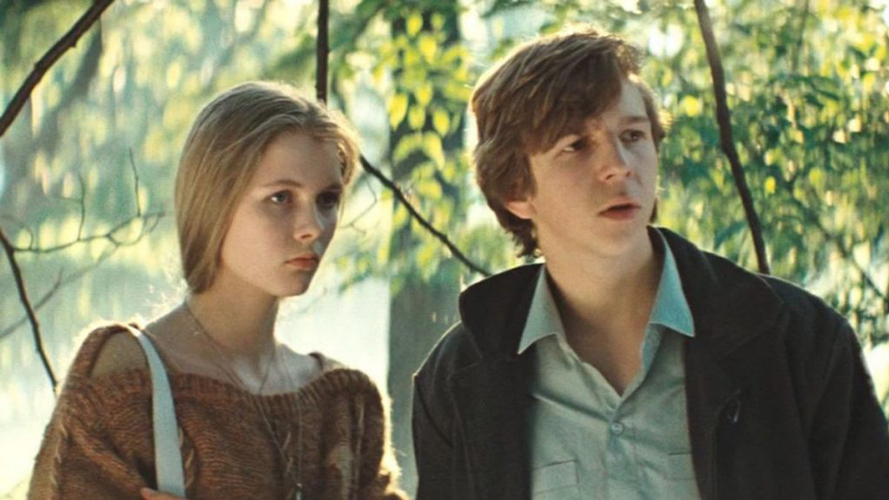
The new film screening and excursion of the program “Cinema through the eyes of an engineer” will be held on September 8 in the famous Bralalist microdistrict of North Chertanovo. Among the last Soviet high -rise buildings will be shown one of the best perestroika films - Courier Karen Shakhnazarov. From the film! The beginning of the tour in the district is at 18:00.
"Courier" (1986)
Director Karen Shakhnazarov
Ivan's parents divorced, the date of the baptism of Rus' does not hold on his head, but in his career somewhere on the outskirts of Moscow (I would like to think that in heavenly Chertanov, but in fact in the Lyubertsy), black warriors with spears, as if brushing sands of Africa (the father-builder, who writes regular reports on the exotic edge). The hero of the “courier” in 1986 is not eager to study, thinks to get a vegetable (because it is close to the house), but, having found out that this is not so simple, he agrees to the post of a messenger to the publishing house “Issues of Cognition”-it seems to be unprecedented, and he will not break either. He is not torn at all. Neither study nor marry. And he comes to life only when, as he himself says, he “carries” him.
In the textbooks, the end of the Brezhnev stagnation falls on the line of 1986 and 1987. “Stagnation” is the best word for describing the state in which the heroes of the “courier” are located. The world around them seemed to stop: there is nothing more to overcome, but what to strive for is not invented. Parents over and over again, caricaturedly ask: by what principles do young people live, “in whose hands the erected building will be transferred,” what does the new generation dream of? To formal, meaningless questions, the answers are either the same formal - “I dream of the victory of communism around the world” (and the awkward pause hangs), or conditionally honest: an apartment in the center, a car, and an unprepared work. But in the case of Ivan, this is not seriously.
His unwillingness (or inability) is emphasized somewhere to move, how movements around the city are set from the outside. Take the manuscript of the Professor living in the center on behalf of the management manuscript. Take a ride on a skate (rather dashingly for the 86th) in the Lenin Mountains, agreeing (without a special, of course, struggle) to a friend’s proposal. To reduce the professor’s daughter Katya in a cafe, where the outskirts with outstanding hairstyles tell jokes. Or go with the same professor’s daughter for her girlfriend’s birthday, where golden youth imitates the karatists (one of the guests lived in Japan with diplomatic parents) and discusses outfits from the fashion magazines (one of the guests was in Belgrade). The only one’s own impulse - to courteously take Katya to that dreaming quarry, where allegedly living from Shapito and killed Jaguar allegedly lives - does not find understanding with a new acquaintance.
And the house between the panels that grew up, as if yesterday, in the middle of the void, is a dusty football box and outlandish break-dance. These panels do not at all look like retro -futuristic exotic with a romantic aura (as it seems to some Columnists now): just ghostly dwellings, a collective storage of people who are on the verge of the end of in vain.
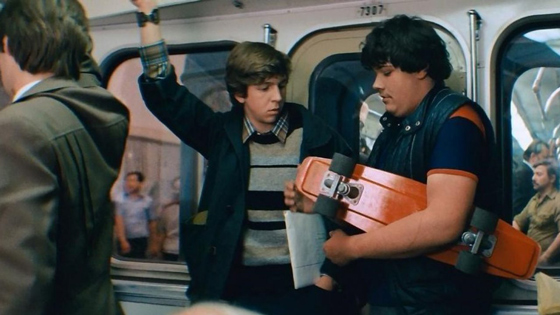 © "Mosfilm"
North Chertanovo
In the 1970s, there was disappointment in Khrushchev. It becomes clear that you are not standardized as reinforced concrete products. People have different requests, tastes, dreams, vision of the future. In the mid-70s, Eldar Ryazanov made about this a wonderful film “The Irony of Fate”, which begins with the animated scene of the victorious march of the panel on planet Earth.
The next era of experimental housing design begins. Projects such as the new Arbat appear (it was planned as a residential and only in the design process changed the function to administrative), the house of the graduate student and the trainee of Moscow State University (by the way, the final scene of the Irony of Fate was removed near it), the Lebed House on the Khimkinsky reservoir.
But the most powerful search project of the era was the experimental and vocational residential area of North Chertanovo. It was designed in the early 1970s. All the current trends of that time were embodied here. The district was divided into functional zones: residential, public, recreational. The services were developed by the developed infrastructure: school, kindergartens, clinic, sports complex with a pool, a department store with a restaurant. The green yards were deprived of cars - under each house there was an underground parking with a race from the back of the house. The road was passed through the complex in the tunnel.
Alas, the construction dragged on. The experimental and vocational district of North Chertanovo was completed only in 1983. And soon it became clear that there would be no prospects. The area remained a grand experiment, which is not launched into serial production.
However, the North Chertanovo was and remains the brightest monument of its era. In architecture, it was called "brutalism." Not only because the buildings were made of rough, textured reinforced concrete. But because this architecture sought to be honest. And the problems of people posed above the problems of beauty.