
Translated material
The drums of our fate
It was a marvelous May evening, in 1995, in Prague. After the sixth, I don’t remember for sure, the mugs of the “holiday” in the famous beer “Golden Tiger”, my interlocutor-Cheh still asked me why most of my compatriots, mainly ordinary people, in August 1968 enthusiastically perceived Soviet intervention in Czechoslovakia. In fact, all of them are millions and millions of people! - Were they so preoccupied with the purity of the socialist dogma?
At first, I answered him in the spirit that not everyone was approved: someone went to the square, someone was exhausted in the kitchen, and someone silently darkened. As for the majority - who today knows what is there, on the mind of the majority? Two more circles passed in heavy silence; The awkwardness arose. My friend-CHe must have decided that I was simply leaving the answer ...
In the sixty -eighth I was twelve years old. Children's memory is tenacious, children's impressions are especially bright. About the Prague Spring I, like most Soviet provincials, knew from newspapers and radio. I remembered. And I answered the Czech:
- What does the socialist dogma have to do with Bes? The newspapers, no day, wrote: "Bundeswehr tanks are heating their engines at the Czechoslovak border."
“But this is absurd!” - Almost choked on my beer Czech. - How could you believe this? Yes, if they warmed up - where would he go, Bundeswehr, on these tanks? What does the Prague Spring have to do with it?
- Absurd. Not to it. But they believed.
... If you imagine the age composition of the population of the Soviet Union in August 1968, or rather, to imagine the psychology of those who made up the backbone of the population, it turns out that the forty -year -old in the forty -fifth year was 25 years old, forty -year -olds each, thirty -year -olds - 20, thirty -year -olds - 15, twenty -year -olds found the end of the war at the age of 10 years: they did not pass the front, they did not pass the front, the front, did not pass the front, But military childhood was sipped, some in the occupation, some in the rear, and some in concentration camps, like my Pskov friend Yuri Strelkov.
In 1968, we represented a deeply injured country with a deeply injured war of consciousness. No logic, no truth, no common sense could defeat the murderous for this - mass! - Consciousness of the phrase about the tanks of the Bundeswehr.
It is generally accepted that among the population living in tyranny, and, moreover, the tyranny of totalitarian, by definition there can be no public convention with the authorities, that the notorious public agreement is impossible, and not needed. This is deeply wrong. Russian autocrats were constantly looking for support in the subject population: they chose the estate to rely on, tried to guess the dominant moods in this estate and correspond to its interests; They tried to identify the dominant popular mood, which could be based on the unspoken convention with subjects. It was not always, however, it succeeded, but there it was not at all ...
... After the forty -fifth year, a public agreement, an unspoken convention between the people and the Communists, was definitely. She was expressed in three words: "If only there was no war."
The country injured by the war was ready to endure any lies, any arbitrariness, any difficulties under one condition: the authorities provide a peaceful life.
It is understandable that the only effective ideology in through the militarized country was the propaganda of the prevention of war and the ideology of guaranteed defense. For example, the struggle of power with dissent was the most effective when the dissenter was declared an accomplice of the arsonists of the war. The largest effect was achieved when the enemy of the authorities was ranked to the allies (direct or indirect) of Nazi aggression. Recall the story with the release of the Gulag Archipelago. Soviet propaganda, being unable to confront the convincing and power of Solzhenitsyn’s book, loudly declared him a “literary Vlasov”. And, in confirmation of the justice of this stigma, the famous chapter of the “Archipelago” was rewinded in his own way, in which Solzhenitsyn tried to find an excuse for those who went to serve in the ROA. National respect came to Solzhenitsyn oh how soon. The hatred that he caused in most citizens of the Soviet Union in the mid -seventies, I remember well.
The Anti -Sakharovsky campaign, on the contrary, failed. Sakharov was always respected and regardless of propaganda. The reason was that Sakharov was perceived as the creator of the defense shield: “And therefore, he knows what he says. He fights for the truth. " All attempts to declare him a conceited, selfish or even prone to the “malicious” influence of his wife, in general, could not lead to anything. There were ill -wishers, there was someone to set - but there was no popular hatred. I myself saw how the hard workers were stuck in the defense of Sakharov on Pushkinskaya Square after the academician was expelled to Gorky. Leaflets were written by hand and with spelling errors.
After the permission of the Caribbean crisis, few believed in the possibility of war with the United States. But the fear of China was. It arose in 1969, after the events in Damansky. Millions and millions of aggressive and hostile Chinese for a long time became the most reliable weapon of Soviet power in the subordination of the people, in any case, the preservation of the Convention with it.
The fear of China disappeared after the failed attack of the hundred thousandth Chinese army on Vietnam in 1978. Suddenly it turned out that these terrible Chinese are completely insignificant warriors. A strange situation arose in the country. The Convention was preserved (despite the fact that new generations, not spared from the injury experienced by parents and older brothers, but still less injured) came to the stage of life. Polytra-workers nervous.
And, trying to change in the mass consciousness the usual image of the army in the name of a new idea of some other tasks than guaranteed defense, they decided on stupidity.
What I mean.
Both the Convention and the propaganda due to it were built (with all the real militarization of life) on the principle: "We are peaceful people, but our armored train is on the spare path." We do not want war, if we have to fight, then the armed people will resist the aggressor. Pakhars, teachers, workers trained in military affairs and who know how to hold weapons are the most modern and crushing weapons in the world. The aggressors have professional mercenaries, we have peaceful citizens who are ready, if necessary, to stand up, etc. I must say that this understanding of defense as a common cause of the peaceful and peaceful people had a support in reality. The outcome of any war in Russia was decided by the militia. By October 1941, the personnel (professional) army, having taken over the severity of the first enemy’s first blows, was, in fact, bloodless. The work of the war was taken by the militia, which, at the cost of incredible sacrifices, the army during the fighting. The enemy defeated the peaceful people who took the weapon.
All films of the first post -war decades about army service are the stories of ordinary guys drafted into the army, with their subsequent triumphal return to peaceful life. Let us recall Maxim Perepelitsa and his characteristic song: "Where the infantry will not pass and the armored train will not rush, Maxim will crawl on the belly, and nothing will happen to him." That is, a simple peaceful guy, give him a weapon, will reliably protect the country, and no modern means of waging war with him will cope and do not go with him in any comparison. But his main thing is to sow bread.
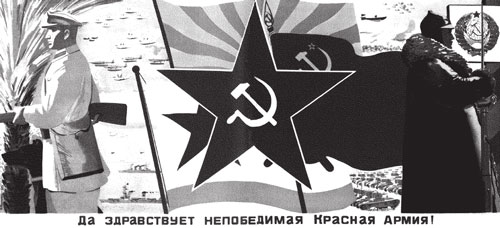
In the seventies, something did not work out in the army. Is it that the city youth no longer wanted to serve, whether the professional American army was more combat -ready, or, most likely, the new one had already dreamed of our generals - not defensive, but frankly offensive - the doctrine, which the image of peaceful people with an armored way on the spare path clearly did not fit, but the word was uttered. In a wonderful, I must say, the film “Officers” by the military unit from the former (brilliant move!) Tsarist officers say: “There is such a profession - to protect their homeland.” For a young working guy who has become a red commander, the word profession becomes a revelation. As a revelation, it was perceived by a mass viewer.
Then a whole clip of films was released - “In the Zone of Special attention”, “Single Swimming”, “Interception”, “The Case in Square 36–80”, “Black Ocean”, “Male Games in the Fresh air” - the plot of which was reduced to professional teachings and purely professional work of the Armed Forces. These films were made for their time quite deftly and amazed many. First of all, with rapture by the profession-and almost no defensive-patriotic rhetoric to you. The meaning of the military profession is in the war as such. It was Vnov. I remember how, after watching one of these films, the writer Leonid Zorin, in amazement, retold me the dialogue of the characters in the exercises, during which it was a question of the behavior of a professional military man, if he was captured and it comes to torture. “We understand, there is a threshold of pain,” one professional says busily. A phrase, hitherto impossible in the lips of the Soviet officer (at least in the cinema). And the whole point is that now it is not a patriot hero, not a romantic in the face of an aggressor, but a professional to a professional about a real war.
The new cinema was also echoed by new publicists. And more than all - Alexander Prokhanov, who received at that time the nickname "Nightingale of the General Staff"; It is enough to recall his rhetorical question, put into the heading of the corresponding essay: "Is it possible to love the continental missile?" (or - a hydrogen bomb, I don’t even remember, but the meaning is that).
So - unilaterally - a rejection of the Convention was declared. It remained to abandon her in practice.
The Convention was buried in Afghanistan. The people did not immediately want to admit this - only when the alleys in the cemeteries of our cities and the villages were filled with portraits of very young people.
The new convention was not proposed. The power of the Communists fell, because she abandoned the main, if not the only obligation to the population, because of which she was endured and ready to endure for a long time.
Of course, the violation of the Convention is not the cause of the collapse of communism. Before violating the Convention, the General Staff also ruined the country. But still, the Convention was perhaps the only one, albeit mainly also unaccountable, restraining the factor ...
That's what I tried-almost as chaotic-to explain “at the Golden Tiger” to my friend-member, although Karel was unlikely to hear me after the tenth mug of beer that drove him into a peaceful dream.