
Translated material
Parallel worlds
It is easier to ask fire than to get it. Tao yes jing
In recent years, researchers of Russian science have come across a number of difficultly explained phenomena.
It would seem that everything was clear and simple-vandals-democrats of liberals in their destructive activity, depriving the science of monetary feeding, led it to death and collapse. It is located on the edge of the abyss and without arching and massive financial injections will die immediately and irrevocably. Only the selfless enthusiasm of the scientific leadership, which has accumulated in its centuries -old wisdom and the tradition of the effectiveness of science management in one already seventh part of the land, allow you to maintain science very shortly in this hopeless position (this position is described in detail in the article by V.Fov). The following is a standard set of unpretentious, endlessly repeating speech: “A country without science is a country without a future. Russia turns into a raw materials appendage ... "
The emotional impact of this convincing picture in its tragic simplicity significantly weakens, however, due to the fact that it is presented with a stunned audience without a single new stroke for 10 years. If you try to switch from emotions, albeit not to analysis, but at least to a simple observation of the situation, serious contradictions are immediately found in its unambiguous description.
Firstly, 10-12 years is too long for the collapsible destruction of any socio-organizational system. We obviously are dealing with some other process.
Secondly, statistics, although it demonstrates a decrease in the level of most potential indicators and the general productivity of science, at the same time shows that after the mid-90s this decrease has slowed down. Moreover, many very significant indicators (the level of extra -budgetary financing of R&D, the share of domestic publications in the global information flow, the number of graduate students, that is, young people who have chosen a scientific profession, etc.) have become noticeable and, most importantly, steadily growing, which did not fit into a model of landfill.
Thirdly, there is a slow, but equally stable development of the innovative process, although the number of innovations that have been carried out by the market test is significantly less than the flow of paper innovations, which was provided by the notorious “implementation mechanisms”.
Finally, fourthly, the fact that neither at the level of general assessments, nor in the discussions of the fate and prospects of Russian science at the meetings of scientific bureaucracy with the leadership of the country, the very existence of new phenomena and processes is not even mentioned, is not even mentioned. You can not notice all these obvious facts only intentionally. They do not fit into the image of science, which those who monopolized the right to speak on their behalf: bureaucratic scientific leadership and their sub -seating from posters and politicians are interested in demonstrating to the people and authorities.
But then, no matter what by modern Russian science, this phenomenon cannot be described by one intelligible picture-it immediately breaks up due to internal contradictions and absurdities.
However, we will try to introduce a contradiction into the description itself, assuming that, speaking of science in Russia, we mean two coexisting in space and time partially intersecting in the composition of the system, different in structure, relations with the socio-economic environment, methods of self-preservation and development. I will call their conditionally “scientific bureaucracy” and “scientific profession”. [1] Such symbiotic schemes are a phenomenon quite common in the description of socio-organizational systems, therefore, without going into theoretical argumentation, I will try to show what is meant on a specific material.
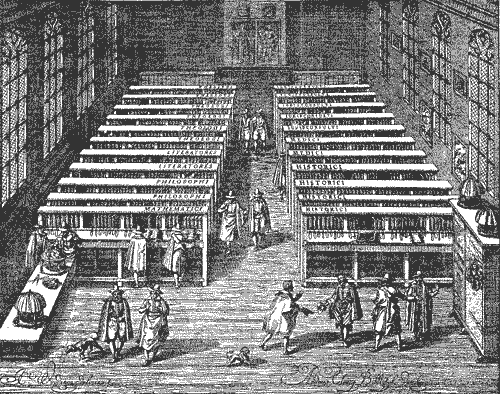
“Scientific bureaucracy” - a giant managerial superstructure of Soviet science (two ministries, four state academies, chapters in ministries, etc.) - not only completely retained formal power, but also successfully metastasizes to regions where local academies appear, scientific and innovative centers deprived of peripherals, etc. It turns out that the meager budgetary resources of science are quite enough to ensure growth Management superstructure. Since the late 70s, the Scientific Bureaucracy has successfully uses the tactics of self-preservation in the context of decreasing resources. This tactic is based on a complete monopoly on the product of science : its examination, evaluation and transfer to the state. So far, Soviet science existed in isolation from the outside world, “local” registers of inventions and even scientific discoveries, categorical opposition to participation in world information systems, etc. were used to strengthen this position. Scientific knowledge is what the “scientific bureaucracy” makes the state. Only their own experts can evaluate this product - all the rest are hostile and intrigues. Thus, the “scientific bureaucracy” has largely ensured its independence from both the country's leadership and the “scientific profession” based on the results of activity.
No less importance for self -preservation of the “scientific bureaucracy” is a guarantee of its resource independence from the “scientific profession”. As already mentioned, this mechanism was formed at the turn of the 80s, when the systemic lag of Soviet science became obvious and the CPSU Central Committee demanded the intensification of research and the transition of the entire scientific complex to program and targeted schemes. The protection against dangerous innovations was a specially designed “request” method.
A huge number of scientific and technical programs were proposed, each in itself is very seductive. It was a pity to abandon them, but there was not enough money. A decision typical of a planned economy was made - a small amount with a promise to compensate for everything in the future was allocated for each program. The allocated amount, as a rule, was enough only for the content of the managerial elite of the program. The requirements of the results were rated by a fair indication of absolutely insufficient funding, to which squeezes from the reports on the planned work of the institutions participating in the program were attached.
The Scientific Bureaucracy was well adapted to new conditions. A powerful parliamentary lobby and under its pressure formed in its absurdity and confusion, the regulatory framework guaranteed it a complete disposal of significant land and real estate in the largest cities and resort zones of the country. At the same time, the structure of the scientific budget, the basis of which is the so -called basic financing of scientific institutions, is recorded, in essence, only the volume of the salary fund for researchers. Everything else is distributed by the “scientific bureaucracy”, almost uncontrollably reporting the results of research, which she herself evaluates. Since the budget amounts are disastrously lacking, the “remnants” and surplus are covered by income from renting land, real estate, etc.
The scandals arising in this regard during the checks of the Accounts Chamber are mixed due to the intervention of supportive officials. This favor is paid for by the “scientific bureaucracy” or directly by state money (elections at the Academy of the most distinguished and promises to other members of the highest echelons of power), or indirect advantages (selective distribution of scientific degrees and scientific titles to officials of different levels [2] ).
With the help of a powerful political lobby, the “scientific bureaucracy” believed in the inviolability of its positions and easily retorts not only attempts to critical analysis of their activities by the “scientific profession” (there are less and less such attempts because of their complete futility), but also the persistent calls of the country's president to modernize the science management system. It seems that the government and the country's leadership also reconciled, at least for a while, with the current situation. This is evidenced, first of all, the rejection of the intelligible wording of the state scientific policy (the notorious “priority directions and breakthrough technologies”, the number and composition of which changes every year, cannot apply for this function in any way). Even more clearly, the position of the government is determined in the prepared Ministry of Economic Development of the long-term forecast "The main directions of socio-economic development of the Russian Federation for the long-term perspective." Desperate in the course of preparing the forecast to receive at least some proposals for science from the “scientific bureaucracy” (traditional speech and the requirements of money-not counting), the authors of the forecast made the reform of science in the section of the mandatory expenses of the social sphere, the creative participation of which is not even supposed to be the development of the country. At the same time, in the forecast of the development of all sectors without exception - from agriculture to geopolitics - the position “Scientific, personnel and expert support for development” is provided. Thus, science is present in the forecast, but the degree and form of its participation, its resource support, etc. - all this is supposed to be solved at the level of individual industries. The system design of the “scientific profession” began in the most acute period of the crisis and continues in the difficult conditions at present, demonstrating the huge self -organizational potential of the scientific community. At the turn of the 90s, our science was left without financial, organizational and information resources, abandoned both by the authorities and the “scientific bureaucracy”. The crisis was aggravated by the fact that the community itself did not have any experience or even psychological readiness for joint behavior in the struggle for its own survival. Traces of professional scientific societies were erased in the memory of generations, defeated in the 1920s and replaced by state-public surrogates such as academies of sciences, creative unions, society of rationalizers and inventors ...
In the new situation, it was necessary to forget about the state patronage and hope only for their own strengths and that part of his team, which was ready to survive in the profession. At the most difficult moment, this active part of the “scientific profession” was supported by the world scientific community. It was, first of all, about the most important form of support at that moment - psychological: “We are the same blood, and you are not orphans in the scientific world!” Problems of assistance to Russian science are discussed at representative scientific forums in developed countries. Absolute disinterest in this process was shown only by our "scientific bureaucracy." In this regard, the form, addresses and channels of assistance (this time not psychological, but information, material and financial) were strictly oriented towards the “scientific profession”, that is, to support projects of individual researchers and groups.
It can be safely argued that it was during this period that the support of foreign funds led to the allocation within Russian science (first of all, the civil, but thanks to the creation of the International Scientific and Technical Center and the Civil Research Fund-and in the military) of its “living” part. [3] In absolute numbers, the size of this assistance was small, but the effectiveness of its “point” addressing made it possible to significantly soften the sharpness of the crisis. The emergence of federal scientific funds (see certificates of RFFI, RGNF, funds supporting applied science) meant the possibility of stabilizing the “scientific profession”, and guarantee working scientists minimal conditions for research in new modern realities. Grant financing played a decisive role in the formation of the professional consciousness of scientists, their conviction that decisive, if not the only criteria for awarding Grant, perhaps for the first time in our recent history, is the prospects of ideas and the quality of the results obtained.
The strategy of "Save yourself, who can!" A characteristic period! " I meant for each researcher, including the need for active behavior outside the profession: the search for sources of financing and the subjects promising from this point of view, tracking the situation at the front line of science, the search for colleagues ready for cooperation around the world, finally, willingness to quickly make decisions. In short, it was about operational processing, along with scientific, also economic, legal and forecast information. It turned out, firstly, that such information is available, you only need to learn how to look for it, and secondly, that this study is quite feasible, although it is difficult and extremely unusual.
Of course, the existence in the regime of constant experiments could not do without serious losses. However, the “scientific profession” survived, although she acquired a strange, mowed configuration. On the one hand, the formation and development of the “scientific profession” in Russia took place according to the rules and schemes common to the entire scientific community. All statements about the unique path of development, the academic tradition of Soviet science (this tradition is perfectly described in the article by G. Khromov) did not withstand the test of reality. On the other hand, the scientific infrastructure remaining inherited from the USSR - discovered a complete incompatibility with the needs of the “scientific profession”. The bulky system of institutions that once open to solve a specific problem, and now existing simply by inertia, has nothing to do with the structure of the World Front of Research, and all the more not able to sleep for its changes.
The situation is no better with such infrastructural relics of Soviet science as an information system (see the article by M. Arapov in this issue “OZ”), a technology transfer (see the article by B. Saltykov in this issue “OZ”), a system of qualification of research staff, finally, communication channels with the government and political leadership of the country. This infrastructure was created for another science in another country.
Therefore, to ensure a “scientific profession” gradually, and to a certain extent spontaneously (each time a response to a specific need), parallel infrastructure is created or formed.
Most studies are carried out in the squares and equipment of old Soviet institutions under the control of the “scientific bureaucracy”. Such a situation arranges both sides to a certain extent. The “scientific profession” does not apply for all the side benefits and income from land and real estate, its meager salary is guaranteed and paid by the government, research is supported by contracts and grants, and their subjects, respectively, are determined by the needs of partners and experts of funds.
Moreover, in the institutions that have established constant ties with corporations, parallel structures for managing applied research (business centers) are organized, ensuring planning, patent protection, preservation of commercial secrets, in a word, everything that, in principle, cannot guarantee “scientific bureaucracy”.
The nominal composition of the institutions is limited by the minimum of employees necessary to preserve the management superstructure of the “Scientific Bureaucracy”. The subjects of contractual work and initiative projects, on the maintenance of which the “scientific bureaucracy” does not, and cannot influence the plans of research work with some delay. In the same way, reports are formed on the results of the research of institutions.
The general configuration of the interaction of bureaucracy and professionals takes on the type of “eight”: inside each loop there is its own life, and they are connected only by a narrow jumper. This jumper is the “roof” in the direct (working area) and portable (official status in the system of state bureaucracy) sense.

It was more complicated with the key information infrastructure for science. The “scientific profession” was forced to focus entirely on foreign information resources, including information about the state of affairs in Russian science.
The situation was facilitated, first of all, two factors: the development of the Russian Internet network and the accumulation of the information resource by Russian scientific funds. Already in the mid-90s, dozens of universities and almost all major scientific centers were connected to the World Wide Web, I note that they were connected even earlier than a sufficient amount of information appeared in it. This information segment is rapidly developing by creating electronic libraries, distributed databases, and recently, computing resources distribution systems (Gried).
The development of the information resource, constantly accumulated by Russian scientific funds, is consistently and quite successfully (see the article by M. Arapov). This information received from applicants almost free gives scientists actively acting in science, the opportunity to find out (at least relatively fundamental science), one of the colleagues, where, at what level and what he does and will do in the next two to three years. Getting this information and checking their reliability is quite simple. There are no problems in how to group this data in order to get an operational idea of the state of the Russian Scientific Front.
В последнее время информационные усилия посреднических и консалтинговых фирм, работающих в сфере инновационного бизнеса, существенно дополнены созданием по инициативе Международного научно-технического центра общероссийской системы информационной поддержки инноваций — «Суперресурса».
Самой тяжелой не только для развития, но и для самого существования «научной профессии» остается проблема поддержания и повышения квалификации исследователей. Полный контроль системы подготовки кадров «научной бюрократией», уникальный в своей архаичности реестр ученых степеней и научных званий, замкнутость исследовательских учреждений и отсутствие института научной стажировки (постдока) — все это приводит к постоянному старению кадрового потенциала. Выпускники аспирантуры не видят перспективы в этой науке, а о существовании другой («научной профессии») многие из них еще просто не знают.
В стратегии решения этой проблемы «научная профессия» может рассчитывать на доступные только ей ресурсы. Это, во-первых, информация о том, кто есть кто в российской науке, если судить по гамбургскому счету. Группа физиков из Троицка, в рамках проекта «Scientific.ru» создает российскую версию «Указателя научных ссылок» (Science Citation Index). Речь идет, разумеется, не о местной самоделке, а о методе работы с SCI, наиболее полно представляющего ситуацию в отечественной физике.
Другой ресурс, к которому обратилась «научная профессия», также связан с мировым сообществом. Этот ресурс — российская научная диаспора, о которой дружно «забыла» (это очередная уникальная особенность нашей академической традиции) «научная бюрократия». Некоторые возможности и даже успехи на этом пути описываются в статьях В. Егерева и В. Борисова. Главное — не проиграть гонку со временем.
Несколько слов в заключение. Меньше всего хотелось бы, чтобы у читателя сложилось впечатление, что, говоря о судьбах нашей науки, я преисполнен оптимизма по поводу ее непременно светлого будущего. К сожалению, перспективы выглядят отнюдь не празднично, в медицинских терминах состояние определяется как «стабильное тяжелое» или «больной скорее жив, чем мертв».
Цель статьи, да и всего выпуска журнала, насколько я понимаю, вовсе не в том, чтобы обосновать ту или иную глобальную оценку ситуации. Прошедшее десятилетие показало, что судьба российской науки зависит исключительно от научного сообщества, того, которое есть сегодня. Ожидать, что научная или правительственная бюрократия по собственной инициативе проведет какие-либо разумные реформы — непростительная маниловщина. Чудо уже произошло, когда на пике демократических преобразований удалось ввести систему фондового финансирования. Ждать следующего чуда просто некогда. К счастью, многие мои коллеги это уже поняли.
Мне хотелось показать, что в России медленно и трудно впервые после 20-х годов развивается современная наука. Она развивается по общим для всего мира правилам и схемам, в тесном сотрудничестве с мировым сообществом. Потенциал нашей научной профессии дал ей шанс выжить, несмотря на все неизбежные ошибки и потери.
Она, как и всякая нормальная наука, оказалась вполне адаптивной к нормальному социальному и экономическому окружению и либеральной экономике ровно настолько, насколько то и другое присутствует в нашей сегодняшней действительности. Можно утверждать — без науки у той части экономики, которая сегодня развивается, нет настоящего. Это прекрасно понимают ориентированные на развитие бизнесмены (они вообще народ понятливый) и к этому вполне готовы профессионалы-исследователи.
И напоследок, о востребованности науки. В целом, в поднадоевшей речевке «Страна без науки — страна без будущего!» — гораздо больше смысла, чем считают ее авторы. Пока страна, ее экономика и социальные институты измеряли свое будущее месяцами, никакая наука им была не по карману. Там, где появляется перспектива на несколько лет, возникает необходимость в прикладных исследованиях и разработках. Если же будущее описывается в долгосрочных прогнозах, то в них, как уже говорилось, мы читаем о кадровом, научном и экспертном обеспечении целых отраслей, для которого нужны десятки тысяч высококлассных ученых, внятная научная политика и эффективная научная бюрократия.
Впрочем, это уже другое будущее.
[1] Оба названия в значительной степени условны, их цель — развести две организационные формы , в которых существует российская наука. В этом смысле можно было бы говорить о «бывшей» и «новой», или живой, науке и т. п. «Профессия» и «бюрократия» как типы организации характерны для любой формы деятельности. Проблемы и угрозы появляются только тогда, когда каждый из этих симбионтов формирует самодостаточную систему.
[2] Эта практика, существующая только в России (во всем остальном мире речь может идти исключительно о почетных степенях ), делает нашу страну посмешищем в глазах мирового научного сообщества.
[3] С причинами и мотивами иностранной помощи нашей науке до сих пор связывается масса небылиц о коварном Западе, о происках ЦРУ и т. п. Последнее особенно интересно, если сравнить число доказанных случаев вербовки наших ученых с числом предательств только высших офицеров, элиты наших спецслужб в те же самые годы.Наиболее очевидное и потому неинтересное объяснение почему-то никем не обсуждается. Дело в том, что представление о едином Западе, в какой-то мере отражавшее реалии «холодной войны», сейчас просто не работает. Мировой научно-технический комплекс представляет собой тысячи исследовательских лабораторий и сотни крупных корпораций, находящихся между собой в состоянии острейшей конкуренции — главном двигателе научно-технического прогресса. В этих условиях отказаться от возможности (в данный момент и на перспективу) подключать к исследованиям значительное число опытных ученых и исследовательских коллективов — просто безумие. Тем более, что волею судеб большинство этих коллективов содействовать прогрессу в исследованиях может уже сейчас, а реальными конкурентами станет еще не скоро. Такого рода сотрудничество выгодно обеим сторонам. С другой стороны, даже чисто экономически нет никакого смысла включать в подобное сотрудничество «научную бюрократию».