
Translated material
We arrived here! How in Russia over time the attitude towards emigrants changed

We arrived here! How in Russia over time the attitude towards emigrants changed
Ilya Klishin
June 19, 2023Russians who have left the country often cannot find a common language with those who remained, and mutual reproaches and accusations sound louder. A one and a half century history of Russian emigration shows that the Russians perceiving those who left compatriots changed dramatically from acute rejection to sentimental romanticization and largely depended on the political and social situation in the country.
Content
XIX century: From sympathy to misunderstanding
XX century: from rejection to romanticization
Our days: political emigrants 2.0
In 2022, about 800 thousand people left Russia. Someone made a decision after careful preparation, others had to do this in a matter of days and hours, in a hurry, with a suitcase and a cat, throwing a car right in the Caucasian mountains or Kazakh steppes.
Many have the feeling that the attitude to the opponents of the war that left among the opponents of the war in Russia is worsened day a day (about those who “za”, everything is clear - for them the “traitors” who left for them unequivocally). Often you can hear remarks in the spirit of "what are you there in your (Tbilisi, Riga, Berlin, to insert the right one)." But if you turn to the history of Russian emigration over the past one and a half centuries, it turns out that these friction between those who have left and remain is a well -known phenomenon, along with the entire spectrum of emotions addressed to each other.
XIX century: From sympathy to misunderstanding
In the middle of the XIX century, when emigrants from Russia generally appeared as a phenomenon - and the score went even to dozens - the attitude in their homeland was sympathetic to them. After all, they fled from the “stuffy” Nikolaev Russia, so as not to arrest, like Turgenev for the obituary of Gogol, or to hard labor, like Dostoevsky - for a copy of Belinsky’s letter.
Alexander Herzen, the most important figure for the Russian socialists of that time, fleeing the royal repression, in the 1850s settled in London and began to publish a radical magazine "Bell", on the pages of which he told directly and without censorship about the plight of Russian serfs and openly criticized the government. The “bell” was immediately prohibited in Russia, however, underground spread very successfully, and Herzen himself was respected, both among revolutionary layers, and among elites.

There was no paradox here yet. Most of the emigrants were also part of the elite (the same Prince Kropotkin, for example). Therefore, there was no total gap between those who left and remained, as it would be later in Soviet times. Moreover, many representatives of the Russian nobility had strong European ties - they often traveled or lived in the West and maintained contact with emigrants in the largest European capitals: London, Paris and Geneva. Well, on the "waters" they sometimes intersected with those whom the police in Russia was looking for, and often quite kindly exchanged greetings.
In the middle of the 19th century, most of the emigrants were also part of the elite
But already in the 1860s the situation changed. The attitude to radical emigrants worsened sharply. Moreover, which is especially important, among a moderate opposition. Liberal intellectuals in Moscow and St. Petersburg turned away from Herzen and his “party”, when the “bell” supported the Polish-Lithuanian uprising in January 1863. Many Russian liberals at this time discovered imperial sentiments - and regarded this position of Herzen as an act of betrayal.
Another interesting example from this era is Ivan Turgenev. The liberal thinker and famous writer, Turgenev was, so to speak, an emigrant by 90 percent. After he spent a month under arrest in 1952, the writer preferred to live in Paris. He came to his homeland only by raids, moving more and more from his readers after a series of successes of novels in the 1850s (the last in this row was the textbook “fathers and children.” This detachment from Russian realities increasingly caused cross-criticism both from the side of the radicals, who considered Turgenev too pro-Western and from the conservatives, who considered him too much liberal. Life, in the late 1870s, the writer began to be considered a lifetime classic.
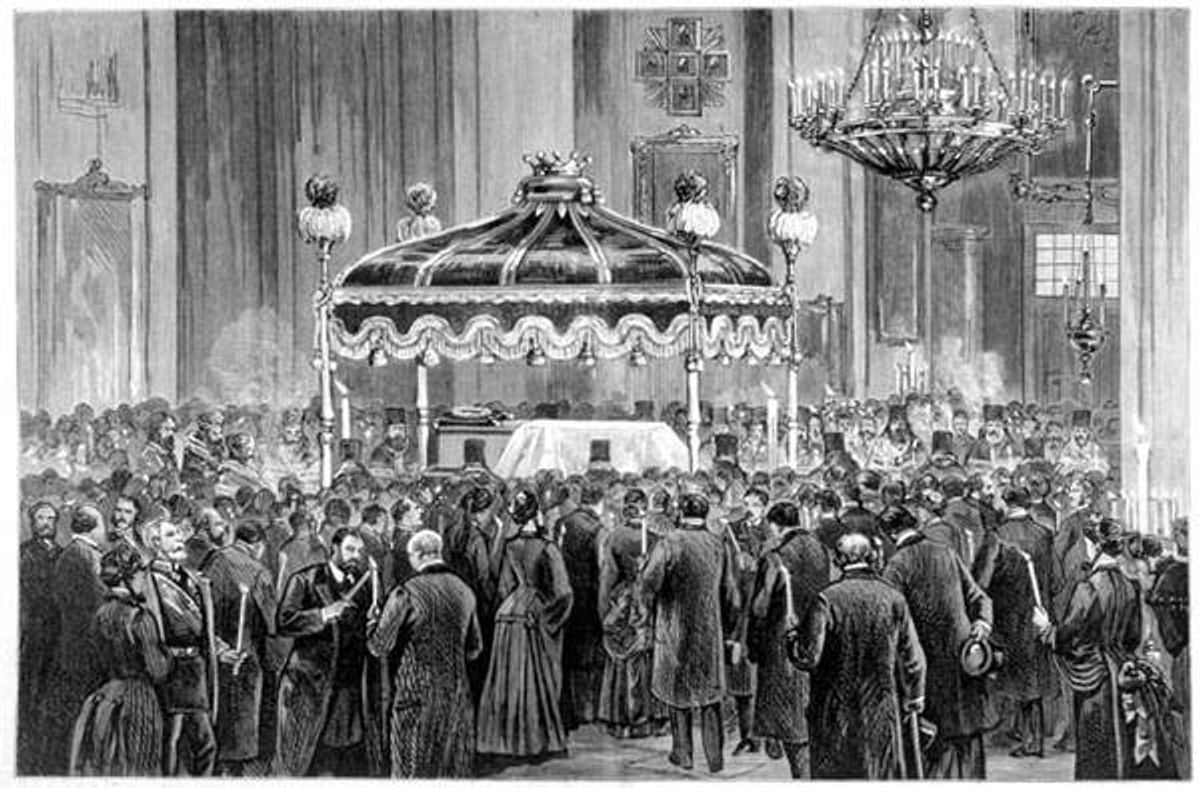
The funeral service of Ivan Turgenev in the Orthodox Church of Alexander Nevsky on Ryu Daria in Paris
By the time of Turgenev’s death in 1883, the landscape of emigration changed dramatically - first of all, the number of political refugees - socialists, revolutionaries and anarchists who are saving from persecution or Siberian exile increased. Representatives of the upper strata of society were replaced by rangers and students. Yes, they aroused for the most part sympathy among compatriots, but the attitude was no longer so unambiguous.
XX century: from rejection to romanticization
The Russian Revolution of 1905 caused a new wave of emigration and rather increased sympathy for those who left. The attitude of the public as a whole was sensitive; People saw in them obvious victims of political repression. Among the famous emigrants were outstanding intellectuals, for example, the best -selling writer of that period Maxim Gorky and fashionable poet Konstantin Balmont. But the boundaries at that time remained transparent; People moved back and forth, driven by political events, amnesties (for example, during the 300th anniversary of the Romanov dynasty in 1913) and personal reasons. Hardly anyone thought in those years that he was leaving forever.

D. Pantyukhin. "Philosophical ship"
All these tides and tides covered with real tsunami - after the First World War, the revolutions of 1917 and the followed by the Civil War, which gave rise to the large -scale outcome of the "white emigration". This time, the country was hastily left by people who had connections with the overthrown of the royal regime or fought against the Bolsheviks in the Civil War. From the scale of the scale of Anton Denikin and Peter Wrangel to politicians like Pavel Milyukov and writers, such as Ivan Bunin, this group was initially branded in young Soviet Russia as unambiguous enemies. This was not just reported by state propaganda; Awareness of this permeated all aspects of society. The presence of relatives abroad in the questionnaire could put a cross on a person’s career, and in the 1930s and cause the camps to be sent to the camp.
Relatives abroad could cause the camps to be sent
In parallel, emigrants have become the subject for jokes. Most often evil, but there were exceptions. The most famous is “Twelve Chairs” (1928) Ilf and Petrov, whose main characters Ostap Bender, dreaming of Rio de Janeiro and “Father of Russian Democracy” Kisa Vorobyaninov).
After the Second World War, the attitude towards those who left changed. Emigrants gradually began to relate to the older generation of emigrants almost sentimentally. In the 1960s and 1970s, an amazing cultural shift began in general: white emigrants in Soviet cinema began to romanticize. In films such as “Run” and “two comrades served”, former white officers are depicted in a sympathetic light, which seemed impossible ten years before. But half a century has passed since the Civil War - and now it has become "possible."

Demonstration of refuseniks in 1973 near the Ministry of Foreign Affairs
And almost immediately after, in the 1970s a new wave of emigration began-Jewish. They left in search of a better life and freedom, not wanting to put up with almost formal anti -Semitism, which, alas, was preserved in the Soviet Union. A characteristic joke of that time was: "The Jewish wife is not a luxury, but a means of transportation." The emigration was often looked at with envy of those who stayed, and dreamed of a more secure life and access to Western goods (from jeans and “cola” to household appliances and cars) - goods that were impossible to get in the Soviet Union.
This mood was rather preserved throughout the 90s, when the borders finally opened, and many Russians took the opportunity to leave. “Success Stories” like the daughter of a neighbor who married a German, or a friend who received a job in America, caused a mixture of envy and admiration. Since the country struggled with the economic difficulties of the Yeltsin era, emigration often seemed to be salvation from poverty and unemployment, but in reality most people did nothing to leave somewhere, reconciling with their more modest reality.
Our days: political emigrants 2.0
In zero and tenths, the attitude towards emigrants changed again and in many ways it laid the foundation for the day of today. If you look back at one and a half -century history of emigration, this decade resembles the "Turgenev period." The very concept of emigration seemed to be a thing of the past. There are more workers in work or study. Someone went to IT startups in California, someone just preferred to work from Thailand for six months.
But the war in Ukraine, which began in 2014, grew into a full -scale in 2022, also turned this page. If before that, only a few were literally political emigrants who really could not (and did not want to ") return to Russia, now there are many times more, and the number is growing every day. And the attitude to those who left is changing before our eyes - it goes up and down. So far more down.
However, it is too early to experience newly -made emigrants. On the above smells of the vast historical panorama, the perception of emigration and emigrants has always been nuanced and mobile. It depended not only and not so much on the emigrants themselves as on internal conditions and narratives that prevailed in Russia at every historical stage. From admiration for betrayal, from sympathy for indignation, from nostalgia to envy-the views of Russians on emigrant-state-owned ones changed over the years, reflecting the political, economic and socio-cultural transformation of the country.