
Translated material
County City N. 2002
We will not say banality, like two hundred years ago, cities, today called small ones, were very large. It is enough that today it is clear what we are talking about: settlements, at least fifty thousand inhabitants who have the status of the city.
We will leave aside a lot of curious details associated with a special, non-non-nycycal form of urban existence in Rus'-Russia, where the Previgorod pre-Petrine, a military settlement of the frontier, was replaced by a sedelic of officials-winners, etc. All this is quite entertaining, but has a very weak connection with modern reality.
This reality is accepted to call, and more often directly vilify the last words, which is inexpensive and completely blocks the ability to distinguish. And there is something to distinguish. It never occurred to me to calculate the number of options for the existence of a small city in Russian expanses, since all typologization of the living is similar to nicknames. It is also enough that there are many more these options than clumsy state wisdom can recognize suitable for distinction.
In fact, there are small cities - factory settlements, formed on the occasion of the construction of the next level of the production chain, which handed over the country under the country in the logic of self -pound, but still completely conceptual art. This is time. There are the remains of the front -line towns of the pre -Petrine era, like Vesogonsk or Kozmodemyansk, who in our time celebrates the annual Benderiad in honor of Ilf and Petrov, who designated this place under the sun, half -flooded with a construction of communism named Cheboksary reservoir. These are two. There are fragments of the noble-official arrangement of the land that the landowners who finally laid their estates after the Great Reform gathered, and at once began to arrange theaters and all that (in one old man, in the Tver province, where, as before the October Revolution, less than nine thousand inhabitants, there were four pieces of theaters before the First World War). These are three. There are fragments of the merchant system of resettlement, which applied to the noble, like Elabuga, near which you can observe the largest ruin of industrial construction of the era of developed socialism. This is four. Even cities that arose as private industrial possessions of the Demidov era, partly surviving the pre -war Soviet stage of growth with huts, partly not overthrown during the Brezhnev reconstruction of cities. This is five. Cities as cities, but enthusiastically deprived of the remnants of municipal independence by the decision of the deeply wise legislative assemblies of the Russian regions, while the heads of city administrations are now just deputies of the district administrations, such as Kuvandyka. These are six. Cities as cities, but they were joyfully connected with depopulated administrative areas, thereby stretching the border of jurisdiction to the border with neighboring areas, so that the functional mayor became a functional prefect. This is seven. And so on.
“And so on” is not at all a figure of speech at all, since you must be an official of the Grefovsk superinship, so as not to see the difference between the chemicals, rather conditionally separated from Moscow, royal villages, without St. Petersburg tourists, Dmitrov, located on a well -known stock meter, and, say, a tikhvin, is an isno existing among the swamps in the corner of the Leningrad region. And not the sound about the main differences between the remains of the Gulag, the medieval villages of Dagestan, some kind of ageli, so far exclusively inhabited by women with children, since men fled when they suspended the construction of the nuclear power plant, some kind of Volsky, whose existence was entirely centered on the indestructible stability of the military school of the rear. And also the half -closed cities, between which fantastic differences in the quality of life came to the place of previous equality in the relative prosperity of Soviet times ...
After spending dozens of expeditions in two hundreds of small cities, I have reason to affirm a simple thing: the typology is not worth a broken penny and not a single city repeats the other, although, of course, the standard signs of the Soviet past and the semi -surveying present are present everywhere.
In our literary tradition, it is customary to be amazed at the world with full neglect of the improvised-good world. At the very beginning of the perestroika, the magazine, in the expanse called "Litobosis", ordered me something urban. I went through the New World in twenty years, having discovered the only “urban” thing - Mikhail Roshchin’s lovely story “Shura and Prosvirnyak”. Everything else took place either in a tightly composed village, or nowhere, that is, it is not clear where. I am not so interested in modern prose as to risk a generalization, but there is a feeling of fidelity of tradition - not without reason the competition organized by Tatyana Tolstoy through Gazeta.ru (the best essay about a successful business) gave such meager results. Directly a mage.
If you still look into the insides of Malgorod , then the richest social architecture will be found, and there is almost no such trend of economic, whether the cultural life, no matter how it appeared here.
Somewhere in Tatarstan [1] it is not difficult to discover the county city of N , controlled with the innocence of the time of the Ottoman Empire: the appointment is led by the appointment of the president himself, according to rumors, a personal friend, as a result of which the airport is working and there are regular flights to Kazan, [2] above the huge building of the gymnasium (Tatar), a three-meter plate of satellite communications is stood up, while the Russian school was visible and the Russian school was visible and the Russian school was visible and the Russian school Best times. At the same time, the prose of life, any asphalt there on the side streets or the lack of sewage, is not included in the localized system of values. On the contrary, when you find yourself in the district city of P in the Samara province, you might think that you are in Holland or like that: in a kiosk is sold for a mere penny of a brochure with a detailed recist of the municipal budget for the current year and a budget report for the past, a special joint -stock fund for the development of alternative to the “oil industry” of income sources, so for thirty thousand inhabitants, so that for thirty thousand inhabitants. There are already more than 700 private enterprises. Incredible, but the fact: that, according to the Moscow authorities, is generally unthinkable, namely the formation of a real competitive environment in the housing and communal services with a clear, public monitoring of it, has been operating in the city of P for the third year, and has been working well.
Since it came to the famous housing office, then another entertaining particular: in the district city of G , that in the Orenburg region, a new team that came to power two years ago got down to business that for the same budget money, without growth, they repaired two and a half times more than it has been done so far. What is curious, they do not kill for it. And then reform, reform! One trifle shocked my imagination more than a three -hundred -meter flower garden along the axis of the street. This is a city cafe, contrary to the ancient Russian tradition, brought into a very cute state inside before they found money for the repair of the facade (checked - the facade was made next year).
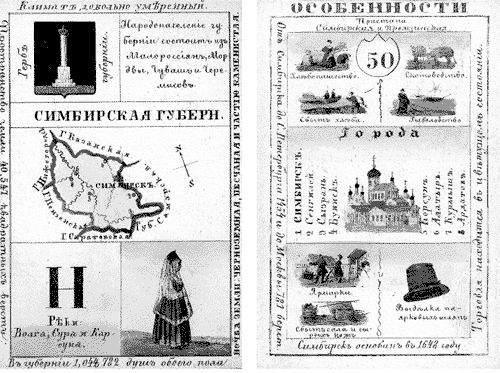
Of course, there are enough other Malgorods, where pigs are striking in the eyes, and when diving, the dull bitterness of the majority, not loving himself or strangers, appears first of all - “came to rob our oil!” , not even more than the authorities. But one thing is interesting. In the open spaces of the district, it was possible to identify no more than 20 “black holes”, which is impossible or almost impossible to help, since not only and not so much money is required as special anti -crisis brigades, for the creation of which there is nothing yet, starting with the legislative approximation and basics of professionalism.
However, even in “black holes” there are some thickening of matter, since Komsomolsky, which is officially not the city, but the mysterious body, according to the city -type village, where 280 routes of budget money last year, 27 of the Internet users were noticed.
They say that the small cities are poor, and it seems that it is, however, this judgment is nothing more than relatively. On the edge of the city of P , in Mordovia, where the hefty domina looks at each other, in the expansion of the Chinese wall, and a dozen cottages, is made by cycling. And not just a bald clearing with the same name, but a real bicycle -drum: on four paths, with all the loops laid by it, the “washing board” and the slides, with the right coating, which is by no means dispersing after the rain. Children from the section frolic there (two dozen of the right bicycles are stored in a capital extension to the house), the children are not from the section, adolescents and adults, and there is a coach that does not make each other out there. And there are benches for fans, and everything is intact, and they do not break anything. The bicycle driving "whole" from the Austrian model, but in Austria there are few such sports facilities in small cities.
But in the Saratov province, he was almost famous for the fact that by the next holiday not only brass letters from monuments to the cemetery were stolen, but even pens from the doors of the city administration. And poverty as such decisively has nothing to do with it, since in the poor-sheet of the table town of Komi-Permyaks no one dares to encroach on a hefty bronze head of a bear, which is customary to poke hands along the sample of the famous scene from the Roman Holidays.
In the city, the total scholarship of cadets of a military school only launches a monthly million rubles in motion for the purchase of drugs. By the way, it seems that after Moscow in the cities closer to her, it is already starting to go out of fashion, while, by virtue of the vastness of the Fatherland, in remote hails and villages of fashion for heroin (“ rubbish, do not stick” - young natives report) only in the first year of the millennium, and there are places where they are still around the traditional dumb drunkenness, but almost highly man.
Economy? Oh, this economy is partly defeated socialism! It cannot be understood, not climbing under the skin of all sorts of salt-ileks and cats, the name of which is legion.
The question of one of my expeditionary youths (it would never have occurred to me to ask such a question): “What would you have done, have come for you ten thousand green?” To this question, the young owner of the “conglomerate”, consisting of a gas station, a trading kiosk and a bar, thinking, dreamily said: “I would have started a tank for the production of mayonnaise.” Listen! Listen! It happened, gentlemen! Alas, those who did not read the capitalist trilogy of Theodore Dreiser at one time.
The trio, consisting of a father -in -law, protrusion and daughter in the role of a manager, possess a bakery and a system of trading kiosks. At the very least, 122 jobs-three more than remained at a hefty factory, once brought in a disassembled form from Finland. With what visible pleasure this Tatar trio in the Russian-Mordovian town shows its kingdom. People’s craftsmen, the number of which remains, according to my observations, stable since Brezhnev times (which means: grew in an absolute dimension), grazes from the boron on the pine -assembled equipment - Russian, German, Austrian, Italian. They graze well-everything is on the go, and pastes are about to add to a dozen bread assortment. Nearby, on the site of a scattered state farm, the contours of tomorrow's production of jams (in small banks), pickles and other things - unlike the captains of social production, are already visible, these people are not too lazy to go around city gardens and buy everything that grows in them. They already comprehended that it is more profitable to pay money than with free loaf of bread, which in no case should be hired by Soviet baking specialists, but we must take school graduates ...
The stubborn-spring engineer of a bankrupt factory on the fact of the factory. He has a car service on the edge of the city (computer gathering, computer diagnostics and all that) that, among other things, there is a wonderful means to maintain good relations with all the powers of this world. On the site in front of the car service, excellent welders who fled all from the same plant make a larger truck with clearly factory quality than proud. They pay them $ 2550 according to the statement and the same amount of the statement that for the county city R is not bad, but maybe it is even more important that they do a job that they are not ashamed. Under this outer layer there is a second - a sawmill, there is a third - a fleet of trucks of different tonnelisms that are willing to rent, there are a fourth - brigades of builders that are occupied in different places, including outside the republic. The owner is indestructibly stubborn and only for a species is angry with the stunted competitors who page old Togliatti artifacts in their garages, almost openly stealing electricity from city networks, and of course, they do not pay.
Next to the bakery, the former trading base, naturally renamed the JSC, the former chief of the bargain and now leads the chain of stores and supplies, indignant on vile competitors, who strive to substitute their kiosks to her very stores and naturally beat her. The boss, of course, worries the city administration, which, in my presence, timidly asks the bakery not to press against the fragments of socialism, [3] for which they reasonably represent correctly formalized permits, in the same administration and issued ... Life is seething.
Creative life in the city s in the Udmurtia is seething. By the level of tolerance, this is a kind of local Amsterdam. Let the merchants of the house break up, [4] But here is the driver of the trolleybus-the vice-chairman of the noble assembly, there are a bunch of newspapers, five cable television programs, avant-garde exhibitions in galleries, poetic evenings in a private garden over the river. There is and, it seems, the only town in Russia for the blind, working at the electrical apparatus factory: the handrails are stretched along all walls and paths of the microdistrict, and traffic lights are equipped with a sound signal.
There are closed cinemas. There were no disappeared ensembles of any kind, there are new people. There are no closed houses of culture. There are no closed libraries either. Speaking of forecasting: in the mid-80s, the fate of libraries in small cities was just a violently debate, and those who quite reasonably proved that as the home libraries developed [5] the inevitable Kirdyk came to boring state libraries. And where are these forecasters now? On Sundays, in some places are forced to limit access, since there are no places in the reading room.
Really, in my basket, a lot of things are packed in my basket: as it were, the mayor (status, he is only the deputy head of the district administration) of the city, located where the land is already being rounded, where the world of forests and colonies begins, who knows by heart the European Charter of local self -government. The mayor of the town lost in the half -wrap, which brought here the idea of the correct urban environment, gleaned during the naval service in the Baltic states, and strictly these rules “introducing” - bushes along the streets, by the way, are evenly trimmed. The twin (the head of the district and the head of the city is already secondly), on the contrary, calmly perceived the eternal puddle in front of the very doors of the administration, but indeed (albeit mediocre) preoccupied with the fact that fifty apartment buildings that had previously been in the Soviet railway department are now nobody. Dear, because the punchouses of Kazakhstan’s sovereign subjects do not engage in houses, they did not transmit the documentation for them, and in the houses of these half a city there is ...
There are more and more churches that does not mean the multiplication of parishioners, if we talk about the Russian Orthodox Church. There are more and more mosque, which means a lot, since Islam is a social design. Around the mosques in cities, passions boil, since more and more often educated, prepared in Cairo and in Sauds, youth does not ripe with the soles of a socialist outliness from the places of mullah. Mostly passions on ethnic grounds are not noticeable, although the followers of the Krasnodar eagles among the heads of administrations come across. Bandits are increasingly growing in a solid business status and often play the role of the only power of counteracting drug dealers ...
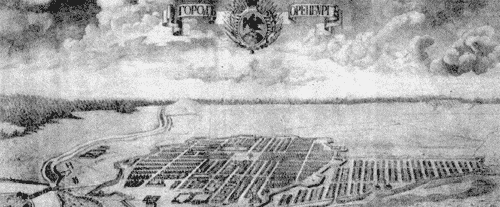
Of the two hundred examined cities, only six poverty in clothing is marked in only six. By the way, although the transport is also expensive, although horns and legs remained from the Soviet Shaltai-Boltani throughout the country, the intensity of moving for purchases within a radius of up to one and a half kilometers and for entertainment (for young people)-up to two hundred, is quite noticeable. Private carpet firmly suppressed state transportation, but, fortunately, official bus (conductors have been revived) and railway routes are preserved by the authorities, as a result of which the fare is kept within reasonable limits.
Policy? Almost absent, except for caperafic pensioners. However, youth organizations began to get to their feet, and some are not without ambitions ...
Social life? Almost absent, except for the residual, usually female councils. All active is built into the administration or in the offices, from it directly dependent, such as schools, technical schools, hospitals, so that the frame of civil society in Malgorod should not be sought outside the buildings of the administration, but inside these walls. Кстати, небезынтересно заметить, что в наше время самая дремучая и нетерпимая, самая густоозлобленная публика — это, как правило, преподаватели техникумов или вузовских филиалов в малых городах, что в общем-то объяснимо. Исключения водятся, но редко.
И что из всего этого следует?
Из пригоршни наблюдений самой по себе, как известно, не следует ничего.
Но если дополнить наблюдения результатами осмысления, выросшего не только из пассивного исследовательского, но и активного, т. е. действенного интереса [6] , то можно рискнуть следующими суждениями.
First. Если разлет цен на все «необязательное» — от входа на дискотеку до интимных услуг — таков, что крайности различаются по малым городам на порядок, если при этом не обнаруживается никакой корреляции между бюджетной обеспеченностью, уровнем жизни и качеством среды в городе N и статистическим портретом региона NN , то все врут календари. Что город, то норов — сказано не вчера, но от этого нимало не перестало быть правдой. У ледуется ли, закрепится ли достигнутое «продвинутыми» градоначальствами — время покажет. Местные предприниматели еще не сила, но кое-где могут стать силой.
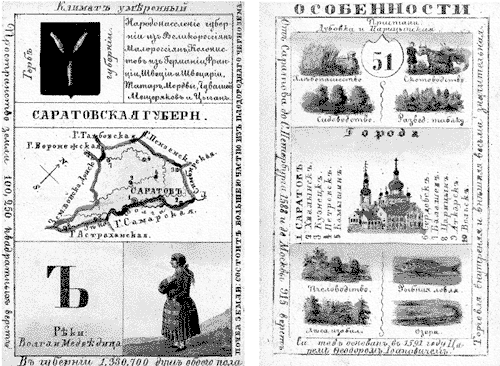
Second. На материале малгородов и районов отчетливо виден принципиально «собесовский» характер официальной экономики, основой которой является хоть и казенное, но милосердие.
Third. Нет ничего глупее выражения «теневая экономика»: тоже мне тень, когда все на свету. В крупных городах все уж очень многослойно, в малых отчетливо видно: за дурацким лейблом укрыты в действительности два качественно разных феномена. Это, конечно же, «экономика отката», но в гораздо большей степени это экономика компенсации недееспособности неопытного государства и дееспособности его граждан. Я читывал много раз, что «теневая» экономика — это от 40 до 60 процентов в теле общей, но, по моим скромным подсчетам, получается, что общий объем неофициальной экономики превышает официальную минимум в два раза, а по обороту — и счесть не берусь.
В Послании к Коринфянам у апостола Павла сказано: каждый гляди, как строишь.
[1] Ни места, ни людей не называю: невеселый опыт показывает, что и одна строчка в печати может возыметь весьма болезненные последствия в биографиях живых героев моих изысканий — читателю придется верить мне на слово.
[2] Это в условиях, когда, скажем, давно закрыт аэропорт в Кирове-Вятке, из Оренбурга, не считая летних отпускных чартеров, единственный рейс в день — в Москву, и т. д.
[3] Один магазин, у самого велодрома как раз уж закрылся.
[4] Впрочем — Hear! Hear! — уже нашелся новорусский предприниматель, упрямо решивший такой дом не только отремонтировать, но и отреставрировать во всей красе.
[5] В промышленно-слободских Набережных Челнах в среднем получалось почти по 100 книг на квартиру.
[6] В этом году в опоре на федеральных инспекторов по регионам я провожу серию развивающих проектных семинаров с местными элитами, охватывая уже не только сами районные центры, но (по необходимости выборочно) сельсоветы.
Как Вы понимаете слово «провинция», что оно означает?
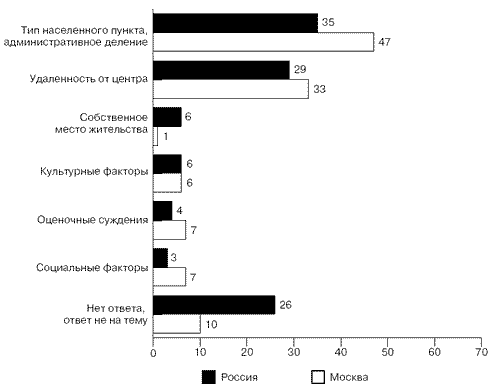
Опрос населения 25 марта 2001 г. © Фонд «Общественное мнение»
Тип населенного пункта, административное деление 35
Village
«В деревне живем, а там — город»; «деревенька»; «деревня, все, что за кольцом»; «деревня, дальние места»; «большая деревня».
Village
«Сельский район»; "countryside"; "village"; «село не в центре, а на окраине»; «поселок»; «сельское место, жители»; «сельские жители России».
Small town
«Маленькие города»; «все малые города области»; «город в области, меньший город по отношению к большему»; "town"; «маленький уездный город»; «небольшой, тихий городок»; «маленькие тихие города».
Не столица
«Не столица»; «все, кроме столицы»; «не Москва»; «все области, не касающиеся столицы»; «все города и веси, кроме Москвы, других крупных столичных городов»; «административное деление — столица и провинция»; «все, кроме Москвы и Санкт-Пе6тербурга».
Region
"Region"; «областные города».
District
«Район небольшой где-то»; «район, поселение»; «район России»; «район страны далеко от столицы»; «другой район страны».
Suburb
«Загородное место»; «пригороды всех городов»; «ближайшие районы к городу»; «пригород, Московская область».
Удаленность от центра 26
Periphery
«Все, что далеко от центра»; «все, что далеко от столицы»; «вдали от центра»; «все, что в 40–50 км от больших городов»; «города, наиболее удаленные от центра страны»; «300 километров от Москвы — уже провинция»; «далеко от центральных городов»; «вдали от крупных городов»; «города, деревни, места, отдаленные от крупных городов»; «вся периферия»; «провинция — это наша периферия: маленькие города, поселки».
Глубинка
«Глубинка»; «глубинка, она оторвана от столицы»; «российская глубинка».
Окраина страны
«Окраина страны»; «окраины, далекие от центра»; «окраинные районы России»; «это окраина»; «окраина центра».
Собственное место жительства 6
«Где живешь, там и провинция»; «мы живем в провинции»; "this is us"; «наша Йошкар-Ола»; «наш городок»; «место, где я живу»; «мой край».
Культурные факторы 6
Глушь
«Захолустье, глухомань»; «захолустье»; «богом забытое место»; «глухомань».
Необразованность населения
«Отсутствие образованности, культуры»; «люди с низшим уровнем культуры»; «меньше уровень культуры, образования»; «менее просвещенные».
Отсутствие культурных мест отдыха
«Как мы, нет театров, музеев, музыки»; «место, где мало театров и других развлечений»; «у нас нет культурных заведений, где можно отдохнуть».
Оценочные суждения 4
Положительная характеристика
«Более глубокая духовная культура»; «добрый и открытый народ»; «более простой человек оттуда, незагруженный городскими проблемами»; «милые, хорошие люди»; «где люди добропорядочные, бесхитростные»; «там люди добрее, порядочнее, это совокупление человека с природой»; «друг друга знают, люди приветливые, добрые»; «более спокойная местность, в отличие от центра, где-то вдали»; «спокойная, размеренная жизнь: без спешки и без крайностей»; «в провинции люди лучше, чем в городах»; «это менее задерганные, спокойные места, где живут люди»; «для меня отдых, спокойствие и тишина»; «люди в провинции лучше».
Отрицательная характеристика
«Люди закостенело смотрят на жизнь»; «люди, имеющие низкую духовность»; «деревенщина»; «недоразвитый придаток».
Социальные факторы 3
Низкий уровень жизни
«Бедность, нищета»; «более низкий уровень жизни»; «в провинции меньше зарабатывают, чем в больших городах».
Плохие условия жизни
«Нет никаких коммуникаций»; «где недостаток информации, бытовых условий»; «неустроенность, нет комфорта»; «нет ни света, ни газа»; «где один сельмаг».
Нет ответа, ответ не на тему 26
«Люди богатые собираются где-то».
Опрос населения 25 марта 2001 г. © Фонд «Общественное мнение»