Date
Author
Фонд «Общественное мнение
Source

Preserved copy
Translated material
Civil climate
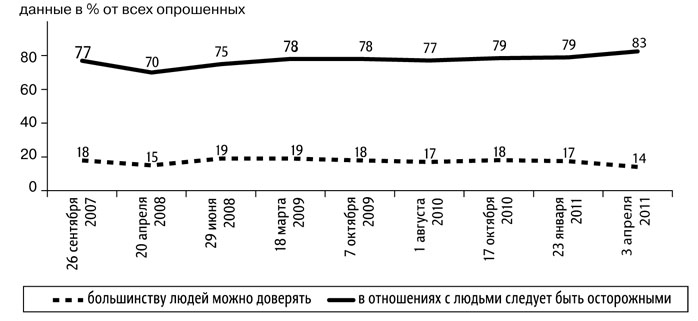
Do you think most people can be trusted or should you be careful in relations with people?
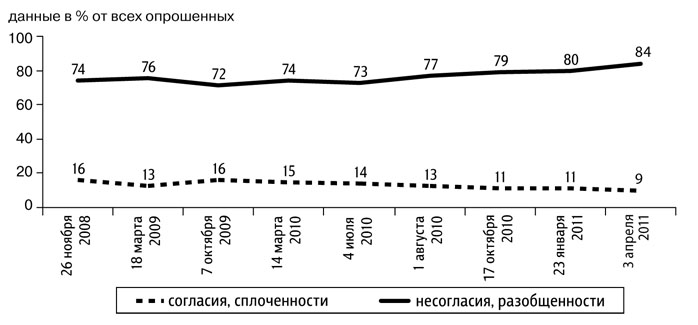
Do you think today in our country among people is more consent, cohesion or disagreement, and disunity?
For a long time, a variety of sociological research has been established: the level of anonymous interpersonal trust - that is, trust in “strangers”, unfamiliar - in Russia extremely low, much lower than in most countries of the world. Here is one more evidence ...
It is curious, however, that people are relatively wealthy (with incomes from 15 thousand rubles per month) are still inclined to trust others about twice as often as those who are more victorious: 24% of the respondents, and among those receiving less than 6 thousand, are stated from 6 to 9 thousand and from 9 to 15 thousand - only 11–13%. And if only 9%are ready to trust only 9%among those who graduated from high school, then among the owners of university diplomas - 21%. Also, of course, it’s not so hot. But still, as we see, the correlation between the standard of life and education, on the one hand, and the level of trust, that is, the quality of social fabric - on the other, is obvious. We will not guess about causal relationships (about chicken and egg) ...
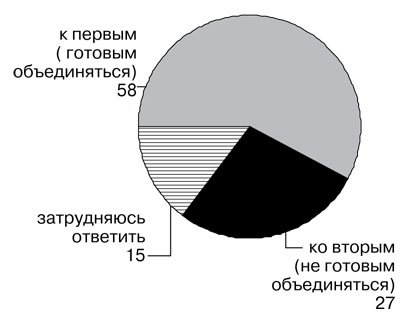
There are people who are ready to unite with other people for any joint actions if their ideas and interests coincide. And there are people who are not ready to unite with others for any joint actions, even if their ideas and interests coincide. What kind of people would you take yourself to the first or second?
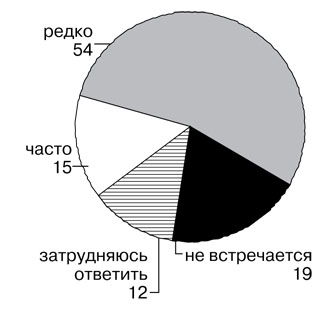
How often can you meet now among the people around you are ready to unite in order to solve social problems that do not concern them personally?
However, as it turns out, most of us (58%) are ready to unite with other people for joint actions. And among young people and among the owners of higher education - almost two -thirds: 64 and 63%. And among those who receive at least 15 thousand rubles. per month, - even more: 70%. So, it turns out that civil society has rainbow prospects here, right?
Here are just bad luck: those around them to unite, to joint actions to solve general problems are usually not located. Most of us rarely meet such readiness, and every fifth does not meet at all. So the problem is not in us, but in others. Well, in fact, in those people in relations with whom, as we are the vast majority of convinced, "we should be careful." It seems that the circle is closing.