
Translated material
We need a new dialogue
A new government has been created. The Ministry of Education and Science received the new leader. The first interviews and statements by Dmitry Livanov show that new reforms of science in Russia are coming. Yes, apparently, further reform is necessary. But it is significant that such a reform can not rely simply on administrative decisions. The key moment in the preparation of reforms is trust and support from those actively working scientists who themselves already have well -deserved authority and confidence in the scientific environment.
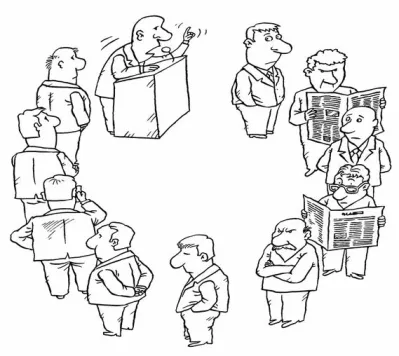
It is known that the new minister is very critical of the situation at the Academy of Sciences. The development of the conflict between the ministry and the academic top can lead to serious negative consequences. No matter how events develop, any compromise, taking into account only the interests of officials of the Ministry, members of the Presidium of the Russian Academy of Sciences and directors of institutes and ignoring the interests of working scientific groups at the laboratories level, will not lead to a noticeable improvement in the situation. Reforms should take place with the representative participation of representatives of strong scientific groups, rely on them. At the moment, the Society of Scientists (or, to a lesser extent, the Russian Association of Science Workers) can become the basis for the formation of such a representative office. Neither the general meeting of the Russian Academy of Sciences, nor the trade unions or the advice of young scientists are considered by the wide circles of active scientists as their plenipotentiary representatives.
Dmitry Livanov is a supporter of the transfer of science to universities. At the moment, the academic segment of science has great potential, and the sharp transfer of gravity to universities without experience and the possibility of good mobility can have tragic consequences (although, of course, strong scientific centers will probably arise on the basis of some universities). In order, such issues are not resolved. It is most important to understand how strong academic groups are ready to cooperate with universities, what forms and under what conditions are interesting to them. And only then act.
President Vladimir Putin has already stated that formal criteria will also be indicators of the development of science in Russia. They must be used, they cannot be ignored, but they cannot be the only and last meter of scientific activity. There is a reasonable approach of the experts corps when the initial selection is carried out according to formal criteria, but in the end we have an expert assessment at the exit. The development of grant financing (together with the need to correct the legislation on the conduct of competitions and the use of funds noted by V. Putin) is certainly an important and fulfilling task. An increase in competitive financing in an adequate examination (most likely, international) and, if possible, is reasonably managing money, will strengthen productively working groups.
I would like to recommend the ministry more to listen to the opinion of real scientists, to work with them directly. Rely on representative representatives. For example, last year, work on the FZ-94 correction, where a small group of active and effective (from a scientific point of view) of young scientists played a key role, is a good example of effective social activity. Another example of this is the intention to increase the financing of the RFFIF and RGNF in the decrees of the President of Russia by more than 3.5 times by 2018. Unfortunately, so far social activity is not welcomed by officials, and decisions are made only when they are no longer able to ignore it. A normal dialogue of scientists and officials is needed. That's just now representatives of scientists at different levels are sometimes people who do not have respect in the scientific environment. This also applies to young scientists. What, for example, is the chairman of the Council of Young Scientists of the Russian Academy of Sciences, or some representatives of the so -called coordination council for youth in the scientific and educational fields under the Presidential Council for Science, Technologies and Education, or the former chairman of the Student Union of Moscow State University, what needs to be done to compete research and developments as a whole, and not only grants, and not only grants, how to increase the salaries of scientific workers and the salaries of scientific workers and Teachers, how to rake the accumulated bureaucratic blockages in the field of legislation - to solve these issues not in the spirit of “as usual”, we repeat, we need a dialogue between the leadership of the Ministry, the Academy, as well as the leading universities and representatives of a wide range of real scientific groups throughout the country. Without real scientists in science "Absurd and corruption."