
Translated material
Not a word in Tatar
The Kremlin destroys the Soviet system of protection against separatism and does not see the problem in this
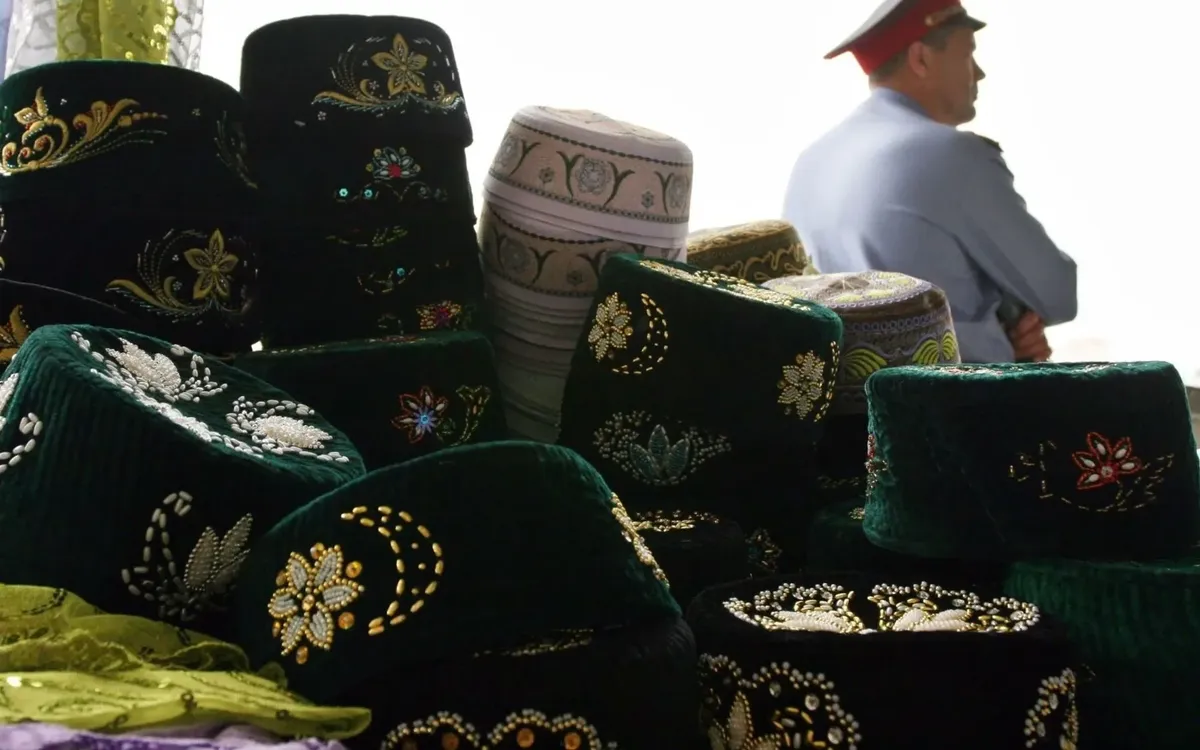
In the summer of 2018, an increase in the retirement age was announced, accreditation from Shaninka was revoked and a bill was adopted that cancel the obligatory teaching in native languages in the republics of Russia. If the first two decisions of the authorities were discussed widely and openly, there are little talk about the new rules for native languages. Unfortunately, the indignation of the Tatars and Udmurts does not care much of the rest of the Russians.
Russia includes twenty -two national republics. Each has its own constitution, parliament, head and state language. In addition to the republics, the Russian Federation, as indicated in its constitution, includes the edges, autonomous districts and one autonomous region. According to the latest census, 26 million non -Russian citizens live in Russia. Amendments to the Federal Law on Education concern each of them.
Coercion to native languages
The bill No. 438863-7 “On the Study of National Languages” was adopted by the State Duma on June 19 in the first reading. The explanatory note states that the new law is designed to “make clarity” in the rules for teaching and studying the state languages of the republics of the Russian Federation. From the point of view of the authors, study is possible only “on a voluntary basis” and “not to the detriment of the teaching and study of the state language” (that is, Russian). At a meeting of the working group, the First Deputy Head of the United Russia faction Andrei Isaev explained that the authors sought to take into account the opinion of the president, who "who" could not be forced a person to learn a language that is not his family and which he does not want to learn. "
Commenting on the bill, the chairman of the Committee on Education and Science Vyacheslav Nikonov clarified: if their parents want their children to study their native language, they will need to submit a written statement twice, before the 1st and 5th classes. Nikonov also admitted that the bill should be finalized. The adoption of the final edition is scheduled for the spring session.
From the explanations of the deputies it follows that in twenty -two constituent entities of the Russian Federation for a number of years, Russian children are forced to learn non -Russian languages. How is it possible?
The Russian Foreign Ministry regularly protests against the infringement of the rights of Russian -speaking citizens in Ukraine and in the Baltic states. Why did Moscow drew attention to the similar situation within the country only now?
Nothing is said about what right of the republic forced Russian schoolchildren to learn their languages. Was it arbitrariness? Republics went beyond their powers? If so, why are their languages called state?
Judging by the records of President Putin's speeches in Tatar, the problems of coercion seemed to have not yet been relatively recently. Why did she suddenly arise now?
Bolsheviks and "foreigners"
If we turn to history, state languages, republics, constitutions, presidents and flags went to the Tatars, Udmurts and the rest inherited from the USSR. “The right of nations to self -determination up to the department ” was the cornerstone of Soviet national policy. Lenin, and behind him, Stalin, starting from the programs of the Austrian Marxists Otto Bauer and Rudolf Springer, believed that assistance to the peoples of Russia in the construction of their own states would solve the problem of separatism.
In disputes with the “Left Blansists”, led by Georgy Pyatakov, Lenin claimed that the Tatars and Udmurts would not leave the country after the Finns, Moscow should help them in the construction of their own republics. Lenin, referring to Marx, believed that ultimately all nations would have their own states. The national bourgeois state is the inevitable stage of the development of all society; After feudalism, before socialism. Lenin was confident that the empires that contain dozens of nations were doomed to decay. He considered Russia a typical empire. So that the Moscow government does not lose control of the territories, the country will have to change.
According to Lenin, Moscow should have intercepted the initiative from nationalists. Inevitably, having come to power, they will disturb the outskirts from Moscow.
If Moscow is ahead of them, if they take their place, the national myth created under its control will tie the outskirts to the center.
Professor of Russian History from Harvard University Terry Martin, author of the book "Empire" Positive Activities ". Nations and Nationalism in the USSR, 1923–1939, ”believes that the Lenin calculation as a whole has justified itself. Thanks to Moscow, Martin proves in his book, the peoples of the USSR did not need to fight for their language and borders. Red Moscow, often ahead of demand, printed school textbooks in their languages, changed Russian officials in local ones, quoted places for non -Russian students.
The “national in form and socialist in content”, which arose, were firmly attached to Moscow as a source of their national statehood.
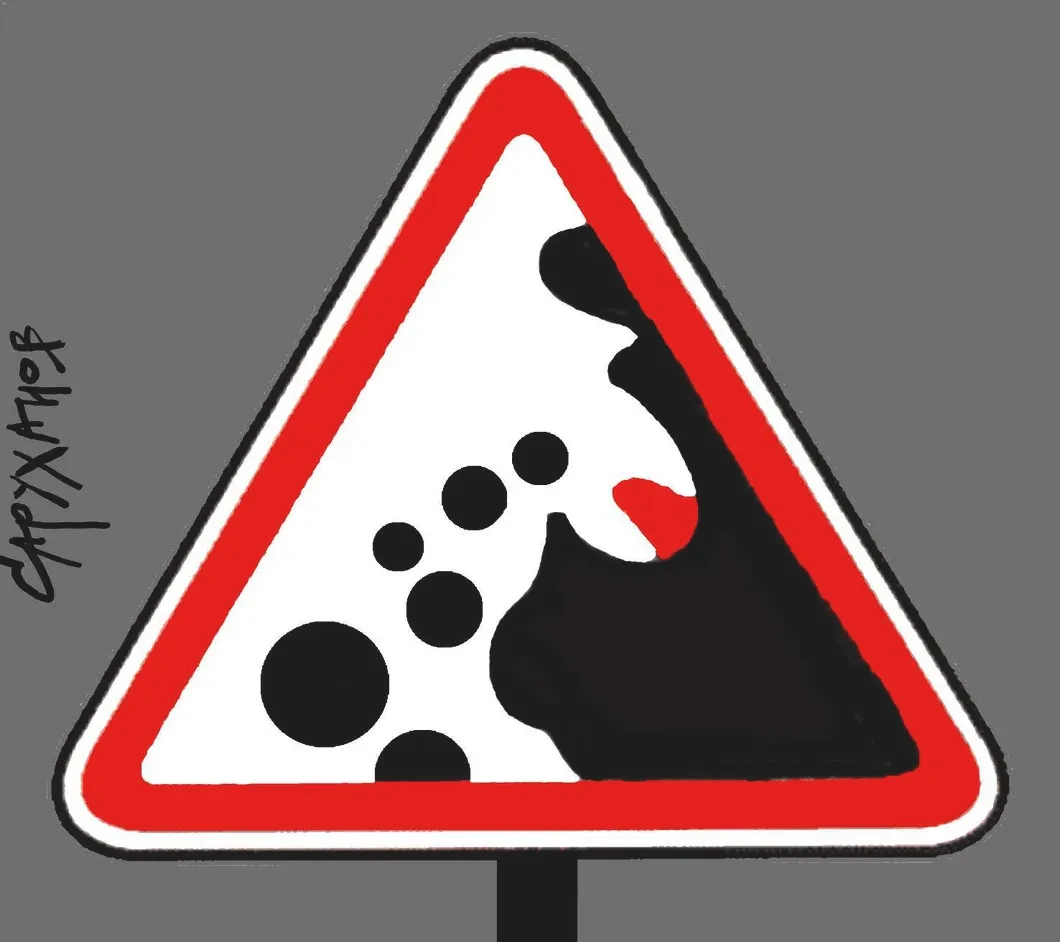
Explaining coercion
From the point of view of Soviet national policy, coercion to study local languages, which legislators speak of, was a fee for the integrity of the country. Terry Martin compares him with the policy of “positive discrimination” (Affirmative Action), conducted by the United States after the abolition of segregation in the 1960s. Due to the positive discrimination, a larger number of non -sophisticated children were able to overcome racial division, get a good education and get a job for highly paid work.
Positive discrimination aligned American society, made it more fair, weakened internal conflicts.
Positive discrimination of the Great Russian majority in the USSR, in addition to leveling, carried an additional load, Martin believes. Russian schoolchildren taught Tatarsky in Tatarstan and Udmurt in Udmurtia so that Tatarstan and Udmurtia would not think about leaving the country. The coercion showed non -Russian that their right to self -determination outside of danger and a return to the Late -Romanian policy would not assimilate. This also includes the demonstrative recognition of Moscow constitutions, presidents and parliaments within the country.
The current bill obviously destroys the Soviet system of protection against separatism.
Its authors, as far as one can judge by their meager explanations, do not consider this a problem. If legislators are sure that the threat of national liberation uprisings, which was written a lot in Soviet times, disappeared, where are their arguments? As a justification, as Andrei Isaev admitted, one phrase of the president acts. This is clearly not enough.
Theater-theoretical and French path
The stinginess of the authors of the bill forces to look for answers in other sources. For example, in the publications of the former Minister of National Policy of the Russian Federation Valery Alexandrovich Tishkov. Unlike the authors of the bill, he willingly and wrote a lot about how to reform the Russian Federation. Including in order to avoid the repetition of the "largest geopolitical disaster of the 20th century."
Valery Tishkov has its original (to extravagance) vision of Russian history. Contrary to general opinion, he believes that Russia has never been an empire. From the point of view of Tishkov, starting with Peter I in Russia, a civil nation was formed.
Russia was divided not into the “white” metropolis and “color” colonies, like the UK, but to those who have already learned Russian culture and became a Russian citizen, a “Russian”; And on those who have not yet learned and did not, but is about to become. The same situation was in France, Tishkov believes. Back in the XIX century, the inhabitants of its European outskirts did not understand French and preferred to call themselves Burgundians, Gaskons, Bretons, and so on.
Over time, the outskirts learned French, learned the "high French culture" and began to call themselves French. Tishkov is sure that Lenin made a mistake. It seemed to Lenin that he destroyed the “prison of the peoples”, the “empire”, consisting of oppressed “foreigners” and the dominant “Great Russians”. In fact, the former minister is sure, he defeated the emerging civilian nation.
If Lenin managed to do the same in France, in its place there would now be separate Brittany, Normandy, Corsica, Burgundia. Russia should abandon the Lenin project and return to the path of France, Tishkov believes: to put back to the background of local identity, to put on the first national. Only a single national identity - from the Baltic to the Pacific Ocean - is a reliable remedy for separatism, the former minister is sure.
Tishkov is aware that he offers a return to pre -revolutionary practice. He believes that
The Romanovs guessed the direction, but, unfortunately, did not guess with the means.
The gross power assimilation, to which they regularly resorted, did not turn the colorful Russian empire into plain France. On the contrary, it became one of the reasons for the revolution. Modern Russia, Tishkov is sure, should follow the Romanov path, but using humane means.
Dismantling of Soviet national policy
Tishkov seems to be not involved in the creation of the bill. On the other hand, the project for the abolition of the obligatory teaching of state languages of the Republic of the Russian Federation fits into the logic of its reasoning.
Leaving the Russian language as the only mandatory is an obvious step towards the same “Russian nation” as the former minister understands it.
Apparently, Moscow is going to build a “civilian nation”, dismantling the Soviet system of national republics. To prevent possible discontent, financing of cultural “identity” has been prepared. It is assumed that twenty -two subjects of the Federation easily exchange the status of republics with their individual constitutions for new textbooks at the expense of the budget. The basis of this assumption is said negligently little. As if it is a third -rate topic. At the same time, the national question is the most important for Russia. It would be right if there were at least no less explanations than the Soviet administrators.
In addition, it would be good if citizens gave the national issue as much attention as the issue of pensions. In the end, if the decision is erroneous, one god knows with whom and in what language the current thirty-year-olds will discuss the regularity of pension payments in the 2060s.
REFERENCE
& Nbsp
After resignation from the post of Minister in 1992, V.A. Tishkov was headed by the Institute of Ethnology and Anthropology named after N.N. Miklukho-Maclaya RAS. Since 2006, he has been the general director of Ethnonsulting LLC, created on the basis of the institute. The organization accepts orders from the state and private companies for monitoring the "ethno -confessional situation" in the regions. This is the largest public organization advising the state on the national issue. Deputy Tishkov as director of the Institute of Anthropology and Ethnography V.Yu. Zorin was then one of his successors in the Ministry of Nationalities, and now he is a member of the Council under the President of the Russian Federation on interethnic relations.