
Translated material
The first and the last
The current Russian crisis has become an illustration of the biblical thesis that the latter will be the first. However, in Russia we are not talking about completely last people, but about those businessmen who were considered a year ago, if not losers, then at least not the most successful players. They did not conduct active expansion, but, on the contrary, got rid of some assets. Now last year's winners are trying to deal with multi -billion dollar debts, especially sadly looking against the background of the collapsed capitalization of their companies. And the old middle peasants have free funds in their hands, which can now invest - albeit with an eye on.
All this spurs the process of redistribution of property, which passes unevenly. In some cases, the old shareholders under the load of debts are ready to squeeze, in others they still hope for a successful outcome - or, in any case, try to delay the dysfunctional. The processes taking place in the field of ownership are logical to analyze on the example of events related to the name of the famous entrepreneur Suleiman Kerimov.
Although, in the general opinion, the list of new winners is headed by Mikhail Prokhorov, but another successful player is called Kerimov, who now has the opportunity to buy new enterprises. In particular, he has just become the main shareholder of difficult times experiencing (total debt as of April - 44.8 billion rubles) of the development group of peak companies. Kerimov has over 31% of the group’s shares, and in the future he can increase his participation to 45%. Peak - one of the active participants in the Moscow Construction Market, specializes in mass development. According to media reports, 25% of the peak shares passed to Kerimov as a result of a non -residency transaction. In exchange for shares, Kerimov promised the owners (they are top managers) to organize the restructuring of the group’s debts, as well as assistance in the sale of apartments to the state, in particular the Ministry of Defense.
In February of this year, information appeared that Kerimov bought from the less successful Oleg Deripaska (the debts of his companies, according to some reports, reach $ 30 billion) 75% of the Glavstroy St. Petersburg LLC with a total area of about 6 million square meters. m. Among them: St. Petersburg residential Yuntolovo microdistricts, Northern Valley, Business Quarter and Reconstruction of the famous shopping complex "Apraksin Dvor". Before Kerimov, the prospect of entering the construction market of the Northern Capital loaned. However, the deal was never completed - as far as one can judge, Deripaska proposed the conditions unprofitable for Karimov. The probability of this version is indicated by the fact that Alfa-Bank and another construction company Deripaska, Glavstroy, did not find a common language. As a result, creditors from Alfa achieved the arrest of shares of the Glavmosstroy, which is part of the Glavstroy.
However, this is a problem of more than one Deripaska. It is clear that the companies in a difficult situation sell property with large discounts, but with the development of the crisis, these discounts are less and less arranged by buyers who believe that after a month or two they buy the same-or similar-assets even cheaper. Many sellers meanwhile, it seems, are still under the impression of last year's capitalization of their companies, considering it as a “fair price” and reluctantly concessions. The maximum of possible concessions, they consider the return of investments invested in the case, which in the benevolent years of the "oil boom" could be calculated by billions of dollars. Internally, they most likely expect that the crisis will soon pass and the “justice” will be restored. In addition, the most influential sellers hope to mobilize their hardware ties, which, however, may not work now - the number of resources at the state of the state has sharply decreased. And the priority for the authorities is a “social company”, and not the support of “falling” companies and, moreover, their owners.
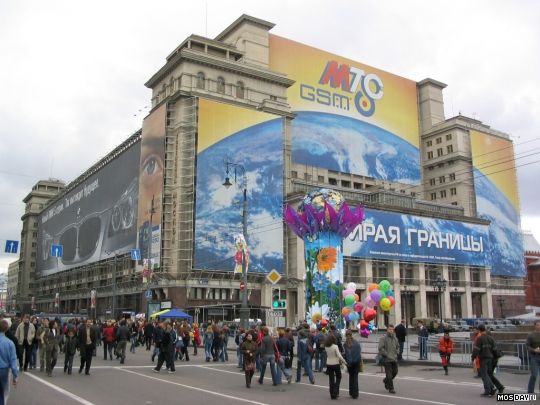
But back to Kerimov. In the spring he was called a possible investor in the construction of a new version of the Moscow Hotel - all the more so since he has funds for this. However, Karimov’s cooperation with the metropolitan authorities somehow does not develop. Back in 2006, he was supposed to become a partner of the city in the United Hotel Company (OGK), whose authorized capital was planned in the amount of $ 2 billion. However, in 2007, the city hall demanded to increase it to 7 billion, after which the joint venture did not take place. Already this year, the head of the capital's property department, Vladimir Silkin, denied the information that Kurimov would become an investor in a hotel project. However, then it was announced that Kerimov was negotiating about the prospects for the construction of “Moscow” directly with the General Council - Strabag, but decisions, as far as is known, had not yet been made. Meanwhile, a scandal erupted around the construction - a criminal case was opened on charges of fraud, which so far some “unidentified persons” are being held, who misled the metropolitan government and paid him with money (87.5 million dollars) with Deutsche Bank, which gave a loan for the construction of Moscow. In return, the Moscow government was supposed to receive a control package of shares of DexMos, which is the customer of the project (now it is a minority shareholder of this company), but this package still does not belong to it.
A number of the media in this regard provide a version of the opponents of the capital's authorities (“unidentified persons” in the expert community identify, first of all, with the State Duma deputy Ashot Egiazaryan), claiming that it was Kerimov, acting as a raider, trying to supplant them from the project. However, there is hardly any doubt that it all began with their inability to ensure the financing of the project, which led to the search for the new investor by the Moscow authorities (apparently, Egiazaryan can be attributed to the number of losers as a result of the crisis). At this stage, in a public space, a option with Kerimov appeared. At the same time, the party of Egiazaryan was ready to get out of the project if she were compensated for invested (according to her) to Moscow, even before the crisis, 300 million dollars, which the Muscovites, it turns out, had to pay in addition to 87.5 million, who had already returned to Deutsche Bank. It is clear that such conditions in the changed, crisis situation were no longer satisfied with the “Muscovites” who were ready to pay with creditors and at the same time get guarantees for the completion of construction, but no more - the real cost of the “dex” as a result of the crisis, as far as possible, fell sharply. The sensational excavation of documents in the Daev Plaza business center, controlled, according to some reports, Egiazaryan, indicates that law enforcement officers considered the arguments of the Moscow authorities more convincing.
However, it is far from the fact that in this situation, Kerimov will take on the completion of the long-suffering hotel, which was planned to be completed back in 2007 (now the deadline was postponed to 2011). The option is quite possible that one of the Russian banks controlled by the state will give money.
As for Kerimov, his current interests are not limited to the construction sphere. This month, the Federal Antimonopoly Service approved the purchase of a 37% of the shares of the largest Russian manufacturer Gold, the company Polyus Gold. Earlier, the shares belonged to Vladimir Potanin, the other co -owner is Mikhail Prokhorov (it is clear that he does not intend to sell shares, so he has to coexist with Kerimov). This means that in this segment of the Russian market there are redistribution processes due to the crisis.
Author - First Vice President of the Center for Political Technology