
Translated material
Why is a person clothes?
In the Blagena Blog, a wonderful story about a penguin named Pierre was told about the markets some time ago.
This penguin was a plowman of a penguin flock living at the California Academy of Sciences. The penguins are very easy to learn from the alpha male: he always sits on the highest stone and oversees order. These penguins live about 20 years, and Pierre has already lived 25.
And so, having lived 25 years, he was bald. He began to swim coldly, and he began to lose his place for a plowman in the hierarchy.
Then the compassionate scientists sewed a neoprene suit for him. The suit was taken with great attention. The whole flock escaped to look at the suit and immediately realized that Pierre is a plowman. He again climbed to the top of the upper place and began to lead from him. But the most amazing thing was that his fluff had grown again! And now Pierre is already 30 years old, and he is still a plowman, and with fluff.
This experience, accidentally set on a penguin, is very similar to another experience with roosters, which, in particular, is described by R.V. The shareholder in his wonderful book "Man is a naughty child of the biosphere."
It so happened that the hierarchical position occupied by the rooster in the pack depends on the one single parameter-the magnitude of its red crest. A rooster with the largest crest is the largest rooster. You can conduct an experiment: take the most casting rooster and put on it a large foam crest. He will immediately become the most important (and since before that he was the most despised member of the pack, his character will be disgusting).
Now the question is: why did people come up with clothes?
At first glance, the question is idiotic - to warm up. Clothing is an exclusively functional thing. Try in winter in Sweden without clothes.
But the problem is that the person at the moment when he came up with his clothes, did not live in Sweden. He lived in Africa, where clothes are generally not needed.
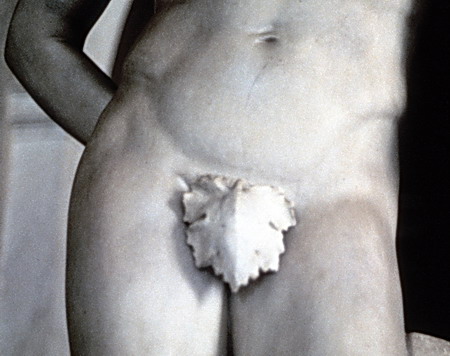
Nevertheless, he took it and invented it, and when he hung the fig list of it, you know, where he did not clearly insulate this place. Most likely, he decorated him.
The story of clothes is very similar to stories with some other human inventions, which at first glance are exclusively utilitarian in nature, and upon closer examination, this utilitarianism disappears.
Take, for example, such a thing as domestication of animals. At first glance, what could be more useful? It seems that, domestizing the animals, the person thought first of all about food and benefits. But the problem is that, for example, in many paleolithic caves of Europe, bones of bears are found along with human bones. Which, apparently, were revered as totems and therefore tried to tame. That is, for a long time, people who lived in rather severe conditions and who did not have enough resources, spent time, effort and food to catch, tame, feed a completely useless bear.
Their actions clearly had nothing to do with the benefits and were more than related to primitive fears and gloomy totemic cults. There is even a suspicion that the peoples were divided into those who had, for example, a totem of a bull, a horse or a wolf (and he was lucky - he eventually tamed a bull, a horse or a dog), and those who had a temor of a bear, etc., and he was not lucky.
Or take a hunt. We are all used to believe that there was benefit from hunting. What? Primitive men hunted a mammoth, uniting into the team and learning to act together, and then they brought food to the cave to the female starving females.
In fact, hunting for large animals was not so useful . In modern societies engaged in gathering and hunting, where women gathers, and hunters of a man, is the woman mines 95% of food. Those 5%that the hunter mines is clearly unprofitable. In addition, it hunts much easier for little game, and not more: it can get it faster, and you can eat it all until it has spurred.
That is, hunting - as well as applying ornaments to the body and taming the bears - was a matter, if not quite, then quite useless.
Now the question arises: why did a person engage in all this useless pastime - painted himself, hunted a huge mammoth instead of a more satisfying collecting roots and shells, risking his life, tried to tame a bear?
There are two answers to this. One answer is that a person was already a spiritual being, with a mystical feeling, striving to surpass himself. His own appearance did not suit him, and he wanted to decorate himself.
Another answer is much more rude and lies in the fact that all these types of activity were typical in biology indicators of suitability - Fitness Indicators - and served for a more successful choice of the female. (About such a hypothesis of the development of the human mind, Jeffrey Miller writes in more detail in his book “The Mating Mind: How Sexual Choice Shapeed the Evolution of Human Nature”).
Such situations in biology are very frequent. The peacock dissolves the tail in front of Pova, and Pava chooses a peacock with the most beautiful tail. The tail does not give any advantages to survive the tail, on the contrary, this is a serious drawback. But the tail gives advantages for reproduction.
The BowerBird bird does not have a tail, but the male spends for a long time before mating, building a real work of art-a hut, which in some species of these birds reaches 2-3 m long, and decorates it with specially brought shells, bottles from bottles and other tinsel. Males often carry shells and traffic jams from each other, fight for them, etc. Of course, if they ask the huts, why he decorates his nest with shells (as a person painted the body), he can say that he is moved by the desire of creative expression and free fantasy of the artist. But in fact, the huts lure the female so much in the hut.
Females choose the best hut and copulate with the male, after which they fall off the nest and carry the egg alone. The hut of bird birds is the best example of what Richard Dokins calls an expanded phenotype ( actually, he uses the example of a hutry ).
Speaking of an expanded phenotype. Our closest relatives of chimpanzees, despite the fact that they eat mainly by fruits, also hunt, and exactly according to the scheme that we talked about above. When Jane Goodol, watching the chimpanze in Gomba, first recorded the fact of the capture of Alfa-male chimpanzees of small antelope (Bushbuck)-what did he do with the antelopa? That's right, he gave a piece of meat to the female in exchange for copulation.
Now it is clear what I’m glooming: a lot of what later developed into useful skills like taming animals or the art of sewing clothes that allowed a person to spread into colder latitudes, it began if you think about how things are completely useless for the survival of a particular organism.
But these things useless for survival were very useful for reproduction. They were indicators of fitness. A man who brought a woman a piece of a mammoth, like a chimpanzee that caught an antelope, or a peacock that dissolves the tail, thereby showed not his usefulness as a mininger (he would be more useful, collecting roots), but his suitability as a manufacturer of good offspring .
Just like a penguin costume, a fig leaf on the genitals increased the status.
And in Pendant there is one small but important thought. For the second century, sociologists and economists have been arguing about why the scientific, industrial and technical revolution began in the West, and not in the East. Paper piles are written on this topic, and at the same time endlessly list the same thing: respect for property, Protestant ethics, fair court, personal freedoms, etc., etc.
So: I dare to say that the indigenous, deep cause of the scientific and industrial revolution in the West had nothing to do with property, freedom, ethics, court, etc.
She was directly related to the fundamental difference in behavioral stereotypes in the West and East: namely, in relation to the female.
In the west, the female remained relatively free. To her, like Pava, like a female bird-marshmallow, was granted the right to choose. The European male, in general, was supposed to be distinguished by the female. So that she would choose it, he had to break something like that. Like a peacock, he had to dissolve his tail.
In the east, the task of distinguishing between the female did not stand. The female has turned into a disenfranchised creature languishing in a harem. It was not necessary to dissolve the tail, it was not necessary to build a hut, it was not necessary to paint the body, it was not necessary to hunt for the mammoth to get the hand of his beloved, or to open the laws of the movement of celestial bodies. The expanded phenotype of the eastern despot with a harem was very different from the expanded phenotype of the Renaissance ruler, which compiles poems and encouraging astronomers and architects.