
Translated material
Kucher and horse
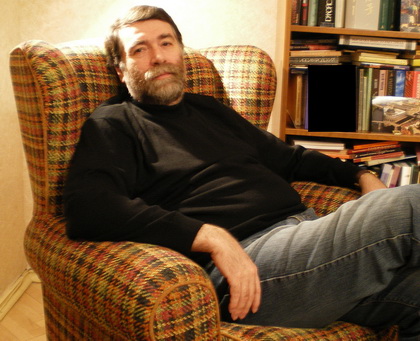
The beginning of 1970 in the USSR was marked by a political scandal. On March 19, an open letter of Andrei Sakharov, Valentina Turchin and Roy Medvedev appeared to the heads of the party and the government with a demand, or rather, by the proposal of the democratization of society.
Just the Tanks of the Warsaw Treaty were punctured by Prague, samizdat was defeated in the USSR, the name of Stalin began to flicker increasingly, which, after the 20th Congress of the CPSU, was under an unspoken ban. It was in a stagnation.
And it was at this time that an open letter appears, in which, even with the reservations necessary in such “correspondence”, but the authors advocate the teninization of society, for socialism with a human face.
Signers offer a program of democratic events for the coming years, warning that otherwise the country is waiting for great trouble.
The letter indicates the characteristic features of an impending deep crisis: stagnant processes in the economy, environmental problems, distress in agriculture, “signs of inflation”, increasing bureaucracy, “symptoms of corruption”, growing crime, mass alcoholism of the population, initial phenomena of drug addiction.
A special emphasis is on the lag of low -budget education. It also goes to foreign policy, which are also “characterized by messianism and excessive ambitiousness . ”
A source of negative phenomena authors of writing see in the "anti -democratic traditions and norms of social life, which have developed in the Stalin period and finally not eliminated to this day." They emphasize that “non -economic coercion, restrictions on the exchange of information, restrictions on intellectual freedom and other manifestations of anti -democratic perversions of socialism, which took place under Stalin, is customary to consider as some costs of the industrialization process. It is believed that they did not have a serious influence on the country's economy, although they had severe consequences in the political and military regions, for the fate of the vast segments of the population and entire nationalities. ”
Especially Sakharov, Turchin and Medvedov talk about the importance of freedom of speech and exchange of information. They state : " True information about our shortcomings and negative phenomena is classified on the grounds that it" can be used by hostile propaganda. " The exchange of information with foreign countries is limited from the fear of "penetration of hostile ideology." ... There is a clear distrust of the creatively thinking, critical active personalities. In this situation, the conditions for promoting the service ladder are not those who are distinguished by high professional qualities and principles, but those who are in words distinguished by the devotion of the party, in fact, differ only in devotion to their narrowly personal interests or passive diligence. ... restrictions on freedom of information lead to the fact that not only difficult control over the leaders is, not only the initiative of the people is undermined, but also the leaders of the intermediate level are deprived of rights and information and turn into passive performers and officials. The heads of the highest bodies receive too incomplete, reduced information and are also deprived of the opportunity to effectively use their authority . ”
The authors are specially noted by the “problem of relations between the state and the intelligentsia”. They try to convince the authorities: “The freedom of information and creativity is necessary for intelligentsia by the nature of its activity, by its social function. The desire of the intelligentsia to increase this freedom is legal and natural. The state stops this desire through all kinds of restrictions, administrative pressure, dismissal from work and even trials. This gives rise to a gap, mutual distrust and deep mutual misunderstanding ... "
The authors of the letter characterize this gap as suicidal .
Reading this appeal to the authorities, the proposed measures in the form of an “plan of events”-an amnesty of political prisoners, the abolition of the “nationality” column in the passport, the gradual elimination of the residence permit, the abolition of preliminary censorship, the creation of advice from specialists under the authorities and the like-it cannot be noticed how they are essentially relevant, despite the fact that much seemed to be carried out in the 90s in the 90s.
All that the authors of the letter warned the authorities in the distant 1970, again blossomed with a terry color by 2010: signs of Stalinism and Nationalism, the gap between the intelligentsia and power, lack of culture, corruption, alcoholism, drug addiction. And again, “folk healers” in different directions, slipping the old recipes, according to which more than one generation of Russians have already been bothering: “Orthodoxy, autocracy, nationality”, then “freedom, equality, brotherhood” according to the Bolshevik-Soviet model.
Opponents of genuine democracy and liberalism constantly scare the rest of the lessons of “dashing”, the democratic 90s, citing the numbers of those killed in gang show and even dead from hunger. Of course, the price of the fall of the Soviet system and the collapse of the USSR is high. But this is the price for the past, not for the future.
But there was no democracy in Russia, she is not allowed to survive infant age-some kind of fatal increased “childhood” mortality among democracy in Russia.
The current government is trying to combine the surrogate forms of the market, “sovereign democracy” and “vertical power”. She speaks or implies a certain political dialectics all the time: now it is still impossible, but someday, very gradually and carefully, it will be possible. The time will come and they will say. In the meantime, still needs supervision, constant monitoring - no matter what happens - and limited legal capacity for the people.
And Russia is just required not bed rest, but to move more, not artificial ventilation of the lungs, not permission to breathe under the control of “doctors”, but even and free breathing.
She needs to be awakened from severe dreams of the past, and she must stop stuffing with mythological sleeping pills.
The country needs large -scale cosmetic repairs so as not to bring the matter to heavy plastic surgery.
Russia should like it without a thick layer of makeup and become attractive to others, learn to smile and rejoice, feeling safe, and not exuding aggression to others.
It is high time for the authorities to look for allies among smart and conscientious, and not crooking, but devoted (all the more so since this devotion is well-known to all, from the same root as betrayal), to attract initiative and thinking, and not the officials-religious officials, to rely on patriotism not of crickers, but experiencing.
For all this, first of all, the modernization of thinking and the conscience of the authorities and the healing of the entire socio-political climate in the country is needed.
Here is such a dialectic. Is it possible in modern Russia? .. I don't know.
But if you discard the tricks on the coffee grounds, if you call a spade a spade, not hiding behind bashful euphemisms (acceleration, publicity, modernization), then we just need the same democratization. People deserve confidence in their patronage. Do they have a desire? ..
As the wise Zhvanetsky recently said, “on duty around the country”: it is time to weaken the Kucher to weaken the reins and yet to trust the horse, maybe then it will bring us home.
The photo is provided by the author