
Translated material
Triumph "Victator" Orban
The odious right -wing politician will lead the Hungarian government for the third time
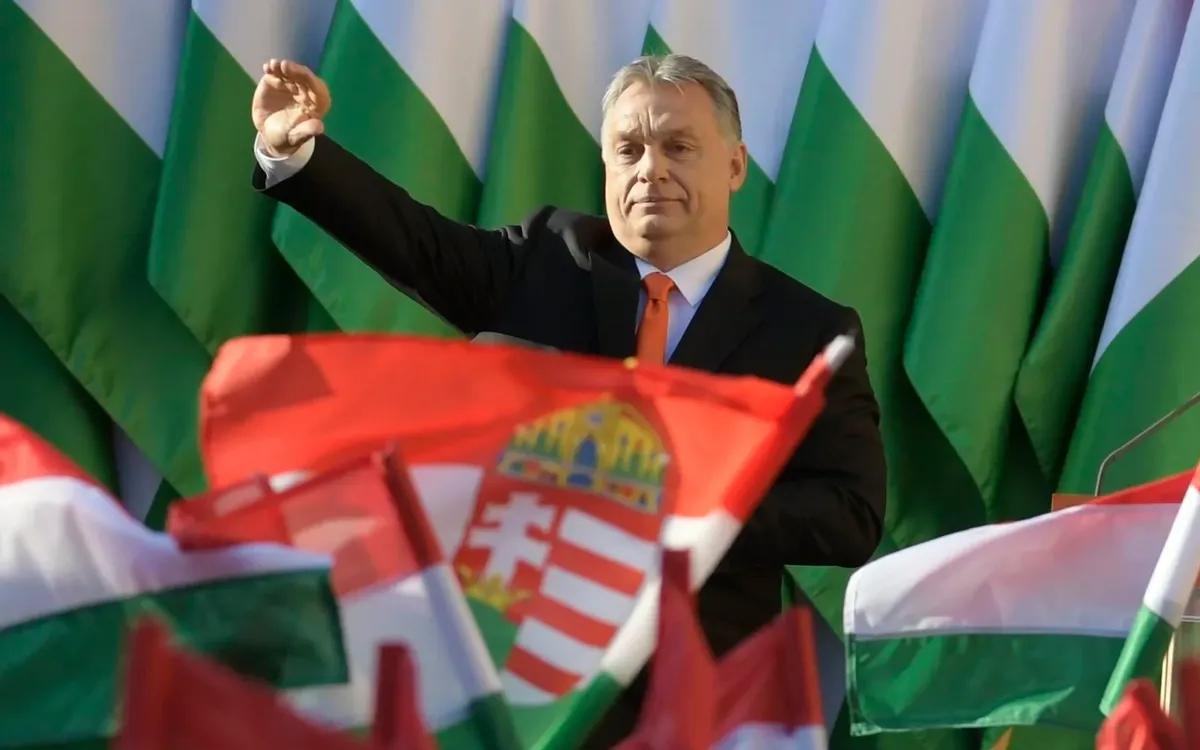
In Hungary, parliamentary elections were held. With a record in recent years, a 70% will be a party of Viktor Orban, known for its antimigrant statements and sharp criticism of the European Union, won a confident victory, receiving more than 48% of the vote. Now she can count on 133 of 199 places in parliament.
The ruling party Fides (Hungarian Civil Union) and the structures controlled by it began to prepare for the elections long before the official start of the election campaign. Back in 2017, the legislative and executive authorities began to actively clean up the public space from uncomfortable institutions.
The tone was asked by the party leader and Prime Minister Viktor Orban, who tirelessly insisted on the need to save the country from the influence of “foreign agents”. First of all, the Central European University (TSU) and public non -profit organizations specializing in the protection of human rights, the development of the right state and freedom of speech were considered. The activities of the university and NPOs clearly went against the purpose that Orban, having come to power in 2010, set himself - to build an anti -libella state from Hungary, united on the basis of national patriotism.
The aggravating circumstance for TSU and NPO was the fact that the Soros Foundation was their main financial sponsor. The American billionaire of Hungarian descent did not approve the constitutional reforms undertaken by Fides, for which he was awarded the title of enemy of the country No. 1.
By the way, Orban himself, thanks to Grant from Soros, was able to go through an annual internship in the Oxford Pembruk-College in the late 80s.
A year ago, the Hungarian parliament adopted a law prohibiting foreign educational institutions if they do not teach the country's main registration (TSU is accredited in the United States). Then a bill was introduced, according to which NPOs, receiving more than 23 thousand euros from foreign sponsors annually, should register through the court as “supported from abroad of the organization” and without fail to indicate this in their official documents, on electronic sites, and publication in the press.
In the election struggle, the Fides and its main rivals entered far from equal terms. The government almost completely controls the country's media market through the State Fund MTVA (4 leading television channels, 7 radio stations, and the MTI information agency). The 40 percent advertising tax introduced at one time put independent media on the facet of survival.
Someone closed, others, sacrificing freedom of speech, were forced to bow to the state for subsidies.
In addition, Fides before the start of the election campaign bought up the majority of external advertising areas.
In election campaign, the Orban party, acting as the only defender of the Fatherland from external enemies, relied on an aggressive style. Hungary, they say, is in mortal danger from two main evils - Soros and Muslim migrants. It was the overseas billionaire, who affirmed propaganda posters, leaflets, videos from Fides, that the plan belongs to the plan to destroy the Hungarian border fence and relocate millions of refugees from Africa and Asia to Europe.
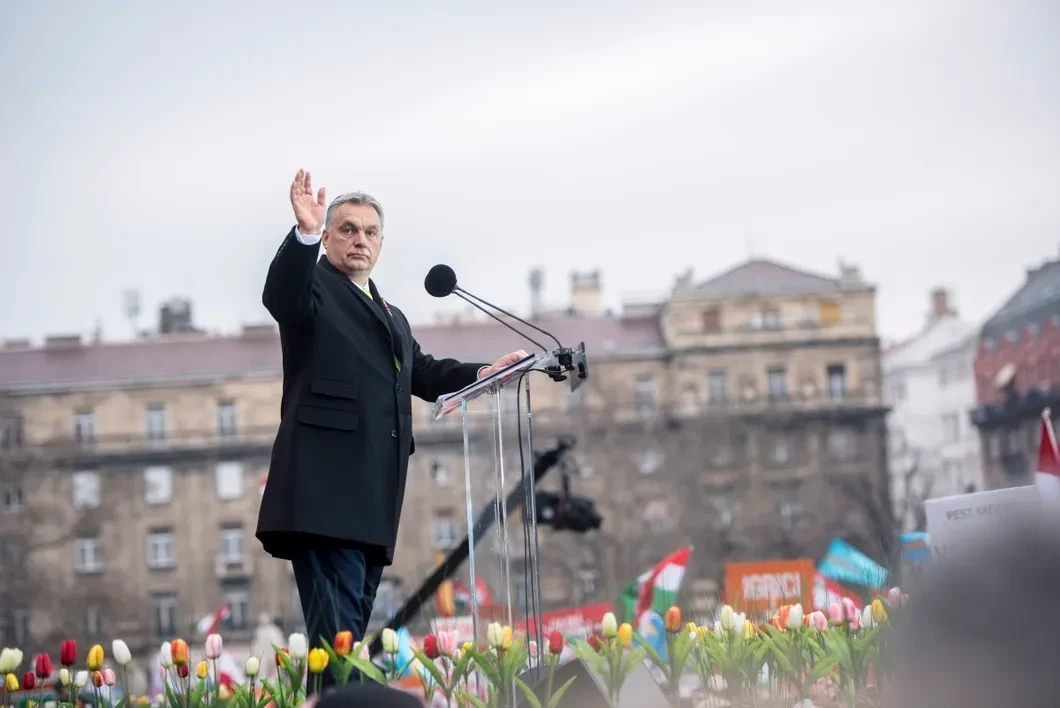
Personally, the Prime Minister, not sparing colors, described the gloomy future that the European continent awaits if you do not take energetic measures against migrants. “In large European cities, the majority of the population will be Muslims,” Orban predicted in his annual circulation three weeks before the elections. “The nation will cease to exist, the West will fall, Europe will not even have time to notice that it has been occupied.”
No less warlike statements sounded to the internal opposition. According to Orban, Soros involved a whole army of mercenaries of two thousand people in Hungary.
The prime minister promised after the elections to make moral, political and legal conclusions, and "to throw out all the dubious NPOs from the country."
The main message for such an election campaign was the desire of Fides at all costs to return the parliamentary constitutional majority of two -thirds. Since 2010, the party had it, which allowed it to make significant amendments to the Constitution, in particular, to change the name of the country (just Hungary without a republic), to endow the ethnic law of ethnic Hungarians living in neighboring countries, to limit the powers of the Constitutional Court, to adopt a law on the loyalty of the media to the authorities.
After additional elections in 2015, Fides lost the opportunity to change the constitution without looking back at the opposition. For Orban, this was an offensive defeat - there were still many unrealized ideas, for example, to expand the participation of the church in public life, patriotic education, and the introduction of conservative family values.
In total, more than 20 parties reported on participation in the elections - from left to right. Among the worthy mention of opposition opponents, Fides should be called the Hungarian Socialist Party (SSP) from the left flank, and from the right - the ultra -rationalist party Yobbik ("Movement for Best Hungary").
SSP after a crushing defeat in the 2010 elections could not recover from the internal crisis. The party elite has split, a number of leading functionaries founded their own left -centric parties. In the current elections, the socialists had to fight to maintain at least the previous parliamentary positions. The result was not comforting for them - they lost more than 13% of votes.
This time, Yobbik relied on social aspects and somewhat remembered her anti -bryussel rhetoric. However, the party was played by the fact that in the election campaign Fides actually entered her clearing, and Orban successfully adopted many slogans from the Arsenal of the ultra -right. And although Yobbik became the second largest parliamentary faction, the party leader decided to voluntarily leave his post.
“Victator” - this is how the opposition christened Orban for his tendency to authoritarianism - the government will lead the government for the third time in a row. Nevertheless, the received carte blanche to continue the policy of “national unity of the Hungarians” does not mean that the coming four years will be completely cloudless for Fides.
In the near future, the Hungarian economy will have serious tests. In 2020, the EU investment program ends, according to which Budapest annually receives about 3 billion euros from Brussels. In the current 4 percent economic growth of Hungary, according to foreign experts, this money accounts for at least 2.5%.
Management representatives of the European Commission have repeatedly stated that after Brexit it would be necessary to revise the EU budget, cut out the part of the financial assistance programs of Eastern European countries and introduce more stringent criteria for its allocation. The latter means both a consistent anti -corruption struggle and the observance of pan -European principles in the field of compliance with human rights, freedom of speech, and independence of justice.