
Translated material
The fight against corruption in Singapore. Part 2
Around Russia
 The fight against corruption in Singapore. Part 2
July 28, 2020 Daily Journal
Today Russia is a raw material appendage of developed countries. There are almost no high -tech industries. But Russia's development is unlikely to be stopped with the help of repression. Sooner or later, and our people will get rid of the corrupt authoritarian power of the nomenclature. Then the question will arise about the urgent reforms, however, today it is useful for us to get acquainted with the experience of the most advanced countries in this regard, in particular Singapore. This is discussed in the proposed readers of the "Daily Journal " by the book of Prime Minister Singapore Lee Kan Yu. Part 1 .
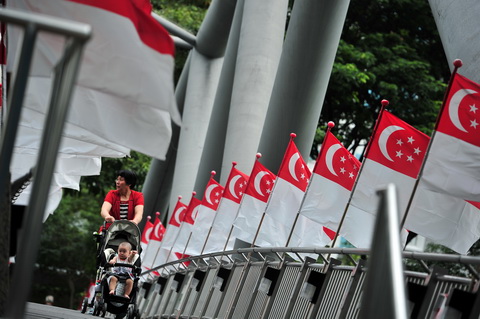
The salary of ministers and senior officials should be comparable to the salary of the leaders of their level in the private sector
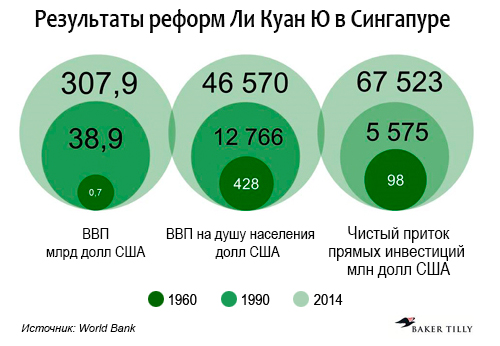
Singapore demonstrated that the system of pure, free election money helps to maintain an honest government. The Singapore government will be able to remain pure and honest only if honest and capable people will show a desire to fight in the elections and occupy official positions. To do this, it is necessary to pay them a salary comparable to the one that a person who has their abilities and honesty could earn money, occupying the position of a large corporation manager or engaged in private legal or other professional practice. These people managed the Singapore economy so much that it grew on average by 8-9% per year over the past two decades, as a result of which, according to the world bank, in 1995, Singapore reached the level of GNP per capita for 9th place in the world.
Representatives of the first generation of Singapore leaders were honesty. My colleagues would reject any attempt to bribe them. They exposed their lives of danger, achieving power not in order to get rich, but in order to change society. But it was impossible to reproduce these people, because it was impossible to reproduce the conditions in which they became like that. Our followers became ministers, choosing such a career from among many others, and work in the government was not the most attractive choice. If you are underpayment for a capable person holding the position of minister, it will be difficult to expect from him to work in this position for a long time, earning only part of the fact that he could earn in the private sector. In conditions of rapid economic growth and a constant increase in salaries in the private sector, the salary of ministers was supposed to be comparable to the salary of the leaders of their level in the private sector. Small -paid ministers and civil servants destroyed more than one Asian government. Adequate reward is vital for maintaining honesty and morality among political leaders and senior officials.
During budget debate in March 1985, I faced the opposition to increase the wages of ministers. A member of the Parliament from the working party D. B. Jayarenam compared my monthly earnings (29 thousand Singapore dollars) with the salary of the Prime Minister Malaysia, who received 10 thousand Singapore dollars, and “clean”-9 thousand. I gave an additional comparison and indicated that the annual salary of the President of the Philippines Markos (Marcos) was only 100 thousand peso, or 1 thousand Singapore dollars a month, and the president of Indonesia, who ruled the country with a population of 150 million, received 1.2 million rupees, or 2.5 thousand Singapore dollars monthly. Nevertheless, they were much richer than me. The leader of Indonesia retained his residence after resignation; Malaysia Prime Minister provided a house or land for the construction of a private house; My official residence belonged to the government. I had no benefits, there was no car, there was no driver, as there were no gardeners, cooks and other servants. I established a practice in which the Prime Minister and other ministers monthly received a certain amount of money and decided what to spend it on.
I also mentioned the gap in wages in China, where the minimum salary was 18 yuan, and the maximum - 560 yuan. Thus, the ratio between them was approximately 1:31. But this did not reflect the gap in the quality of life between the least paid workers and the highest paid leaders who lived behind the walls of Zhongnanhai near the “Forbidden City” (Forbidden City). This ratio also did not take into account the fact that the possibilities of acquiring goods and services were different, not the availability of cooks, servants and elite medical services. In general, this led to various quality of life.
Egalitarianism is a good policy. For decades, people wore the same type of jackets and trousers in the style of Mao, the same bad cut, sewn allegedly from the same material. In fact, there were various types of jackets. One of the provincial leaders, who was responsible for the development of tourism, explained to one of my ministers that, although they looked almost the same, the quality of the fabric was actually different. To illustrate, he unfastened his jacket and showed that he was on a fur lining.
The desire to gain public support, as a rule, encourages the government in power to pay less to its ministers. At the same time, the cost of housing benefits, the coverage of current expenses and costs for the use of a car, travel, costs of children's education often exceeds the size of their salary.
During repeated discussions in parliament in the 1980-1990s, I pointed out that the wages of ministers and other politicians in the UK, the USA and most Western countries did not keep up with the pace of economic growth. It was understood that the people who came to politics had private means. Indeed, in pre -war England people without their own source of income could be found in parliament extremely rarely. Although this is no longer a rule in the UK or the USA, nevertheless, the most capable people are too busy and make too much to strive to get to the government.
In the United States, highly paid representatives of the private sector are appointed by the president to the government for one or two terms (4-8 years). After that, they return to the private sector and work as lawyers or companies. Often they become lobbyists of anyone's interests, their “value” increases significantly, because they have free access to key figures in the presidential administration. Such a system of “rotating doors” seemed undesirable to me.
After receiving independence, I froze the salary of ministers and limited the increase in the salaries of civil servants in order to successfully deal with unemployment and economic recession and to give an example of self -restraint. When by 1970 we solved the problem of unemployment and it became a little easier for everyone, I increased the salary of ministers from 2.5 thousand to 4.5 thousand Singapore dollars a month. I left my own salary unchanged (3.5 thousand dollars per month) to remind the state sector to employees, that some self -restraint was still necessary. Every few years I was forced to increase the salary of ministers in order to reduce the growing gap in payment of their work compared to the private sector.
In 1978, Dr. Tony Tan (Dr. Tony Tan) held the post of general director of the large local bank, Ovrasiz, Tchainiz Bankeing Corporation, his salary was 950 thousand Singapore dollars a year. I convinced him to resign and take the post of state minister, offering a salary that was less than a third of his salary, not counting the loss of benefits, the most valuable of which was the presence of a car with a driver. The Minister of Communications, He TEN CEON also sacrificed many, throwing his career as a successful architect during construction boom.
In 1994, as a senior minister, I submitted a proposal to the Parliament to introduce a system by the government, according to which a revision of the salary of ministers, judges and senior public servants would become automatic, tied to the amount of taxes on income paid by the private sector. The Singapore economy grew 7-10% per year for two decades, and the increase in wages in the public sector has always lagged behind the private sector by 2-3 years. In 1995, Prime Minister GO Choca Tong dwelled at the formula I proposed, which linked the salary of ministers and senior public servants with the salary of employees of a comparable rank in the private sector. This allowed them to automatically increase the wirt, since income in the private sector was constantly growing.
This change in the remuneration system set the salary of a public sector at 2/3 of the income of employees of the private sector of a comparable rank showed by them in tax returns caused an acute polemic. Specialists who worked in the private sector were especially unhappy, because they believed that the salary of our ministers in this case would be completely disproportionate to the one that government officials receive in the most developed countries. People are so accustomed to the existence of civil servants who received a modest salary that they seemed to be inappropriate to the very thought that the minister not only possessed power, but that his work should also be paid in accordance with the importance of his work.
I helped the Prime Minister topect these changes. We rejected the arguments of the opponents who proved that the honor that the company provides to the ministers, trusting them with the right to occupy a high position and dispose of the power related to it, was already more than sufficient remuneration. They insisted that the service of society should always entail a loss in income. I believed that, with all his nobility, this approach is unrealistic and is the most correct means not to allow ministers to occupy their posts for a long time. But it was precisely the continuity and continuity in the performance of official duties and the experience gained in this way that gave us a great advantage and was the strength of the Singapore government. The experience and common sense of our ministers, which the government demonstrated when making their decisions, was the result of their ability to think and plan for a long -term perspective.
Although the opposition made the question of salarying ministers an important point of the pre-election struggle, the results of the general elections, which took place 18 months later, showed that the Prime Minister retained the support of voters. People want to see in power an honest, good, pure government that achieves real results - and this is exactly what the PND provided them. It has now become easier to accept a talented person from the private sector to work in the government. Before a new wage scheme was introduced, the best lawyers earned from 1 to 2 million Singapore dollars a year, while the judges paid less than 300 thousand. Without changes in the wage system, we could never attract some of our best lawyers to the positions of judges. We also brought a salary of doctors and other specialists in government institutions in accordance with the salary of their colleagues engaged in private practice.
This formula does not mean an annual automatic increase in salaries, because the income of the private sector increases or decreases. When in 1995, income in the private sector decreased, in 1997, accordingly, the salary of all ministers and senior officials was reduced.
President of the country as a keeper of the national treasure
In order to insure him to be a rash election to the government of less honest and noble people, in August 1984, in a speech at a meeting dedicated to the national holiday of Singapore, I suggested electing the president of the country. He would be the keeper of the national treasure, and would also have authority in order to cancel the orders of the Prime Minister if he had prevented the investigation of cases on suspicion of corruption against himself, ministers and senior public servants. The President would also have the right to apply a veto when appointing a supreme judge, chief of the General Staff and chief of police. Such a president would need an independent mandate of voters.
Many believed that I was preparing this post for myself to take it after I departed from the post of prime minister. In fact, I had no interest in this position, because for the person of my warehouse it would be too passive. This proposal and its possible consequences were discussed in the White Book of Parliament in 1988. A few years later, in 1992, the Prime Minister GO Choca Tong changed the constitution and introduced the post of elected president. We had to support the correct balance between the authorities of the President and the power of the Prime Minister and the Government.
When the countries of East Asia - from South Korea to Indonesia - were devastated by the financial crisis of 1997, corruption and consumption only worsened their problems. Singapore was easier to suffer this crisis, because we did not have corruption and kum, which caused multimillion -dollar losses to other countries.
Before the law, everyone is equal without exception
Those high moral standards that we have established allowed Prime Minister GOCK TOC to appoint a purchase of two real estate, made in 1995 by my wife in my name and my son Lee Sien Lung, Deputy Prime Minister. They both received a discount of 5-7% from the developer when buying real estate. The developer provided discounts of 5-10% and other customers-so he felt the market during the period of relative stagnation. Immediately after the acquisition of these real estate objects in the field of real estate, the boom began and the prices in the real estate market rose sharply. Those who did not manage to acquire real estate during the period of relative stagnation in the market filed a complaint with the Singapore Stock Exchange Committee, because the shares of this real estate trade company were quoted in the stock market. As a result of the investigation, the FBS came to the conclusion that the law was not violated during these transactions. Since my brother was one of the directors of this company, rumors spread that my son and I were dishonestly at the purchase of real estate. Singapore’s monetary policy control conducted an investigation and reported to the Prime Minister GO Chock Tons, that in receiving the discounts there was nothing illegal.
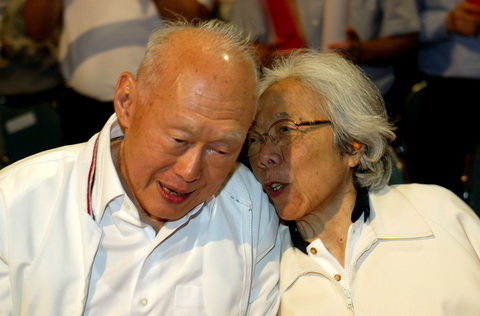
Chu was outraged by the inappropriateness of accusations. She worked as a lawyer for 40 years and knew that the provision of discounts was ordinary practice in real estate trading. I also indignant and decided to dispel suspicions of illegal business activity, having betrayed the publicity of information about our acquisitions and discounts. We paid the cost of discounts that amounted to about 1 million Singapore dollars, the Minister of Finance, that is, the government. The Prime Minister ordered this money to return to us, because he was convinced that there was nothing illegal in these transactions and the government could not claim this money. Lung and I did not want the matter in such a way that we benefited from family relations with my brother, who was the director of the company for real estate trade, and decided to transfer 1 million Singapore dollars to charitable needs.
I asked the Prime Minister to raise this issue in parliament in order to comprehensively discuss the problem. During the debate, members of the opposition parliament, including two lawyers, one of whom was the leader of the opposition, said that, according to their experience, the provision of such discounts was standard marketing practice, and therefore there was nothing illegal in our acquisitions. As a result of such an open and complete discussion of this incident a year later in a general election, this issue was not even raised. Speaking in parliament, I noted that the fact that the system I created allowed me to investigate and betray the publicity my own actions proved that it was impartial and effective. Before the law, everything is equal with us.
Confucian values [1]
The Deputy Minister of Propaganda of China Tsu WEICHENG (XU Weicheng) was struck by the uncorrived and effective administration of Singapore and asked how we managed to preserve the high social and moral qualities of people. I said that everything that we did was to strengthen the cultural values that people already had, their feeling of what was right and what was not.
Such Confucian values as devotion to parents, loyalty and justice, hard work and frugality, sincerity in relation to friends and devotion to the country are important supports of the legal system. We only strengthened these traditional values, encouraging the behavior that they corresponded to them, punishing the behavior that contradicted them. At the same time, we decided to destroy such vices as cums, favoritism and corruption, which were the reverse, shadow side of the obligation to help the family in Chinese Confucian.
Singapore is a compact society, and its leaders should set an example of honesty and impeccable behavior. Мы считали, что уверенность людей в том, что правительство не собирается их обманывать и наносить им вред, является жизненно важной. Поэтому, какими бы непопулярными ни были меры, предпринимаемые правительством, люди понимали, что эта политика не являлась результатом коррупции, кумовства или аморального поведения.
Ответ южнокорейскому министру Ро Дэ У [2]
Ро Дэ У был спокойным и серьезным человеком. Когда мы впервые встретились в июне 1986 года, он был министром в кабинете Чон Ду Хвана. Он высоко отзывался о некоррумпированном правительстве Сингапура. Его президент пробовал уничтожить коррупцию, но обнаружил, что это было нелегко. Он спросил, как нам удалось этого добиться.
Я объяснил ему, как работала наша система, базировавшаяся, во-первых , на хорошей системе сбора информации; во-вторых , на беспристрастном, а не субъективном подходе; в-третьих , на полной поддержке расследования и судебного преследования коррупции со стороны высшего руководства страны.
Источник: Ли Куан Ю. Сингапурская история: 1965-2000 годы: из третьего мира — в первый. М.: МГИМО-Университет. 2nd ed. 2010.
Фото: 1. Then Chih Wey / Zuma\TASS
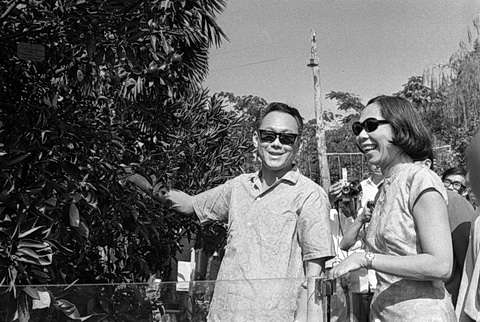
2. USSR. Sochi. 19 сентября 1970 г. Премьер-Министр Республики Сингапур Ли Куан Ю и его супруга возле дерева Дружбы в городском парке Сочи. Коньков Александр/Фотохроника ТАСС
3. In this May 1, 2006, file photo, Singapore's then Minister Mentor Lee Kuan Yew, left, shares a light moment with his wife, Kwa Geok Choo, right. AP Photo/Wong Maye-E/TASS
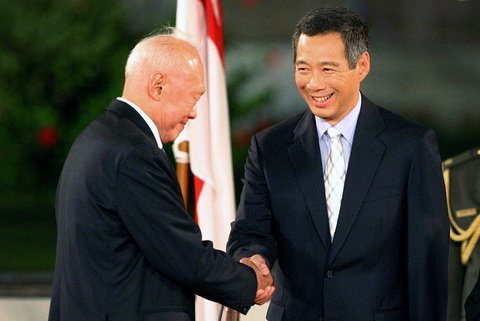
4. In this Aug. 12, 2004, file photo, newly-appointed Prime Minister Lee Hsien Loong, right, shakes hands with his father, then Minister Mentor. AP Photo/Wong Maye-E/TASS