
Translated material
Sad reputation
In the economy
 Sad reputation
November 30, 2011 Alexey Makarkin
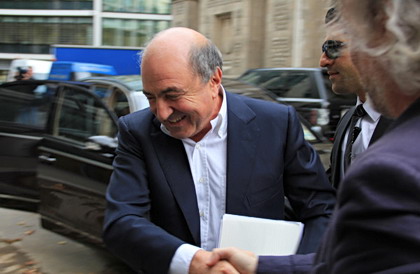
The judicial dispute between Berezovsky and Abramovich is an event, at the same time, unimportant and important. Unimportant for the vast majority of Russians. And important for Russian business and the state - their reputation once again was under blow.
The population of Russia is already clear. The fact that the state presses on business is like twice two. The fact that the authorities determine the rules of the game in the entrepreneurial sphere and can punish naughty and mercy (or, in some cases, seriously encourage) loyal ones is also clear. The fact that there is systemic corruption in Russia is even President Medvedev recognizes. Specific details of business pressure are unlikely to be interesting to many-the 90s were left behind, they have long been accustomed to loud political and economic scandals. And in general, something out of the ordinary on the process for the Russian consciousness did not sound-it seems that even if the parties have hidden secret weapons, then they are in no hurry to use it. Do not rush stones in a glass house, especially if you live in it - in the end, it was Berezovsky who made a considerable contribution to the creation of a system of large -scale political corruption.
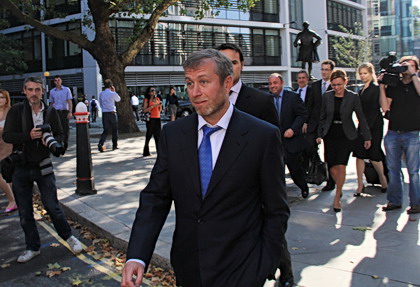
In addition, Russians in any business love to highlight the right and guilty. For whom to root, and who to whistle for. Here, both sides are equally antipathetic to the population. They completely do not consider Berezovsky a victim, but do not sympathize with Multimilliarder Abramovich. And if so, then the story interests them even less. You can draw a remote analogy with the first process of Khodorkovsky, during which most Russians did not sympathize with any of the parties (which was objectively beneficial for the authorities as a dominant player). Now the situation has changed - especially after the second court, even more odious than the first. According to the autumn survey of the Levada Center, for the 10 months that took place from the conviction of Khodorkovsky and Lebedev in the second case, the number of respondents who believe that this verdict was in justifying. Only 10% (compared with 19% in January) believe that the verdict was sentenced "in accordance with the evidence of guilt in court." The number of those who believe that Medvedev should have mercy on Khodorkovsky increased: 36% (67% in Moscow) against 28% in April 2008. 30% of Russians would be for the liberation of Khodorkovsky, 20% - against. But in order for a significant part of society to be among the sympathetic to the founder of Yukos, it took many years to prison and camps - which is not close in history with the London process.
Therefore, Berezovsky’s revelations and Voloshin’s testimony, Abramovich’s statements and the maneuvers of lawyers are interested in Russia unless directly involved in the process - and even experts and journalists. But this does not apply to a foreign audience, for which our “twice two” is almost a stone age. In the last decade, Russian business has made a lot of efforts to look more civilized, acting in the framework of modern “rules of the game”. Foreign consultants were hired, foreign managers were invited to work, an IPO was held on prestigious exchanges. Doubtful events of the past sought to betray.
And after the start of the crisis, the Russian authorities became interested in the growth of the country's investment attractiveness. And not surprising. When oil prices galloping, the economy is growing rapidly, and the people are satisfied with the rulers, then the need for foreign business in Russia is sharply reduced. You can squeeze it out, as happened with the Sakhalin-2 project, and create obstacles to new investors, belonging to most of the country's economy to the number of strategic enterprises. After all, the country rises from the knees and begins to think with imperial categories. When he begins to storm, it is time to recall common European values and reward foreigners again (especially innovators, but not only), convincing them that right now it is necessary to invest in Russia. And so on.
Not everyone did it successfully. The history of the work in Russia of the oil industry from BP did not contribute to the formation of a positive opinion among foreigners about Russian realities. But business often hopes for the best, coming to developing markets. However, the London process, if it does not cross out many efforts, puts their effectiveness for very great doubt. Moreover, the point is not only in the “skeletons from the cabinet” - the process is no worse than the “Khodorkovsky case”, demonstrates that in recent years the essence of the system has not changed. Guarantees of property rights were not either. Justice, however, improved (at least when it comes to arbitration proceedings), but if important political interests are present in the case, then it is necessary to forget about universalism.
For investors working in the field of high technology, a “smart economy” is an alarming call warning that you should not risk it. Of course, the investor is by nature apolitical, but the concept of political in Russia is interpreted very expandfully (as, for example, social responsibility is in Russian “voluntary-compulsory” laying out of a number of state functions). Another thing is that there will always be players who are ready to take a chance that worked either in Indonesia at Suharto or in Libya with Gaddafi - and among them not only gambling speculators, but also solid raw materials. The problem is that this is the economy of the twentieth century - and innovation loves transparency and democracy, that is, the exact opposite of what is around which a polemic is going on in the process between the former oligarch and the oligarch current.
Author-First Vice President of the Center for Political Technology
Photos of RIA Novosti