
Translated material
The justification of the court
Resolution: Judge Marina Nosova defended the honor of the judicial system, but now those who led us all to this line have paid for this
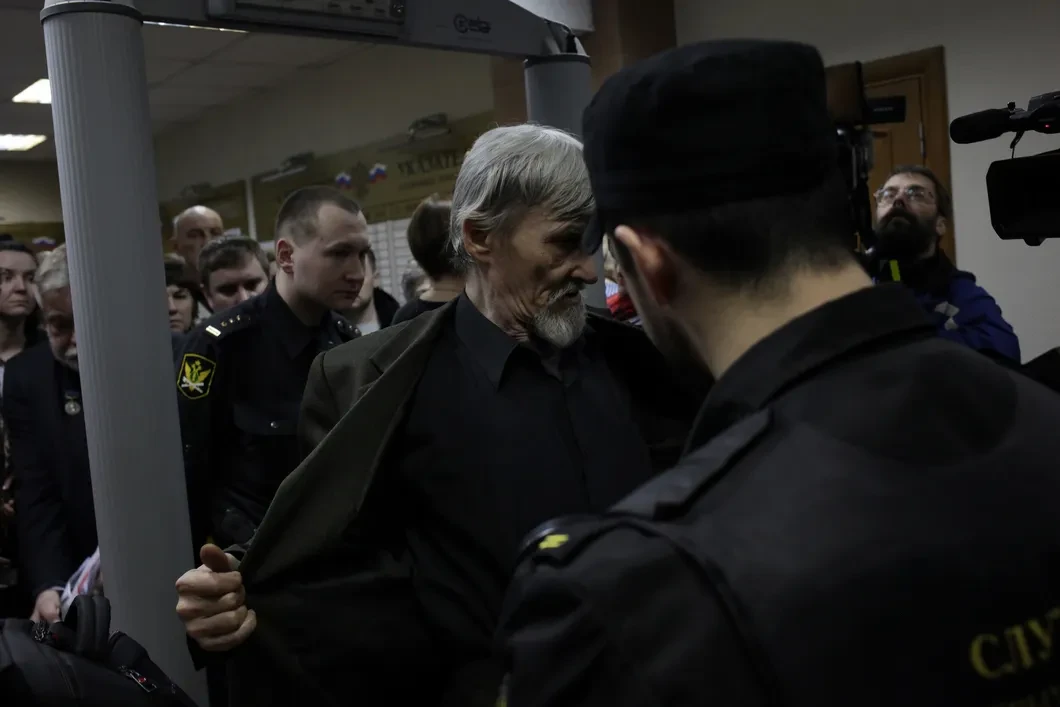
Dmitriev’s case put the courts and critically evaluating them (this is sociology) public opinion on a new line of confrontation. We are already used to the fact that there are, as it were, there are two truths: one is absorbed by the judge and, by virtue of this, soon “enters into legal force”, the other, alas, is often opposite, is clear to anyone who knows how to analyze the facts and draw conclusions. No court can deprive people of this natural law, and the mass of such conclusions (we add here the opinions of judges, which does not always coincide with their sentences) forms that the law is not regulated, but from a sociological point of view is a public opinion.
Until now, the discrepancy between two truths usually took place due to the provenness or unprovenness of a crime: evidence of Lukava (in particular, this concerns “examinations”), rarely one hundred percent convincing, and can almost always be argued about this. The fundamental novelty of the situation related to the “Dmitriev case” was determined by the fact that the charges against him, regardless of evidence, did not contain any corpus delicti at all, and attention! - From the very beginning it was clear to everyone who saw photos allegedly proving “pornography”. There was no question of the spread of it at all, although the charged with Art. 242 of the Criminal Code talks about "manufacturing for the purpose of distribution or public demonstration."
In order to determine the lack of composition, no examinations were needed, which three were carried out in the case, there was no court and the case itself at all: everything was clear to all the initiates from the very beginning (this is also to the question of excessive load on judges - of course, it will be the same, while the judges will allow “law enforcement agencies” to load themselves with such ... well, with Beliberda). The process, as it should be under such an article, was closed, and there could be some kind of fluctuations in public opinion-but only until the first information about the photographs appeared in the media. However, the investigator, who initiated the case, his leaders, the prosecutor who sent the case to court, the judges who gave Dmitriev’s sanction to custody, finally, the judge Nosov, who ultimately acquitted him, but before that extended the preventive measure and transferred him to the recognizance not to leave - they all saw the photographs, and there was no crime there.
To the honor of the judge of the nasal, she did not cross the line behind which it is no longer possible to respect either herself or the profession. But this is not the end of the Dmitriev’s case, but only the beginning of movement, now in the opposite direction.
This process should (I will not dare to write: “will”) be regulated by Articles 306 (“knowingly false denunciation”), 299 (“bringing the obviously innocent criminal liability”) and 305 of the Criminal Code of the Russian Federation (“pronouncing obviously unlawful sentences, decisions or other judicial act”) in terms of detention.
Judge Nosova perfectly understood that her sentence, even a compromise in terms of “storing weapons”, would give rise to this reverse chain in the Dmitriev case. So let's pat her: it is unlikely that she will be easily “in the system”. How easy it is to condemn in it and how hard to justify - although in terms of the meaning of justice everything should be exactly the opposite.