
Translated material
Versions of history
Evgenia Albats and Tatyana Yumasheva-A dispute about the role of the 90s and their results
By the 10th anniversary of the resignation of the first president of Russia Boris Yeltsin, his daughter Tatyana Yumasheva began to blog on the Internet.
And this gave the start of a political discussion, in which thousands of people were involved - including those who are on the Internet, and even more so in a living magazine, rarely looks. There have already been a lot of versions in the media why the close circle of Boris Yeltsin initiated this discussion. Some are convinced that the goal is to prepare a public platform for the 2012 presidential election. Others believe that Tatyana Yumasheva does not set any pragmatic task for himself and only wants to protect his father's memory. The New Times considers the discussion about the role of the 90s and their outcome-the coming to power V.V. Putin - extremely important and considered it necessary to join it
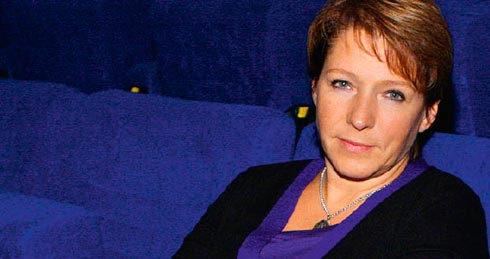
Tatyana Yumasheva in her blog t_yumasheva:
Why Vladimir Vladimirovich Putin? Secretary of the Security Council and at the same time the director of the FSB. In recent years, he worked in your administration. He worked very well. You knew him a little worse when he headed the control department of the administration, although you liked his clear and clear reports. And when he became the first deputy head of the administration, you were already able to make sure that you have a serious, strong leader, a politician. The first deputy is responsible for the regions. And in a matter of months he was able to establish good his own contacts with governors / ... / You are not at all embarrassed by his past work in the KGB. / .../ He will lead the country to a democratic course. He is for market reforms. He is with a strong character, he will continue the movement of Russia forward.
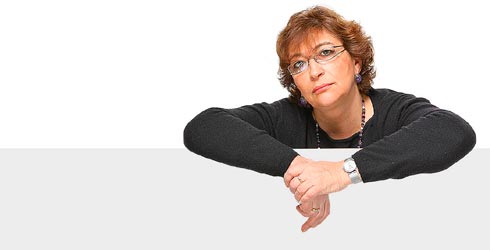
Evgenia Albats in an interview with Echo of Moscow:
Tatyana Borisovna writes how Putin was chosen - 10 percent of truth, and everything else is a continuous silence/ .../ It is still not clear why Boris Nikolaevich or the people who advised him, chose not Sergey Stepashin or Nikolai Aksenenko, namely Vladimir Putin. Berezovsky claims that the choice was made precisely Dyachenko (now Yumashev. - The New Times) and Yumashev. People who then worked in the presidential administration also say that it was Putin’s good relationship with Dyachenko and Yumashev that made him the successor to Yeltsin. They talk about how the meeting of the administration is going on, and the leadership of the administration, deputy head of the administration Vladimir Putin sits, is silent. We must make some decision. Express your opinion. He gets up - as he was then called - Vova, leaves the office, goes to the office of Tatyana Borisovna. Then he comes and expresses his opinion ...
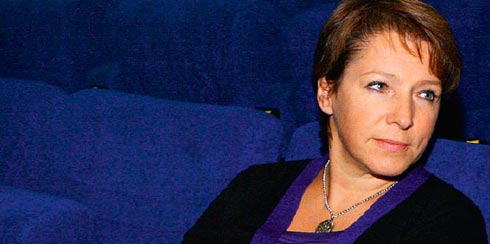
Tatyana Yumasheva in her blog t_yumasheva:
/ .../ Eugene says we still do not know why in the end the choice stopped at Vladimir Putin. But Berezovsky claims, she says that Dyachenko and Yumashev made this choice. But since when, Evgenia, Berezovsky became your source of information? Since when did you believe him? You know no worse than me how he loved to embellish, how he loved to present his role in any political process.
Further - even more fun. You are asked, a person cannot be chosen by forcibly, why did Putin not refuse the position of the president? You answer: yes, he really did not really want to. I wanted to go to Gazprom. But he was chosen by Yumashev and Dyachenko. And he went.
And there is no mention of Berezovsky. This is already you say - Yumashev and Dyachenko chose Putin. Naturally, the question arises: where do you get such incorrect information? You continue to tell where. With reference to people who then worked in the Kremlin. You describe this like this: “The administration is going on/.../” (see above. The New Times). Do you imagine the picture you draw? There is a meeting of the management of the administration. At the head of the table Yumashev or Voloshin, near Yastrzhembsky, Prikhodko, Pollyeva, Putin, Brycheva (legal administration), Shevchenko, Sysuev, etc. Yumashev asks a question, well, any, the most acute. For example, about Skuratov or about impeachment that you want. Everyone expresses their point of view in a circle, clockwise (such meetings usually took place). The line reaches Vova (I do not know a single person who called him that), he jumps up, runs to my office, receives the necessary instructions from me, then returns and says his opinion. Do you imagine this well? Is this not a crazy house?
Dear Tatyana Borisovna!
Of course, it would be more correct to lead this discussion face to face, and not “remote access”. Perhaps, the readers of your blog in a living magazine would have better understand those contradictory, crazy, sometimes terrible, but also wonderful freedom, which had never been in the vastness of the Fatherland, the 90s.
Moreover, today it is customary to groan them from the screens of television and from the highest stands, including primarily the successor of Boris Yeltsin. Although if it were not for these “dashing 90s”, where would those who are in power today and with conditions? Would you look at foreign students at Leningrad universities? Would they stomp from the representative offices of foreign missions, tracking which of the fellow citizens there are Western diplomats and correspondents? Would they swallow dust in the proxy-warriors in Angola and Nicaragua? Would you teach scientific communism or political economy of socialism at the universities of the capital?
This hatred of the 90s and the people who rose then-was it because the faces of that decade were by no means brothers in raspberry jackets, but also people are bright, extraordinary, no matter how much they did and what decisions made. Today, as one wise interlocutor once remarked, the time has come for the “triangles” who understand their grayness, and therefore even more hate those from that era ...
However, this is the misfortune: these “three -year -olds” were brought into power - not only you personally, Tatyana Borisovna, but also those who made these most important and, as “zero”, catastrophic decisions for the country.
My desire to protect Boris Nikolayevich’s memory is very respect for me. But the trouble is not even a trouble, the tragedy is that history will judge the first president of Russia, including for his successor. This is what is called his Legacy. The decision, which Boris Yeltsin told the Russians on December 31, 1999, turned into the destruction of the main thing that your father did for Russia: democratic institutions, albeit weak, but parliamentarism, the principle of separation of powers, pluralism of the media. Today's expansion of the state into the economy, monopolism, monstrous pressure on small and medium-sized businesses, “Rayer's Day non-stop”-all this is already a consequence. Yes, and corruption in the 90s was wild, and the oligarchs lost any idea of good and evil, and a demonstration of wealth and luxury in a widespread country-all this was. But today, corruption is no less - more, and Bentley, Maybachs, palaces demonstrate not only and not so much businessmen - officials who do not create or produce anything. But in the 90s you could breathe, but now it is impossible.
But these current results, Tatyana Borisovna, is again the consequence of that choice. Including how this choice was made - on the sidelines, under the carpet, in an atmosphere of absolute fog, when to understand why the finger stopped at the KGB Lieutenant Colonel V.V. Putin, and not on his predecessor as Prime Minister Sergei Stepashin, or not on the main railway worker Nikolai Aksenenko, is still difficult. Didn't you even understand your environment that, making Putin’s successor, you bring the most terrible institution of Soviet power to power, organically not accepting transparency and democracy - a corporation called the KGB?
Why did Anatoly Chubais, about whom you write so warmly, persuaded both President Yeltsin and Putin himself not to make this choice? Why did he lobby for the candidacy of Stepashin, and the Kremlin apparatus was against? You do not explain this on your blog. But maybe we, Russian citizens, have the right to know the arguments “for” and “against”? By the way, the process of transferring power from the First President of the USSR Mikhail Gorbachev was immeasurably more open to the first President of Russia Boris Yeltsin: he was recorded by reporters, if not a minute, then by day and hours.
Meanwhile, the opacity of the backstage choice in which you took part, the autumn-winter of the 99th year, predetermined the complete annihilation of any elections of recent years. Including the choice, more precisely, the purpose of the successor of Putin.
You were touched by a story about meetings of the Presidential Administration of the model 1998-1999, the mention that Vladimir Putin did not express his opinion without consulting with you? No, Tatyana Borisovna, these are not my speculations - this is a direct quote from an interview with January 2000 with the deputy head of the administration Boris Yeltsin. At the same time, I cited this quote in one of my materials: the conversation was strictly off the record, on the condition of compliance with the anonymity of the source, so I can’t name the surname (and the publisher of the journal Irene Lesnevskaya, and the chief editor of “Echo of Moscow” Alexei Venediktov is known). This person reads your blog and just the other day repeated these 10 years ago. He will consider it necessary - confirm in your blog.
And “Vova”, Tatyana Borisovna, Vladimir Putin was literally called - both his colleagues in Peter, and former employees of the control department of the presidential administration, which he headed at one time, and even subordinate to the FSB. So then he was called that you can do. Now, however, the name is different-the "master." Better? For me, it’s worse. Gives the zone.
And finally, Tatyana Borisovna, about the link to Boris Berezovsky. You ask the question: "Since when, Eugene, Berezovsky has become your source of information?"
From long ago, so since 1995-1996. How were the sources of information and dozens of other people - in power or close to it, in parliament, in political parties, in the FSB, etc. Such a profession has such a profession: ask questions.
With the exception of Vladimir Putin, I interviewed in those years from all the prime ministers of Russia, most of their deputies and key ministers, and many large bosses in the administration of President Yeltsin. This was time: officials considered it necessary to answer journalists' questions. Now - no, they don’t think. Afraid to trembling.
I did an interview with Boris Berezovsky regarding the choice of the successor of Boris Yeltsin in the summer of 2000 (see Izvestia on July 29, 2000), when he was not in emigration - in Moscow, in the very House of Logovaz techniques, where you, as far as you know, have been. Boris Abramovich really loved to demonstrate that he was a “prime minister and presidents.” And at that time, Berezovsky would just be beneficial to say: “Yes, I appointed Putin a successor” - in fact, you write about it in one of your posts. And I remember how reluctantly he said that he had recognized the surname of the successor later than others - he was clearly wounded. In a recent interview from London, which Boris Berezovsky gave the New Times magazine (No. 28 of August 17, 2009 - http://newtimes.ru/articles/detail/4735/) He repeated this again.
But another thing is important: Berezovsky was not at all the only source of information - it was confirmed by a number of other, very informed people.
And the last: there are many more questions that I would like to ask you. Perhaps this correspondence discussion would not have been, if power and people - and then, and now - close to it, would understand that the secret one must sooner or later become obvious, and the openness of power is an absolute need for the normal existence of the country.