Date
Author
Вячеслав Половинко, Дарья Козлова
Source

Preserved copy
Translated material
Mr. Guardian
As a new head of the Council for Human Rights, Valery Fadeev has made a way from a moderately liberal journalist to an apologet of the regime
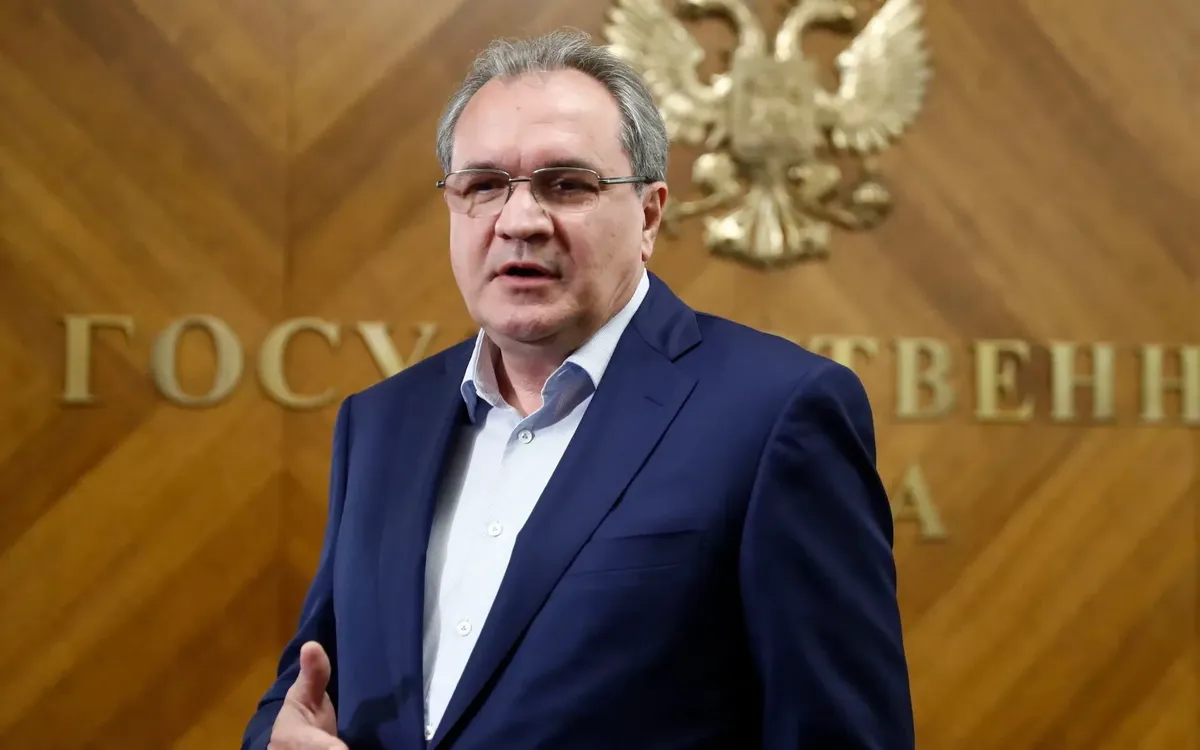
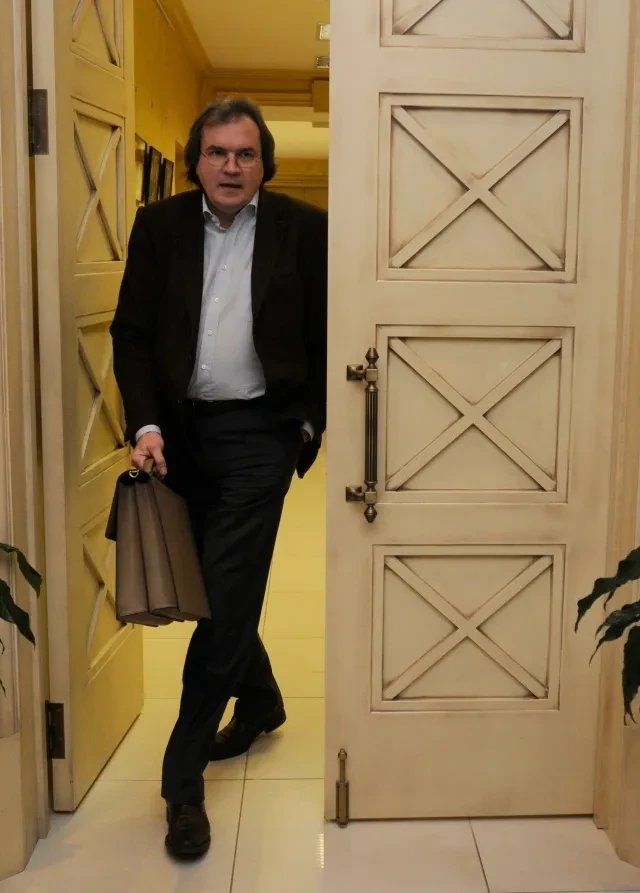
The new head of the HRC Valery Fadeev in one of the first interviews, after appointment, said that "illegal manifestations are inappropriate, especially in Moscow." The day after the statement, he seemed to play back, saying that he intends to “raise a question” about why there is still no response from the police and the Russian Guard about the complaints of victims on summer protests in Moscow. This does not mean at all that complaints will eventually be considered, but Fadeev’s approach inspired some commentators: perhaps he is not such a person of the state system and will be able to continue the HRC line. However, a little hopes for this. Valery Fadeev is inherent in some liberalism, but he still puts the interests of the state in the first place. This was almost always, but in recent years Fadeev from a journalist who was able to at least carefully criticize the regime, has turned into a full -fledged supporter of the current government. The "new" traced how Fadeev’s views changed, depending on what place he was in.
"Kommersant"
In journalism, a graduate of the MIPT, an operator of a missile mine and a senior researcher at the Institute of Market Problems of the USSR Academy of Sciences Fadeev first appeared in 1992 on the pages of Kommersant. The specificity of the publication was then that many invited authors were published on his lanes, and even those who were formally considered an employee of Kommersant, as a rule, worked somewhere else. Fadeev first acted in the newspaper as an invited economic expert, and a couple of years later he became the scientific editor of the weekly Kommersant-Weekly.
The then chief of the publication, Mikhail Rogozhnikov recalls that even against the backdrop of the “so bright collective” Fadeev struck everyone with “his bright appearance”.
“You know what journalists we are: we are running all overwhelming, the backs of scales, we smoke nervously ... Fadeev, who later joined the team, has already stood out. It was evident that the intellectual was distinguished by calmness, nobility of appearance and behavior, ”says Rogozhnikov. “He already showed himself as an economic thinker.”
By 1995, Kommersant-Weekly formed the first backbone of the future team of Fadeev. In addition to Rogozhnikov, who, by virtue of status, was a formal and informal leader, journalist Alexander Privalov was closed by the triumvirate (noted that he was “highly evaluating Fadeev’s personality, but refused to talk with the“ new ”). Probably, in the conditions of a close -knit team, Fadeev would continue to work in Kommersant for the long time. But everything changed a large scandal.
In the spring of 1995, a production and ethical dispute broke out between Mikhail Rogozhnikov and the owner of Kommersant Vladimir Yakovlev. Yakovlev, according to the public memoirs of Fadeev, brought an article criticized by Sberbank to the magazine and demanded to print it. But after checking the data, it turned out that the indicated problems of the bank are exaggerated, and the material itself is very similar to the custom. Rogozhnikov and Yakovlev entered a public skirmish. As a result, Yakovlev fired Rogozhnikov. “In general, we did not want to leave Kommersant, were loyal to the publication,” Rogozhnikov said. - But it became clear that disagreements of various kinds were growing. For some time before the conflict, we already had [thought] that, probably, we will have to leave. And if we leave, then we will really make a new magazine together. Fadeev was among those who subscribed to these agreements. ”
From what and what money the magazine was not very clear, but the ONEXIM-Bank, whose chief of public relations of which Mikhail Kozhokin, arranged attention to Rogozhnikov, Fadeev and Privalov, drew attention to the situation. A meeting with businessman Vladimir Potanin. Potanin agreed to finance the new edition, and in the same 1995 the first issue of the journal "Expert" was released. The name was invented by Privalov, the first editor became Rogozhnikov, Fadeev took the usual position of a scientific editor, to which the post of the first deputy of the main one was added.
"News"
In the mid-90s, Rogozhnikov left the post of chief editor, but Fadeev did not take his place. He suddenly moved horizontally: to the post of first deputy chief editor of Izvestia. This was a proposal that they do not refuse.
By the beginning of 1998, Izvestia still could not recover from a major scandal with a reprint of the article from the Le Monde newspaper about Gazprom’s shares for $ 5 billion, which the then Prime Minister Viktor Chernomyrdin bought himself. A few days later, the French newspaper printed a refutation, and Izvestia thoroughly shook: the publication was transferred to the strengthened control of Lukoil and the Onexim Bank. Mikhail Kozhokin, connecting the journalists from Kommersant with Potanin’s money, by that time became the Vice President of the bank and the “curator” of Izvestia, in January 1998 he proposed “pouring fresh blood into the editor”. “ONEXIM also had a stake in the expert business magazine, from there Doctor Kozhokin and took two“ donors ”, called the third from the outside. All three were appointed deputy chief in Izvestia, Fadeeva - the first, ”the former editor -in -chief of the newspaper Vasily Zakhariko sarcastically recalls.
For Fadeev, this transition was a test of ambitiousness: from the very first day, Zakhady felt that he was set by his understudy and expects to occupy the chair of the editor -in -chief over time. By that time, he already decided to finalize only before retirement and the unobtrusive claims of Fadeeva perceived calmly, all the more he believed that Kozhokin himself would eventually become the chief expense (so, by the way, it happened). The transfer to Izvestia, in fact, became a mistake in Fadeev’s career: without his former team skeleton, in someone else's team, he tried to translate his orders, but ran into the strongest rejection of the team. What did not prevent him from extracting dividends from this.
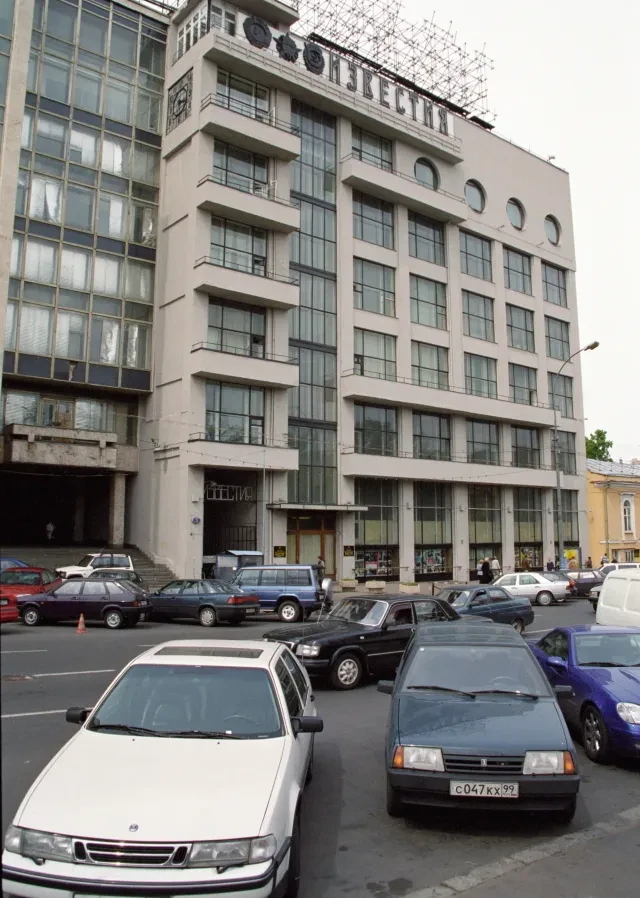
“In our first conversation, it turned out that Fadeev knew absolutely nothing about“ Izvestia ” - neither a richest story, nor an outstanding role in the development of journalism, no purely“ Izvestinsky ”professional experience, traditions, no legendary names,” says Zakharyko. -
We must pay tribute to him: he spent many days behind the archival bindings of the newspaper. And to my question, what was especially impressed, answered: the sport was previously well illuminated.
An unpleasant memory: a collection of the editorial office to discuss the reform proposed by the Fadeev group. A lot of naive, primitive, almost boulevard. And a lot of mocking laughter in the hall. And one more thing: some kind of cold, ruthless attitude towards people. Cross the entire staffing, reduce, fire a third! And nothing to anyone in return. ”
Former Izvestia employees, with whom the correspondents of the Novaya, noted that sometimes the inconsistency of the views of Fadeev and the rest of the team was striking. “Once he said that he liked the layout of Izvestia of the 30s-“ bricks ”without photographs-Fadeev seemed more convenient for the reader,” says one of the average administrative links in Izvestia. -And on one of the glider, when one of the employees referred to the fact that [Anatoly] Agranovsky would not do that, Fadeev noticed that, they say, who is this Agravsky: “What kind of special corner that made two materials a year? It was necessary to dismiss him! " One of the former Izvestia editors recalls that Fadeev once demanded that the phrase “We are mankurts” from the text of the journalist Edwin Polyanovsky, because Fadeev himself does not consider himself such. But the phrase about mankurts eventually resisted.
Many were embarrassed by some deliberate anti-American orientation of Fadeev’s thoughts (then this was not in the trend). Vasily Zakharyko believes that they could not influence these views on the editorial policy, since the newspaper’s course was always formed collectively. But the main problem was not this.
“Often some fighting was heard in it, while an ironic condescension to everything that blows from there, with a decaying-provering West, especially because of the ocean,” says Zakharko.
- It was noticeable, however, that he is a supporter of a strong hand in the state. At the same time, interest in the main many years of issue of Izvestia - man, his rights, freedom - was zero. Fadeev also believed that our deficiency is emphasized by patriotic journalism. ”
In the fall of 1998, instead of Zakharko, Mikhail Kozhokin, who was almost the first thing he sent Fadeev, was the editor -in -chief to Zakharko. In Izvestia, they exhaled with relief, but along with the ambiguous reputation of Fadeev made a lot of political ties out of half -year experience. This proximity to the “Kremlin phones”, as Vasily Zakharko put it, eventually gave a start to reincarnate Fadeev.
"Expert"
Returning to the magazine to the old team, Fadeev took up the post of editor -in -chief for almost 20 years and, in fact, made the main journal about the economy of the beginning of the zero years - both supporters and opponents of the new head of the HRC converge here in assessments. The sharpening of Fadeev on ideological leadership allowed him to formulate the main mission of the magazine, which by that time could still not understand what he wanted to talk about.
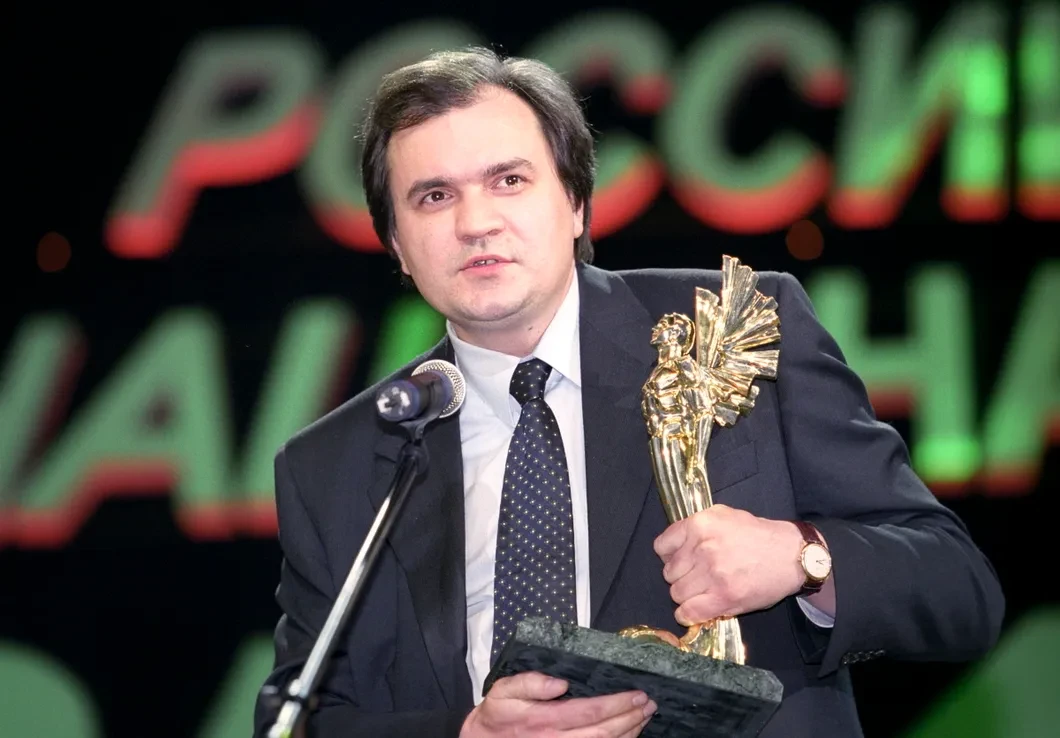
“The line, within which large topics were raised, I call myself the“ development of Russia ”. Fadeev believed that we have a huge country, and it was still underestimated. To do this, you need to create some rules of the game. "Expert" never objected to the rules of the game, says Mikhail Rogozhnikov. -“Expert” to the topic “How do we behave in a market economy at all, how can we swim in this water,” added the thesis that we are actually not fish that are floating there. And not fishermen who catch fish in muddy water (and the better it is, the better).
We are actually the owners of this reservoir. It depends on us what kind of fish will be found there, whether the water will be clean there and what algae will be there. ”
Fadeev was very lucky: on the one hand, he had a team of like -minded people, with whom he almost completely coincided with political beliefs (the easiest way to describe them to the term “conservative liberalism”). On the other hand, the “expert” was entirely about the economy, which allowed him to be more or less free in his judgments about the development of the country. “The Expert magazine was, of course, liberal propaganda, but could afford to criticize the current power - from the standpoint of healthy conservatism,” explains the employee who served with Fadeev and in the “expert”.
Journalist and publicist Ivan Davydov, who worked in the structures of the "expert" in the mid -zero, recalls that he was attracted by the "rather tough" articles of the magazine about the "Yukos case" in 2003. “In my time, Fadeev’s team often made the pages of the magazine criticizing the government, since this did not correspond to the correct and aimed at the development of economic policy from the point of view of the“ expert, ”says Davydov.
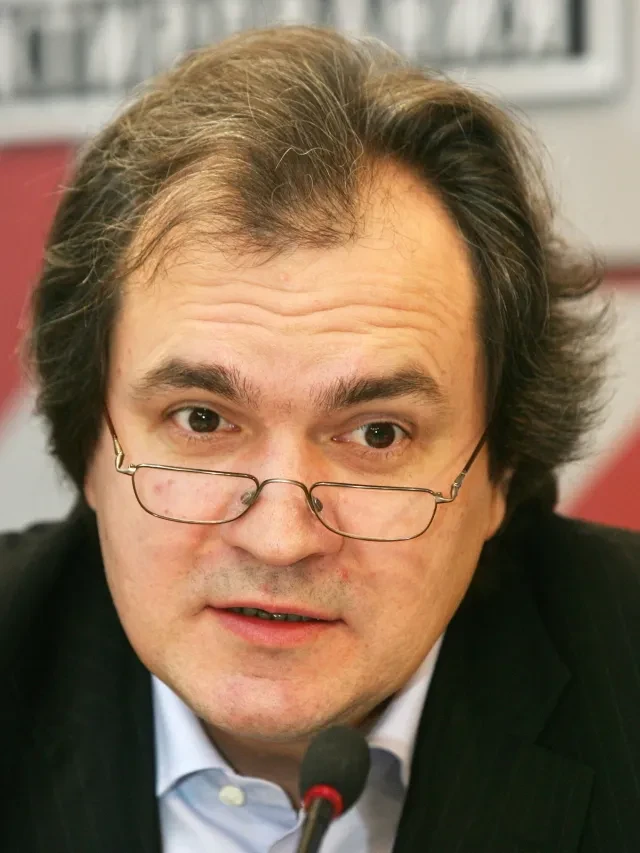
In 2007-2008, Fadeev launched two more projects on the basis of the expert. And if the Russian reporter magazine looked like a logical and consistent step in the development of the holding, then the launch of its own channel “Expert TV” put the financial well -being of the “expert”. The ambitious idea to overtake the time and create a business channel in the “figure” came across many managerial miscalculations of the “economic thinker” of Fadeev and his wife Tatyana Gurova. “For the channel, HD equipment was purchased, which then did not even have some federal channels ( and this is in December 2008, in the midst of the financial crisis. - Ed. ), The journalist who worked for expertw says. - The troubles began with this. In order to somehow straighten the financial situation [and patch the hole formed in the budget], Fadeev was constantly forced to reload the stakes of the "expert".
Oleg Deripaska, who owned the blocking package, was allocated some part of the funds, but even that was not enough.
But for Fadeev, as some employees describe his condition at that moment, the TV channel was the “idea-fix”. As a result, it closed only in 2013, closer to the second crisis. At this point, many employees have not paid salaries for a year (according to Kommersant, the total set of wage debts was 28 million rubles), and the holding itself owed the budget, printing house and lesslers.
The Expert continues to storm so far: in 2019, the Moscow Arbitration Court decided to sell a quarter of the holding shares at the market price, which were previously laid down on a loan to a shipyard. But this is already without the obvious participation of Fadeev: he left the magazine in 2017, finally changing a journalistic career to a political one.
Policy
Since Fadeev never hid his loyalty to the idea of the “strong hand of the state”, his participation in politics was a matter of time. It is known that he has long been part of the Public Chamber of the Russian Federation and was even its secretary until the appointment in the HRC. But the very meaning of the existence of OP to experts is generally incomprehensible. “From the very beginning, the function of the Public Chamber was to create the appearance of a certain liberal presence under the Russian authorities for social activists,” says Grigory Golosov, professor of the European University in St. Petersburg. - This function does not fulfill this function for a long time, we can say, from the very beginning. Then this function moved to the Human Rights Council under the President, so we are now observing how the Public Chamber flows into the HRC, and, probably, this indicates that he will be as emasculated as OP ”.
However, it was much more important in the public chamber for the career of Fadeev to interaction with Vladislav Surkov. The first public contacts between them have been known at least from the time of the already forgotten Seraphim Club in the early 2000s, but the main stage has come for a period from the mid-zero to the middle of the tenths. Surkov, in particular, became a fastening link between the magazine about the economy and the political career of Fadeev.
“At some point, the“ expert ”began to be associated with Surkov and the presidential administration of that time, because the“ expert ”, together with AP, was engaged in the Institute of Public Design, which was invented by the Public Chamber,” says Vitaly Leibin, editor-in-chief of the Russian Reporter magazine. “Among other things, these were partly attempts by the Presidential Administration of Domedvedevsky to find a political balance and attract conservative patriotic liberals to their side.”
Some Surkov’s software articles were also published in the “Expert”, and one of the popular hypotheses of the end of the zero is that it was precisely the structures controlled by the Surkov that the holding financing. Public expert employees deny this.
The proximity to Surkov and loyalism allowed Fadeev to easily climb the steps of the imperious staircase. In 2011, he became the coordinator of the liberal platform of United Russia, at the same time as the coordinator of one of the directions of the All-Russian Popular Front. A year later, he acquired the status of a trustee Vladimir Putin. In 2013, together with Vladimir Pligin and Viktor Zubarev, he released the manifesto of the liberal platform of United Russia, in which he argued that no other party, except the party in power, could defend liberal values in Russia.
“He climbed into the public sphere, and there they are not so much to achieve positions as they do not refuse proposals,” Leibin states.
In 2016, Fadeev tried to take another height - to become a deputy of the State Duma. To do this, he nominated his candidacy for intra -party primaries "EP" in the Komi Republic. Almost the perfect choice: shortly before this in the region, the entire former team of Governor Gaiser was cleaned in the region, and a bet was on the fact that the Varangian would not experience any problems with local elites, says Leonid Zilberg, founder of the 7x7 website. “Fadeev and his techno perceived the victory as a practically resolved thing,” recalls Zilberg. “But in the end, it seems to have been“ threw ”him from all sides: the local authorities did nothing to help him, and in Moscow at that moment Surkov’s problems began, and it was decided not to take any action.”
Fadeev took the last place in the intra -party primaries and left for Moscow without hopes for the deputy mandate.
At this time, Fadeev had already conducted a political talk show on Channel One called “The structure of the moment”, and in 2016–2017 he became the host of the main Sunday broadcast “Sunday time”. Telekritik Irina Petrovskaya calls the manner of his conduct of the program “None”. “He has absolutely no television charisma. Apparently, someone promised him this place, I have no other options for why he was there. ” It can be assumed that the sudden appearance of Fadeev on Sunday was a moral compensation for the failure in Komi.
К 2019 году Фадеев уходит из всех СМИ: долю в «Эксперте» продает ВЭБу, с Первого канала, по официально принятой версии, увольняется сам, чтобы «сосредоточиться» на общественной работе. Пост главы СПЧ для Фадеева становится очевидным повышением — должность президентского советника ему могли дать «по совокупности заслуг и за многолетнюю лояльность», говорит знакомый с ситуацией источник «Новой». «Он ведь и правда так думает, как говорит», — уточняет собеседник газеты, имея в виду свежие заявления Фадеева о неприятии несанкционированных митингов и пожелание тем, кому не нравится действующая власть, убираться «отсюда вон!».