
Translated material
: Reform again

The Ministry of Social -Revolutionary reform thought of a new pension reform: a number of provisions of the reform of Mikhail Zurabov are changing. The purpose of the department: to make the system balanced so that there is no need for budget infusions. The state actually dismantled pension reform.
By 2014, the government will begin pension reform, which offers to bind salaries and not index inflation. Full pension rights will give work experience for about 30 years, and less than now, contributions will have to be paid already from all earnings. The meaning of radical innovations in creating a balanced pension system that does not need budget infusion.
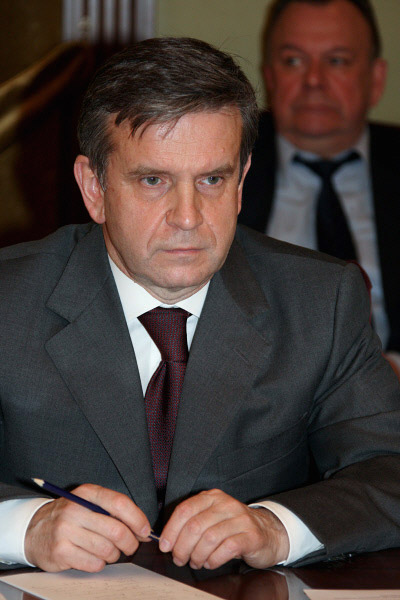
Mikhail Zurabov. Photo: Sergey Subbotin/RIA Novosti
According to Kommersant, in this way the government will try to fulfill the order of President Dmitry Medvedev - to find a way to reduce the rate of insurance premiums to a level close to the previous 26% (from January 1, 2011 it is increased to 34%). Two weeks later, the government will consider two options for reducing the rate of insurance premiums: a general decrease in the rate to 30 percent or a decrease to almost 26 percent for all other than large businesses.
The problem of pension payments is not purely Russian. The general aging of the population in Europe also forces us to think about the principles of pensions (see Mikhail Zurabov. How the world economy will change). Some countries switch to multi -level pension systems when the pension consists of several parts - payments from the state, the employer and the citizen himself. Thus, the distribution is combined (when the pension is paid from taxes of the working generation) and the funded scheme.
In Russia, they tried to solve the problem at the expense of the 2002 pension reform (the main deprivation of Mikhail Zurabov), which provided for the transition from the trial to the funded pension. All citizens born in 1967 and later pay contributions to the Pension Fund today. Of the funds accumulated on the end of their labor activity, they will be paid a pension. Those who were born before 1967 remained in the distribution system.
They were more fortunate. The Pension Fund manages the money received from employees, as follows - reports them to VEB. And he, in turn, invests money in financial instruments. Or the future pensioner himself brings them up to the private pension fund. Only investing VEB has the right only in papers of high reliability, and they are low -income. It turned out that in the first six years of functioning of the system, Web's income was at the level of 6.6 percent, a little more (6.8) for private traders, and inflation was an average of 11 percent. Pension money, therefore, decreased, and not increased. But there is also the costs of maintaining a personal account.
In short, the 2002 pension reform de facto was rolled up.
At the same time, it was not possible to achieve a responsible approach to the accumulation of pensions of the employees themselves. The employer pays contributions for them and, in fact, the majority is not interested in the pension system and do not know anything about their funds in it. However, the number of “silent people”, whose funds are automatically sent to VEB, is reduced: in 2010, the number of citizens who transferred pension funds to private funds increased from two millions to 3.9.
Pensioners who are in the distribution system regularly indexed pensions to a level just above inflation. This, however, led to an increase in the deficit of the Pension Fund. Therefore, the idea of increasing UST from 26 to 34 percent came up, which was done from January 1, 2011. However, the new tax rate did not manage to exist for six months, as in the Kremlin they decided to reduce it. New pension reform - a response to Medvedev’s demand to reduce tax. De facto increases the retirement age slightly. Increased discussions were conducted about the increase and has repeatedly said that there would be no increase in the retirement age.
The new initiative shows how to make the life of citizens worse, guided by good wishes.
Radical experts propose in principle to cancel the funded system as ineffective and return to the distribution system. In particular, the State Duma deputy Oksana Dmitrieva advocates the abolition of the funded system. In this case, the load on the working part of the population will still increase, which, according to many economists, will reduce the growth rate of the economy. The opponents of the abolition of the funded system are independent pension funds.
The pension system is a stumbling block for the Russian authorities (see Grigory Gritsenko. How can we compensate for a pension deficit). No matter how they try to reform it, it does not come out very smoothly and every time with a big scandal. This time, it seems, will not be an exception.