Translated material
Venezuelan parallels
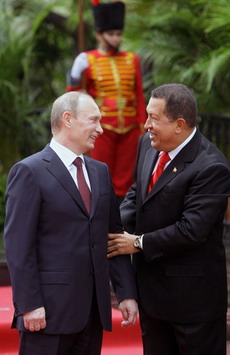 Analogies, as you know, are lame. But the similarity between Russia and Venezuela in recent years is so amazing that it is just right to draw up a textbook of comparative political science. The retired lieutenant colonel Chavez, who came to power in the late 90s under the slogans of the “oligarchs-predators”, did not differ in talents either in the economy or in public administration, but high oil prices came to the rescue for help. The stream of Nefteedollarov, who was pouring to the lieutenant colonel, neutralized protest moods and provided the regime with the silent consent of the majority, untied his hands to usurpation of the authorities. The term of presidential powers was extended to 6 years, the Supreme Court was equipped with supporters of the president, electoral legislation was blocked under the ruling party. The change of management of Petróleos de Venezuela, initiated by the authorities, set the oil industry (Venezuela has the largest oil reserves in the Western Hemisphere) under the reliable control of the presidential administration. The popular independent RCTV television company was devoid of etheric frequencies, and later the rights of broadcasting through cable and satellite networks. Chavez’s political opponents were in prison (former Minister of Raul Baduel) or forced emigration (ex-candidate for President Manuel Rosalez). The boycott of the 2005 parliamentary elections, announced by the opposition in protest against the lack of honest competition, allowed the supporters of Chavez to take 100% seats in the National Assembly and dismantle the remaining constitutional drawings. Having proclaimed the victory of the “Bolivarian model”, Lieutenant Colonel expressed the intention to stay in power for at least another ten years.
Last Sunday, the Bolivarian Model gave the first failure. On September 26, Venezuela was held in Venezuela parliamentary elections that the opposition did not boycott this time. The “Front of Democratic Unity” created by the opposition parties received 65 seats in the new National Assembly. The supporters of Chavez got 98 mandates - this is a formal advantage, but is already not enough for constitutional laws and the approval of judges exclusively by the forces of their own party (for this, the “Chavists” required two -thirds, that is, 110 mandates). The lieutenant colonel loses the qualified majority in parliament, and with it the possibility of sole rule. His prospects in the 2012 presidential election suddenly look much more foggy.
The failure of the authoritarian model sooner or later becomes obvious. In the context of an economic decline and natural fatigue of the population from the stuck king, the opposition did not stop neither the left -handed television, nor the controlled courts, nor the hostile election commissions. Luck begins to change the Venezuelan lieutenant colonel. Analogies, of course, are often lame. But the Russian opposition, quite possibly, is time to prepare for good news.
The author is a historian, publicist, member of the Federal Political Council of the Solidarity movement
Photos of RIA Novosti