Translated material
What does the future governor of St. Petersburg believe in?
Already in the first years of the reign of the last Russian Emperor Nicholas II, even before the rebellious fifth year, the sections of the official newspaper chronicle began to look somewhat unusual before the manifesto and the Duma democracy period. Descriptions of the dignitaries and the highest administrative officials of the state began to appear in them, descriptions applying for detailed portraits of the next outstanding figures of the empire. For example, Governor-General N. always cares about humanity and especially about the Russian people who subordinate to him. It consists of the trustee of the Orthodox Ensky Society, sacrifices to temples, commits pilgrimage, delves into the needs of poor students, achieves the allocation of large subsidies for the development of tram lines and public transport, etc. His wife is a patroness of city shelters for stray children, rich, sanitary institutions and other and other. The Governor-General and his wife visit temples, are present at the ceremonial discoveries and all kinds of public ceremonies. The Society of the Soul in them does not chat and offers prayers for their good activity. So the monarchy tried to turn around to the people of the human side, to show its democracy, openness and reliability.
Then, in 1917, other times came, other fathers of the Fatherland, already socialist, not at all sentimental and browing with their severity and laconicity. Another 74 years passed, and from the output August, everything suddenly rolled back, its own circles. Now large regional bosses come to the people from the Kremlin Olympus in the halo of a spiritual track record, with church candles in their hands and a complete set of other human features.
Find out anything from their real life is enough. Most of the current authorities descend to us, however, not from heaven, but from the Soviet and, as a rule, the Chekist-Partyan-Komsomol past. How they have such an explosive mixture, the muddy Soviet past and the Novo-Russian pious present, is incomprehensible. But the fact is undeniable: it fuses and how. Why is a similar alloy intended, what it works for - it is doubly incomprehensible. Although, of course, it is clear that it is aimed at the benefit of the Fatherland.
However, if in old Russia the glossy and empty portraits of courtiers and housekeepers were balanced by a strong public opinion, who knew a lot about the actual face of a politician and official, then in Russia a new, as in the USSR, people know almost nothing about their “servants”.
In recent days, the names of three applicants to the post of head of our northern capital flew out of the named after sovereign democracy. All candidates are from the Problem Prochrevsky politicians in demand in the zero years. According to political scientists, the most likely contender for the place of the head of St. Petersburg is the presidential envoy in the Central Federal District Georgy Poltavchenko, a few hours after Matvienko, the acting acting What is known about him, in addition to dry lines from official releases and restrained-vested characteristics from the mouths of bureaucrats?
The newspaper commentators unanimously claim that because of the isolation of the envoy about him, nothing is known about him. A business, pragmatic man, “pious”, “Orthodox Christian”. Former deputy Alexander Chuev, several years ago, met Poltavchenko in the temple, reports that “you can successfully conduct business with him, and just communicate humanly. He is able not only to listen, but also to understand the opponent. ”
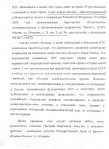
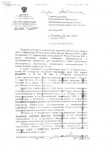
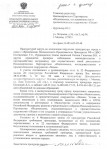
Meanwhile in early 2010. After Poltavchenko’s appeal to the Prosecutor General of the Russian Federation, the Moscow prosecutor’s office was instituted in relation to one of the oldest socio-political organizations in Russia-the People’s Labor Union of Russian solidarists (his magazine “Sowing” and its publishing house). The audit was excited "for compliance with the legislation on counteracting extremism."
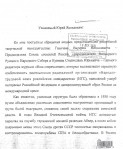
The initiative of the president’s plenipotentiary was born as a result of letters to him two, as he writes, “prominent representatives of the Russian creative intelligentsia: Valery Nikolaevich Ganicheva, chairman of the Union of Writers of Russia, the co -chair of the World Russian People’s Cathedral, and Kunyaev Stanislav Yuryevich - the chief editor of the journal“ Our Contemporary ”.
True, the names of these two figures are more likely to be a cohort of the sad-known nomenclature Soviet patriots, who in the 1960-1980s consisted in the ranks of the so-called "Russian Party." It included party-Komsomol functionaries of various ranks (Ganichev, for example, in 1967-1968, headed the propaganda department of the Komsomol Central Committee). They considered their task the struggle against any capitalist influences, or the Western export of democracy, “Jewish liberalism”, dissidents who supposedly decompose the moral of the Soviet people and the power of the socialist camp. Under the slogans of an ideological war, the members of this clan made a successful Soviet-party career.
Now Kunyaev and especially Ganichev emphasize their Orthodoxy (Ganichev, as, indeed, Poltavchenko, was awarded many orders of the Russian Orthodox Church). But the “radical organization” of the NTS, as well as the magazine “Sowing”, destroying the great USSR, began to inflict “damage to the interests of the Russian Federation” and discredit “the image of Russia in the international arena”. The history of the denunciation of two repainted Soviet national communists in detail, in the exciting style, is stated on the pages of one of the Russian “thick” magazines, “Banner”, in November 2010. The author of the article is Valery Sentorov, a well-known publicist, mathematician, a former Soviet prisoner of conscience, a long-term member of the NTS-notes that Russian solidarists in August 1991 fully supported the democratic choice of Russia. The members of the organization still do not consider themselves opposition to the authorities, recognizing its legitimacy, and with their criticism they try to help her to help the country's advance towards greater civilization and assimilation of Christian values.
It is paradoxical that the members of the former Soviet “Russian Party” sent a sly against the organization, which has been proclaiming its goal to the struggle for the restoration of historical Russia for many decades. On the title of her monthly magazine for almost 60 years there is a motto: "Not in the strength of God, but in truth." The publishing house "Sowing" printed such famous Russian nationalists of the late Soviet period as Leonid Borodin, Vladimir Soloukhin, Vladimir Osipov.
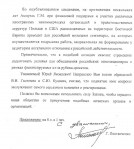
Why did the President’s plenipotentiary prosecution give the unfounded accusations, based only on the interpretation of thoughts and ideas? “I would have believed it is possible,” he impressively completed his appeal to the prosecutor General Chaik in December 2009, “to use the power of the law to protect our society from the presence of such printed bodies and organizations.”
It seems that the whole thing is the specific piety of the “pious” post -Soviet officials, which they borrowed from the Old Roma of the Tsarist elite. Playing before society as defenders of faith, the good -hearted fathers of the nation, simultaneously strict to its enemies, high -ranking bureaucrats of old Russia, undoubtedly, developed ideological postulates of the so -called national Christianity. These propaganda developments of tsarist dignitaries were, in particular, used by Germanic National Socialists, in the 1920s invented the poisonous surrogate of the Christian religion in the form of the National Church. That is, the type of Christianity has constructed that its spiritual, deeply humane content was replaced by the highest interests of the nation, power and Nordic ideology.
This kind of faith and piety not only do not stop ideological headphones, but extremely disposed to it. Especially if they are combined with the heritage of Soviet agitprop and Soviet detective. The reaction of the President’s plenipotentiary to the clicks of the two dinosaurs of the repainted Soviet literary hierarchy involuntarily highlights the content of his faith. With such a faith, where will he start a long -suffering beautiful city on the Neva?
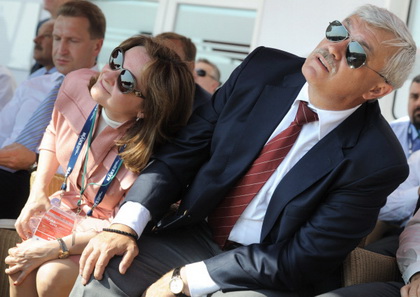
Photo by RIA Novosti,
photocopies of documents are provided by the author