
Translated material
The statement of incapacity
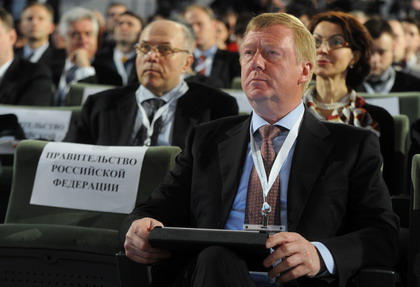
The main feeling that remained after the Gaidar Economic Forum remaining at the end of last week is a disappointment bordering on bewilderment. Words, mostly smart and correct, was said a lot. The trouble is that they did not sound for the first time, and not even for the fifth time. Over the past couple of years, an economic discussion has not moved a step, and to what is happening with the Russian economy in reality, it has less and less relations.
Prime Minister Medvedev, as at the time of his presidency, longs for the accelerated rates of economic growth due to the development of non -resource sectors of the economy. True, if before the crisis, experts talked about the growth of the economy by 6-7% per year, now the prime minister sets the task of achieving growth by at least 5%. But this relatively modest result does not look too realistic against the background of the current 3.5%.
The discussion about where to get additional sources of economic growth also does not shine with novelty. Some, including the prime minister, speak of structural reforms, business and investment climate, state departure from the economy and consistent privatization, stimulating private investors. Others are ready to bet on large -scale state investigations in infrastructure, for the sake of which they are ready to close their eyes to an inevitable budget deficit in this case. All the same words were pronounced a year ago, and two. The only difference is that earlier the “main ideologists” of government liberals were Kudrin and Ulyukaev, and now - Ulyukaev and Siluanov. The first deputy chairman of the Central Bank and the Minister of Finance is still arguing with the deputy head of the Ministry of Economy Andrei Clepache.
However, if the arguments of the ministers and their deputies are still somehow mating with reality repeatedly, pouring into battles for budget billions, the premiere’s performance sounded quite a pity. Take at least a passage dedicated to the state corporations. According to Medvedev, they "played a role in the consolidation of disparate assets, and in the future their fate should obey certain rules." Take an attach. True, for this it will be necessary to forget how in July 2009 Dmitry Medvedev, while still president, expelled the head of one of the most odious state corporations - Rostekhnology - Viktor Chemezov from the Presidential Council on modernization. He also instructed the Prosecutor General Yuri Chaika and the head of his control department Konstantin Chuychenko to check the financial activities of the state corporations and submit proposals on the advisability of further use of such an organizational and legal form. Then he signed a decree on the preparation of the “Concept for the Development of Legislation on Legal Entities”, which contained a proposal to abolish the state corporation as an organizational form of legal entities. The discussion about the further fate of the state corporations was conducted the whole second half of 2009, and then the question was only about whether they would be state -owned or abolished.
But the state corporations safely survived until 2013, and today the recognition of their “merits” and the mild reminder that it was time to know the honor of Medvedev sounds like a recognition of his own incapacity. As well as the Medvedev call for privatization. In a detachment from the context, this call would sound quite adequately from some young inexperienced politician taking the first steps in the government. But against the background of the absorption of Rosneft, one of the largest private oil companies-TNK-BP-these words of Medvedev indicate only their lightweight and insignificance.