Translated material
Inter -settlement territories
 Ali Magomedov
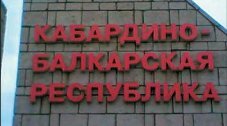
In the extensive editorial mail of the Dosh magazine there are a lot of interesting information, but we were especially interested in the one. And not just interested, but forced to think. Thinking with you, dear reader. But first a brief historical excursion. Balkars, one of the title state-forming peoples of the Kabardino-Balkarian Autonomous Soviet Socialist Republic, also fell into a number of repressed peoples. The unification of two from the ancients of the neighboring peoples of the North Caucasus - Kabardins and Balkars - took place on a parity basis in the 20s. Each of them invested his territorial share in the “common economy” of the republic. Kabardins are spacious arable lands and valleys at the foot of the Caucasian ridge, Balkars - mountains with their gorges, inaccessible gorges and peaks. Both peoples have long been harmoniously complemented by each other, without interfering with the natural development of their ethnic cultures.
On March 8, 1944, Balkars were subjected to total expulsion to Central Asia. Their territory was divided between Georgia and Kabarda. In 1958, the statehood of the Balkars was restored, the Kabardino-Balkarian Republic appeared on the map of the USSR again. The ethnic territory of the Balkars was returned to Georgia to the RSFSR, to the Kabardino-Balkarian Autonomous Soviet Socialist Republic. But one and a half decades of life without Balkars, many of their territories were occupied by neighbors. And even after returning from the exile of the Balkars, the long, hidden, decorated under the legality of the intrigue to assign the Balkarian mountains continued. The term “inter-settlement territories” arose, applied exclusively to the historical Balkarian land, followed by a focused oppression of the ethnic group-host, restriction of its resettlement, and the ban on living on the grandfather's lands. Balkars were pushed from the development of open wealth. 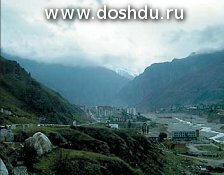 The Declaration of the Supreme Soviet of the USSR of November 14, 1989 “On the recognition of illegal and criminal repressive acts against peoples that have been violated and ensuring their rights” and then the Law “On the Rehabilitation of the Repressed Peoples” of April 26, 1991 with subsequent decisions of the Supreme Soviet of the USSR, the RSFSR, the Russian Federation, in which the provisions of the provisions of clearly formulated territorial rights of repressed peoples, including Balkarian. However, with the assignment of someone else's ethnic territory, it was not only not finished, but the intrigue, started by this purpose, continued to develop and complicate. Especially for the sake of this, many supposedly public nationalist organizations arose that unleashed the struggle with the “illegal claims to the rights” of repressed peoples, without disdaining them with exposure, direct slander, resuscitation of Stalin-Berievsky accusations, etc. There is a targeted artificial unremation of interethnic conflicts, fraught with unpredictable consequences.
A similar allegedly interethnic, but essentially territorial conflict between Ossetians and repressed Ingush is widely known: rehabilitated Ingush also did not return their indigenous territory, and Ingush cannot live without it, as, for example, Georgians without Tbilisi, Ukrainians without Kyiv, and Russians without Moscow ... This is a conflict of two republics - North Ossetia and Ingushetia. But what is happening in a single Kabardino-Balkaria? Why is one of the title peoples of this republic oppressed?
The Council of the Elders of the Balkarian people was forced to send a thorough statement on violation of the territorial rights of Balkars to the chairman of the parliament of the KBR I.B., Prosecutor of the KBR O.O. Zharykov, a copy of the application to the General of the Russian Federation Chaika Yu.Ya. For 50 signatures of deputies of the State Duma and the Council of the Federation of the Federal Assembly of the Russian Federation.
People here still do not leave the hope that in Moscow, in the Kremlin, they will pay attention to an indisputable fact - the situation in the Kabardino -Balkarian Republic has nothing to do with equal coexistence of two titular peoples. Conflicts of this kind are not only unacceptable in terms of legality and morality, but also conceal a serious danger to the Russian Federation as a whole.