
Translated material
Magellanic clouds
Magellanic clouds, large and small, are the satellites of our galaxy. There are quite close to us - 50 (large) and 60 (small) kiloparsk - and close to each other. For comparison: the diameter of the disk of our galaxy is about 30 kiloparsk. The Magellanic clouds together are an order of magnitude smaller than our galaxy in the number of stars and luminosity (by mass the difference is even more, due to dark matter). However, there you can see a lot of interesting things, including such that it is difficult to see in your surroundings: the disk of the galaxy is very dusty, and most of it is not available for optical telescopes. In particular, gigantic nebulaes are visible there-gas-pile complexes, in which the brightest clusters of young massive stars are born. Pictures of their very reduced, close to us analogues were published in the Trinity version No. 18.
In these gas-pile complexes, everything is the same: a two-phase environment (cold dense gas with dust and hot luminous gas) with a density and temperature contrast in two to three orders of magnitude, bizarre forms due to the outlet of the cold phase with an ultraviolet stars, finally, the brightest clusters of young massive stars born in complex.
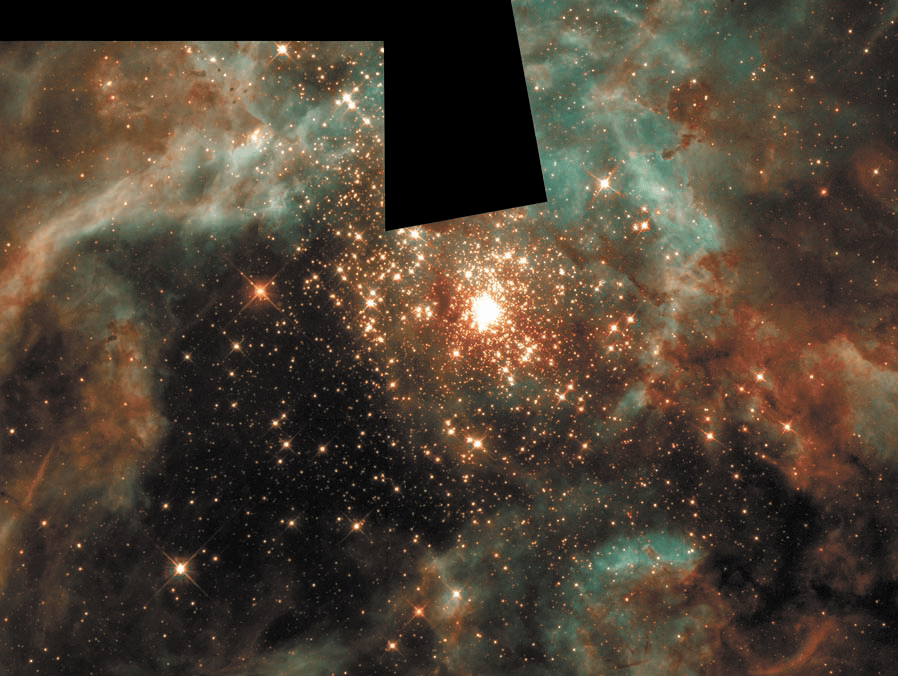
Giant (70 × 50 parsec) gas-pale tarantula (30 gold fish) in a large Magellanic cloud. In the center is the brightest stellar cluster R136 only 2 million years old. In total, there are about a thousand stars in it, among them dozens of giants weighing about a hundred masses of the Sun.
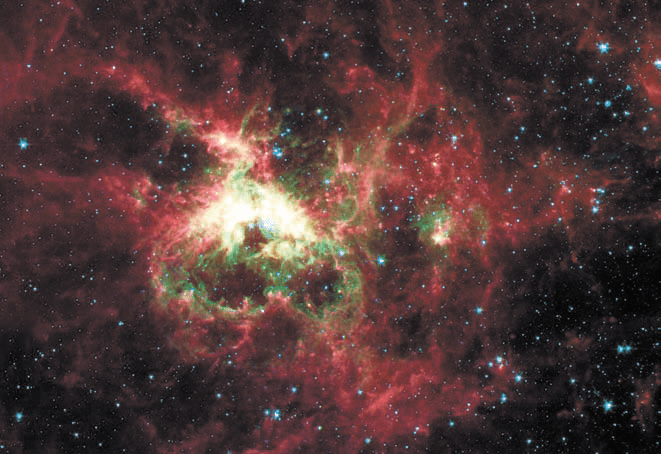
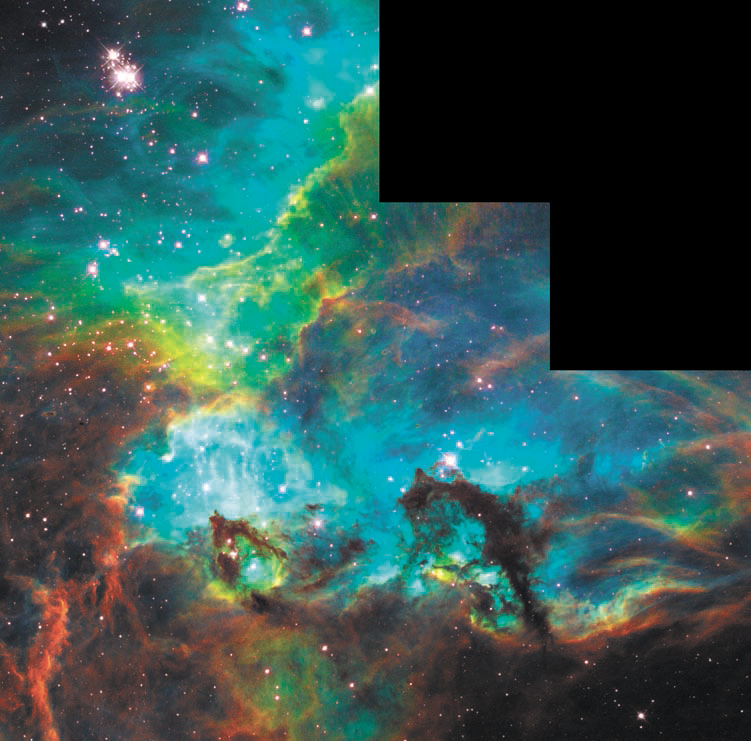
Next to Tarantula.
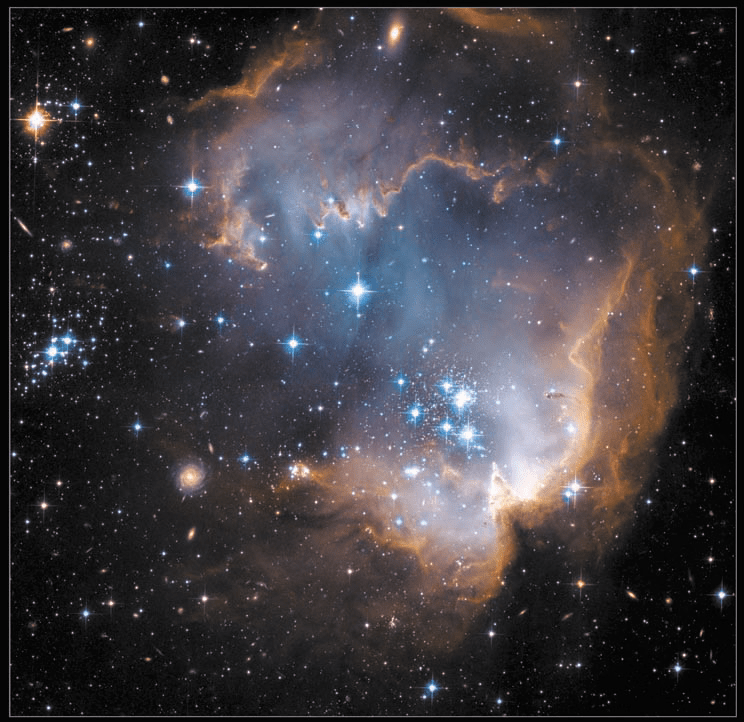
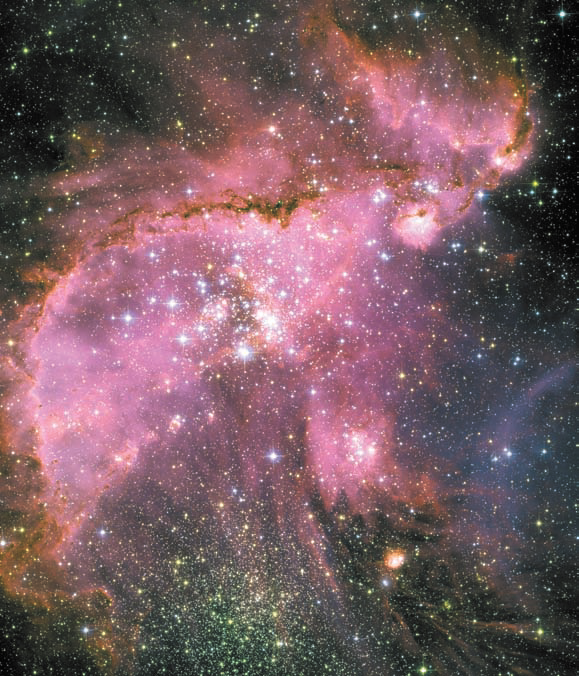
Pictures of the Hubble space telescope are available at http://www.stsci.edu in the form of a well -systematic album. They are open for non -profit use.
The strip was prepared by Boris Stern