
Translated material
: Steal ...
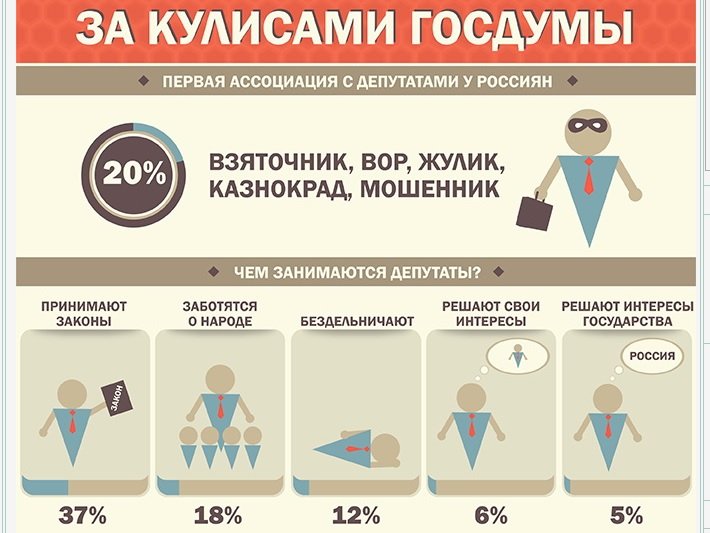
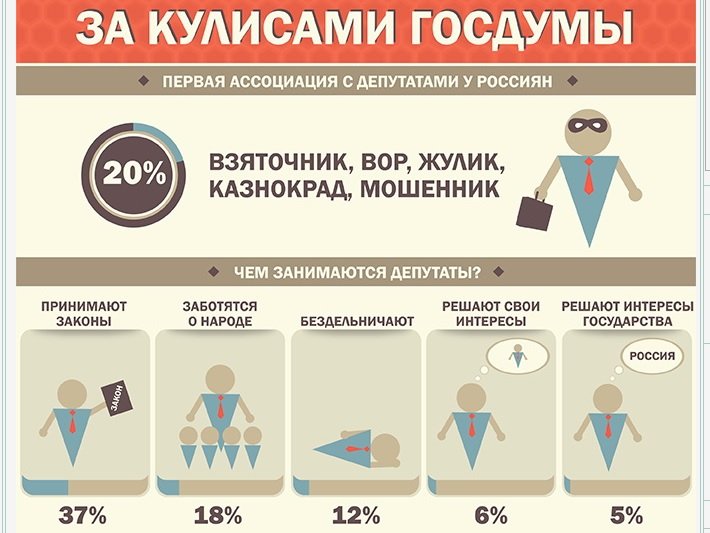 The image of a typical deputy according to Russians. Picture from the site wciom.ru
Almost synonymous with the word “deputy”, a significant part of the citizens considers the words “fraud” and “thief”. The attitude towards officials is a little better. It turns out that the level of negativity in relation to representatives of the authorities is almost equal or even exceeds the level of positive. What makes an extremely tempting “witch hunt” inside the authorities itself.
Representatives of the authorities of Russians do not cause much respect. Putin, Shoigu or some departmental structure with a long and established mythology, conditionally “Kremlin” or “most important bosses”. But specific officials, security officials or deputies are a completely different story, they are not so much in love, but they definitely do not trust.
According to the fresh data of a survey of the All -Russian Center for the Study of Public Opinion (VTsIOM), the associations themselves, which causes the word “deputy” in citizens, are far from comalized for parliamentarians. The question “what comes to your mind” was asked in the open form, that is, the Russians were chosen at once by several answers, but this did not help the deputies, and the picture leaves the sad for them. The most popular response, according to the results of the study, was “bribery, thief, crook, embezzle, fraudster” - 20 percent of the respondents were given this association. Further, with a significant margin, “negative emotions” and “representative of power” (11 percent). 9 percent remembered the “thirst for profit”, 7 called the deputy “Darkomed”, 5 - “Defender of the interests of the people”. Only 2 percent of the respondents thought that it was “smart, educated, causing sympathy, trust in a person”.
A typical deputy in the representation of Russians is more likely to take care of their own interests a bribe taker, indifferent to people (such estimates prevail also) than close to the people, an honest person and the guardian of the law, which is on guard of the country's interests. The paradox, however, is that the specific work of this deputy causes much less complaints: at the workplace he is engaged in the adoption of laws (37 percent), cares about the good of the people (18 percent), and is engaged in state affairs (5 percent). There are smaller negative assessments here: only 12 percent considered that at work the deputy is loafing, 6 - “decides his personal interests” (such a wording in the survey), 4 - the people are robbing.
This, of course, is not entirely fair to deputies from citizens-our deputies are different and even if most of them defend their political interests (or group, selfish, any other), this does not mean that they do not work and do something useful for the country and its population.
However, there is a most negative image and this image - this is the image of power in general. Say, according to the study of the Levada Center from the fall of 2011, 40 percent of Russians completely agree with the opinion that most politicians are engaged in politics only for their personal benefit. Another 45 percent agreed in part. The same percentage agreed with the judgment that many government officials did not obey the law (35 - definitely yes, 50 percent were inclined to such an interpretation). Two -thirds then replied that the interests of the authorities and society in Russia do not coincide. In other words: an abstract deputy or an official in the eyes of Russians, rather, a bad person and certainly does not bring to them personally, rather harm.
What such ideas are rooted in is definitely difficult to speak, but they are quite stable (perhaps only a little intensify). The phenomenon of the popularity of the slogan about “a party of crooks and thieves2, tied to“ United Russia ”by Alexei Navalny, is also connected with that. He, as a person, at least within the framework of his own blog, receiving a more or less real feedback, and in real time, he simply got in anticipation of a significant part of the public. Therefore, his popularity grew, and therefore things were instituted against him, and the authorities tried to intercept him with tough anti -corruption rhetoric with specific accusations of specific officials and businessmen close to them.
And when the former State Duma deputy Vladimir Pekhtin says that he will sue Navalny and sue the latest annual income, because the accusations of Navalny against the mansion in Miami are not true, and significant damage was caused to the honor and dignity of Pekhtin. Earlier, other United Russias tried to excite something against Navalny because of the slogan "Party of Crooks and Thieves." Judging by the surveys, deputies and other party members can easily add half the population of the Russian Federation to the co -standers, since the attitude towards them is just that. In February 2013, with the slogan “United Russia - Party of Crooks and Thieves”, 40 percent were generally agreed, 41, almost equally, they did not agree (you can’t understand, however, what role “socially approved answers played here).
Here, the focus, of course, is not in Navalny - he knows far from such a large number of Russians. But how many of them agree with the slogan promoted by him! When journalists in Kirov tried to ask who Alexei Navalny was, few could answer, but a couple of answers (interviewed the publication PublicPost) were very characteristic: “The official, probably, some kind. Who else steals money? " And "some deputy, something illegal has done and criminal cases against him now."
In other words: having mixed in the head of Russians, propaganda and counter -propaganda of the authorities for the image of the authorities itself, not much positive. From this today, the political profits are not at all extracted by Navalny himself with his “crooks and thieves”, but by Vladimir Putin and his administration, who saddled the topic of corruption. The rest of the authorities should be anxious. If the image of an “official-corruption” and “deputy-zhulik” will intensify in the mass consciousness, then there will be very few options for the development of events. Either for the sake of maintaining power, the Kremlin will turn the campaign for the “fight against corruption” into witch hunt, or the current elite will lose power at some point. Plus, a set of intermediate options that are just as risky for each specifically representative of the elite: after all, anyone can be under the blow.