
Translated material
The opera jumps
This is not about the next readings of the classics, not about the opera that serves as a front entrance to the citadel of the ancient tradition. Not about the one where the overhead beards are elegant wigs, but people go with a special picture gait: at first you notice how the hero’s leg begins to rise, and only after a few seconds you can hear how hard the heroic boots are lowered onto the stage. It's not about old texts in which love, death and politics stand behind the backs of kings, duchess, mavrov, Ethiopian captives, painful ladies and paradise birds. Not about the opera where the classic, dressed in the directorial interpretation, is so sharply talking to the audience that some are afraid to come. And not even about the one that is the subject of professorship and academic studies. The conversation is not about the industry of expensive ideas designed for large, but qualified demand.
Rather, on the contrary, the chamber is not necessarily strictly professional. In Moscow and around - almost a boom of modern opera. In the new season, there are six meaningful premieres of new operas, completely fresh, only recently invented and composed, including “Titi's impeccable” Alexander Manotskov in the production of Vladimir Mirzoev in the Chamber Music Theater Boris Pokrovsky, “Blind” by the American Lera Auerbach, the youngest composer in the catalog of the prestigious musical publishing house Sikorski , in the catalog of Sikorski, The Muztera of Stanislavsky (as part of the Operape project) and the abstract parable “Full Moon” of the radical avant -garde, Alexei Sysoev in the production of Philip Grigoryan (Moscow premiere of the project, already submitted at the Territory festival in Sochi and Kazan, October 16 in the Theater of Nations). This is the case, except for the long -awaited premiere of the opera Dmitry Kurland "Nosfrata" in February in Perm. Against the background of foreign order, the numbers look, of course, pale. Over the past five seasons, two and a half thousand different operas have been played in the world, of which more than 300 are world premieres. Thousands of authors went into business, of which 640 are our contemporaries. In Germany, leading among other countries in the number of opera performances, about 20 world prime ministers pass each season. And this is not a special rise in opera business: so it was started, the tradition was not interrupted, and the industry grew. Unless the special pressure, the emphasized state propaganda of new music in Germany after the war influenced the gradual increase in the number of premieres on the opera stage - which excites the neighbors, forcing them to move.
But here are completely different orders. And the six or seven prime miners capable of hurting-this is a lot, so many that it becomes noticeably naked eye.
Here, modern opera is a separate type of art. It rests aloof from tradition and occupies not only those who work in the title musical genre or gently love it. More often these are completely different people. Artists, poets, directors and composers who are not seen either in revisionism, nor in the habit of hiding in academicism as a shelter, on the contrary, in an effort to communicate with the general public or officials on premieres in large theaters. What else, it would seem, can attract an old, bulky genre.
State theaters and ministries do not order operas. The "children of Rosental" by Leonid Tratnikov - Vladimir Sorokin at the Bolshoi Theater confirm the rule. And when the Nashi squads and Duma deputies besieged the stake in the struggle for morality in the opera (they annoyed Sorokin), the tenants (in turn, annoyed by mass interest in the cabinet work) said: “This is done by people who do not know that there are still music in the leadership besides words.” Then he did not know that even the presence of a plot in the opera was also a surprise for many. God knows that this opera, but its deliberate old -fashioned, belonging to a high tradition, emblematic status and the role of an irrefutable proof of the existence of a complex culture are a common place. The genre has another flickering property, it is disgusting and fascinating: it seems flat, clear and, conversely, difficult, slurred at the same time. His generic line - egregious convention - attracts and repels. There is nothing more touching and stilted than singing with a dagger in the chest. But there is nothing more unbearable in appearance.
In a word, there is no state order, but the opera has a reputation as a reactionary fifa and one continuous torment with a notorious convention. When a few years ago new composers made an open letter, where they demanded support from the state to support modern academic music, it sounded inappropriate paternalism. The state, if this is not post -war Germany, should not be of modern music, except not to interfere with existing. But state money for a modern opera was still found, however, they came in a roundabout way. Four of the six opera premieres of the next season makes the Operape laboratory, the initiative of director Vasily Barkhatov. A significant part of the financing of the project is the money of the Ministry of Culture and state -owned companies. But the “operape” will function as a fund - look for funds and place orders. At least four per year. The performers are those who asked state support (without, however, in view of adapt aesthetically under the state stand -up), and those who would not even occur to it.
In Germany, leading among other countries in the number of opera performances, about 20 world prime ministers pass each season.
In just a couple of years, in the opera-in this kingdom of athletic stories, strict subordination, stenobit expression and large costs-for some reason people came in a language that seems to be impossible in large synthetic forms and fundamentally alien to the high part of theatrical stage, but even the idea of co-shaped. Here, for example, composers who avoid the text (too talkative). Artists who are guided by the stage (defiantly utilitarian). Poets and writers to whom the story endure. Why came-it becomes a little clear when Boris Filanovsky, a conceptualist composer with high-forgotten St. Petersburg education, Dutch experience and recently Ramat-Gan’s place of residence, explains why the opera “Three Four” was written on the texts of Leo Rubinstein: “Because I really love Rubinstein-and texts, and so.” At the heart - human and aesthetic interest, the ability to be interlocutors, to speak in one emotional and intellectual tonality. To the assumption that the opera - the place of the meeting of the texts, replies: "In this case - for sure." So, it is. With the only clarification that the meeting of the texts is a meeting of people who have something to discuss. And the modern opera is an unexpectedly convenient case. Place and shape. Now it doesn’t even matter exactly who organized this place, who is the main author after all. By tradition, the leading role in the composition of the opera is with the composer. With any equal cooperation of the librettist and composer, the story of the opera is proud of separately. And the most famous case is on the verge of odiousness and absurdity: Richard Strauss and Hugo von Hoffmanstal did not meet in the process. They simply could not stand each other - and joint work was discussed by mail. Examples of such cooperation, when it is not known which of the authors to love more-Belsky and Rimsky-Korsakov, Kocto and Stravinsky, Stravinsky and Oden, Oden and Henz-almost in the latest time, gradually distant from the genre. In addition, the name of the composer is still recorded in the first line.
However, now this is not always the case. It seems that the main author is the genre itself or memories of it. He organizes the meeting.
The “Marevy” opera, which was made and just shown in Nizhny Novgorod, the art group of Provmyz Galina Myznikova and Sergey Korov (perhaps the “Mareva” will come to Moscow in the new season), is arranged so that a detailed scenario, intonation, speech manner and emotional result-everything was in advance by artists. It was they who wrote the opera "Hare". Composers Mark Buloshnikov and Kirill Shirokov are invited interlocutors. Both are very young people. Both are not lovers of words in the territory of music. Both are professional writers of frank, stylistically unprotected musical works, careful acoustic events, as if homeless and therefore risky. The idea of the pro-Movmyaz, as it formulates it, is to do something with a frozen opera form: "Jump from the roof to the roof." "Hare" is an opera about death. Not that the viewer watched her - he was worried about her. And just as she constructs the illusion of cinema, avoiding the use of the video - she also continues the tradition, partly arguing with her, but just referring it in mind. Recalling, as they do with forgotten verses, when one one line is important important to the occasion.
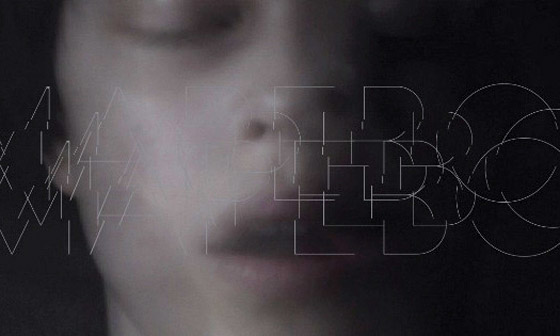 Provmyz. Opera "Hares". Fragment of the posters
Another opera prime minister of last year is Sergey Nevsky’s Outland in the project of Kirill Serebrennikov “Platform” on “Winzavod” on the texts of autistic children-the case of meeting two hermetic languages, two very closed interlocutors. The first is an autistic child, the second is a composer with his complicated and closed language for the general public. Almost any composer practice today is unintentionally tight. And when in the center of the composition is the ancient canon of Okeghem (Nevsky divorces it in space, the singers walk around the hall, between the audience and around) - he ceases to be a memory or symbol, but begins to work almost physically with walls - it arranges a place to meet the interlocutors interesting to each other. The audience inside music is those who are not expelled from the table when a good conversation happens.
Nevsky has a dense, textured letter, inventive, but without excesses. Time is structurally and well packaged. And the directing in the project is not about that. The main complaint to the performance from the side of musical criticism was that toy hares and Svetlana Sorokina in the role of mother are completely in no way connected with music. But the opera is so written that it allows you to enter its territory, into its text. And he, in turn, is still musical.
Between the language of new music, which is said by the new opera composers, between the arrogant independence of its structures and the old genre, amazing relations are built. It’s like asking the poet-metaphorist to write an adventure novel. And they write, and, it seems, with more and more pleasure.
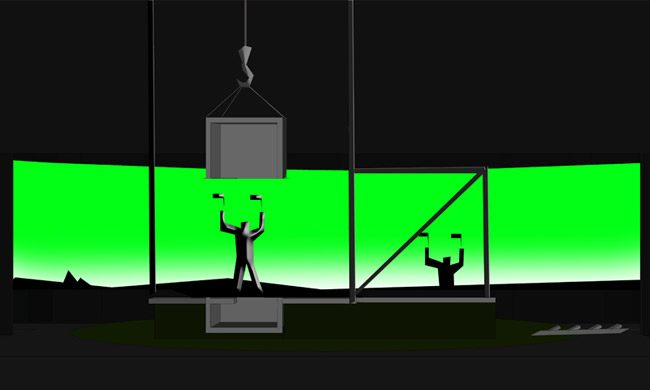 TerritoryFest.ru Philip Grigoryan. Sketch of the scenery "Over the Moon"
The opera genre is arranged as a layer pie, inside each score, and even more so the production - several levels of sticky memories. Music is written according to the libretto, for the libretto there is a plot, inside - legends. The expressionist opera remembers a great romantic, Verist - about the baroque background and the Florentine start. Each director more or less clearly imagines not only these layers, but also a staging tradition. Any approach to the opera threatens with excess calories of traditions. But it is the seductive conservatism, the invisible presence of centuries -old professionalism irritates and occupies the authors, no matter how aggravatedly unconventional to speak their manner and no matter how important and unique here and now it was the subject of the conversation. Like it, it turns out again that we are still talking about love, death and politics. And there are familiar heroes - a maniac Nosferata, St. Francis, king, queen, and all to the piano.
This approach may look too poetic. But, it seems, just the poetry of meetings among dangerous ruins, where you have to jump from stone to stone and where therefore the conversation sounds especially honestly, and there is a motive to engage in the opera.
What awaits us in the new season
1. Opera "Francis"
Composer - Sergey Nevsky. Director - Vladimir Bocharov. Conductor - Philip Chizhevsky. Choir and orchestra Questa Musica . Bolshoi Theater. September 12-13. Within the framework of the project "Opermroup".
The most anticipated and high -button event of the Moscow season - the scene obliges. Partly “Francis” was represented in Germany, at the Klangspurren festival, but is added only now, specifically for the “postgrapp”. The great master and activist, the ideologist of his generation, Nevsky, like no one knows how to reveal his secrets to the public, make the meaning of ornate sounds intelligible and translate events from one context to another, so “Francis” probably will not seem like a fragment of a foreign - European - history. In the responsible role of the director, the 4th year student of Rati-Gitis (workshop of Vladimir Mirzoev).
From the explanations of the author: “Francis is the story of an uncomfortable person. This is a monologue of a dying saint, which is not fully confident in his own holiness and constantly requiring the Almighty confirmation. The Francis party in the opera is divided between several readers (they read the text in Russian) and a counteratrador singing the German original. Four scenes form a huge static multi -figure picture - but the static of the plot makes us more acutely experiencing a musical time and monitor the change in the colors of the human voice. ”
From the libretto of Claudius Lunsstedt. Composer translation:
“Tonight in a dream ... I stand on the edge of the tree of a tree is incredible
tall tree of a very beautiful tree of strong strong
I come to the stocky to him closer even closer in the shade and
Suddenly I grow up myself so that I touch the crown with my hand I can tilt
it to the earth what it means, Lord, will I give me
rise to approach you becoming like ... it's true
Lord stand here in thin rags in the cold still winter
a little trembling, the burners are shaking God where you can’t hear here
Reception ... who speaks and speaks behind me? Hello brother
my brother what do you need ... Says nothing to sky
The whiteness of the teeth is like a dentist a cold reflection like July on
courtyard ... Hey Franz, how much a drop of your sweat if it could
I spat on him in a haru, but I do not dare to be in your eyes, you see, and so too much I tremble the spit on the edges like
a frantic dog saliva pushes the mouth of such a brother not
I can love you only my father listen ... they are
Now my turn renounced me to cut off my body in order to torment the true path to torture to a complete victory over
The final deliverance is never my contemptuous body will cover something other than these clogs, I have God
plan…"
2. Opera "Three Four"
The composer is Boris Filanovsky. Director - Dmitry Volkostrelov. Conductor - Fedor Lednev. Moscow ensemble of modern music (MSM). Tower "Federation". November.
The most conceptual project of the “operape” from the most sophisticated and at the same time not only conceptualist, but also the journalistic composer of the new scene of Boris Filanovsky on the texts of Leo Rubinstein (card classics: “Home music”, “Mother of the soap of the frame”, “Pure lyrics” and “everywhere life”). “Three four” is set by the student of Leo Dodin, the holder of the important “Breakthrough” award, the founder of the St. Petersburg Pos Theater Dmitry Volkostrelov, who is called the leader of the new Russian directing. The directing promises to be no less intricate than the combination of sounds, words and generally the whole situation: the composer brings the text from the involuntary librettist, and he, in turn, appropriates a strange voice for himself. In addition, the opera, the least similar to the opera in the classical sense, is placed in one of the most non -) places of the city.
From the explanations of the author: “The libretto is made up of four Rubinstein texts on cards. On the canvas of each text there is a mini-station that intentionally balancing between the music theater and a pure concert. Actually, theatrical action here is replaced by the musical behavior of performers. Four vocalists - soprano, countertot, tenor and baritone - do not sing by heart, but they willingly play along with their piano, trying to fit the four of him. The ensemble with them is a reader; The author of the music, by proxy of the author of the texts, is taken by the author of the music, then byking in history, then managing it from the outside. ”
There is nothing more touching and stilted than singing with a dagger in the chest. But there is nothing more unbearable in appearance.
3. "Dreams of the Minotaur"
Composer - Olga Raeva. Libretto - Vladimir Sorokin. The directors are Kirill Potoptov, Ekaterina Vasilev, Ilya Shagalov. Conductor - Fedor Lednev. Moscow ensemble of modern music (MSM). Theater of nations. October 12.
“Dreams of the Minotaur” - a joint project with the festival “Territory”. The quintessence of the plan of the “operape” to drag as many young directors as possible to the opera, but what happens is to drive like needles at different points of the city. At the request of Raeva, the student of Edison Denisov and the demanded European master - Vladimir Sorokin wrote several episodes in different genres. For episode 1 (everything is conceived so that each of them can be performed as a separate thing) - different dreams, including "from the landowner who dreamed of a revolution in the future" and a "soldier of Stalin's times." For episode 2-"Fairy Tale A la Schwartz." It is this, the 2nd episode (surrounded by the 1st and 5th) will become a world premiere in Moscow. Episode 1 has already been performed at the Klangspurren festival with the famous ensemble "Modern", and episode 5 - in Moscow, the Ensemble of Mark of Pekarsky. The project is long -playing, it will be composed and put gradually. For 2014, the Moscow premiere of the entire opera is planned. «Опергруппа» особенно акцентирует то, что все три режиссера внутри одной оперы — очень разные. Кирилл Вытоптов, драматический режиссер и любимец Женовача, отвечает за традиционный психологический театр. Екатерина Василева (Раева называет ее «умной и смелой», «человеком будущего») — выпускница Розетты Немчинской, у которой учился Василий Бархатов, — за линию собственно музыкальной режиссуры. Илья Шагалов специализируется на видеоарте, в этом году окончил Школу-студию МХАТ у Кирилла Серебренникова и ответит в проекте за современный взгляд на вещи.
Фрагмент либретто Владимира Сорокина. Эпизод 2. Дочь носорогопаса
NARRATOR
В далекой и прекрасной стране, где всегда тепло и прохладно, где приветливый и спокойный народ с утра до вечера трудится на тучных полях, где шелестят густые леса и синеют высокие горы, где восемь рек впадают в двенадцать озер, где крохотные медведи спят в цветках орукайи, а огромные птицы кричат в кронах триволовых деревьев, жил-был король. Бог послал ему богатое королевство, но не дал ни королевы, ни наследников. У короля было три страсти: жидкие кубики, зубной скрип и невинные девушки. Каждый месяц пожилая обергофмейстерша выбирала ему новую девицу — луну. Король жил с ней месяц как с женой, и если она была правильной, отдавал ее замуж за приличного человека. Неправильных девиц ждала Горькая Участь. Многие девицы не только из простых семей мечтали побывать королевской луной. Но строгая обергофмейстерша выбирала только самых красивых и умных. В этом королевстве жил старый носорогопас. Однажды его носороги разрушили своими рогами огромный термитник. Когда носорогопас подошел, то увидел в термитнике большое яйцо. Он разбил яйцо и обнаружил внутри его спящую девочку с рыжими волосами. Девочка проснулась и прижалась к носорогопасу. Он отнес ее домой и удочерил. Девочку окрестили Сферой. Когда Сфере исполнилось 15 лет, носорогопас повез ее во дворец на королевские смотрины. Там их ждала огромная радость: обергофмейстерша выбрала девочку луной для короля на месяц май.
Первое действие
Дворец короля.
SPHERE
Я — луна! Господи, благодарю Тебя!
НОСОРОГОПАС
Слава Всевышнему!
KING
(складывая жидкие кубики)
Как тебя зовут, дитя?
SPHERE
Сфера, ваше величество.
KING
Чудесное имя. Покажите мне ее.
ОБЕРГОФМЕЙСТЕРША
(раздевает Сферу)
Ваше величество, внешне у этой девочки есть все, чтобы стать правильной луной . Полюбуйтесь на ее фигуру.
KING
Perfect.
WATCH
Attention! Время зубного скрипа короля.
Король скрипит зубами.
НОСОРОГОПАС
Ваше величество, моя дочь прекрасно сложена.
KING
Она стройна, как тростник при полной луне.
ОБЕРГОФМЕЙСТЕРША
Смотрите, ваше величество, какие грудка и шейка. Изгиб талии, нежные бедра, девственный лобок. А пяточки, а пупочек, а ушки! Ее тело жаждет правильных ласк!
KING
Она прекрасна.
НОСОРОГОПАС
Моя дочь прекрасна, ваше величество!
ОБЕРГОФМЕЙСТЕРША
Молчи, деревенщина!
KING
Какие у нее огненные волосы. Тебя надо было назвать Пламя, а не Сфера.
НОСОРОГОПАС
Ваше величество, она из яйца! Поэтому и Сфера.
KING
Из яйца? This is good…
(складывает жидкие кубики)