
Translated material
Evgeny Tarle
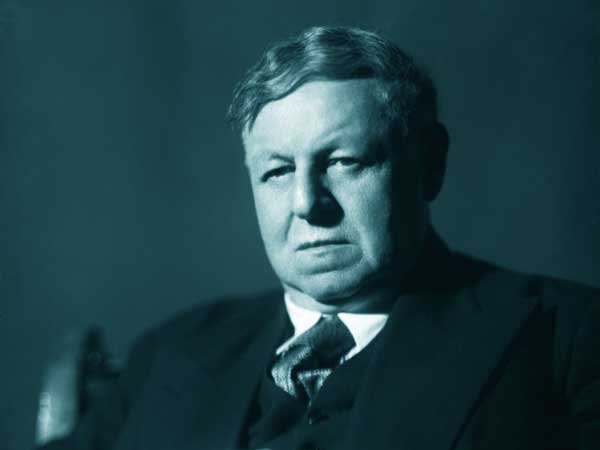
On November 8 (October 27), 1874, Evgeny Tarle, a historian, and author of research on Napoleon, was born.
Personal business
Evgeny Tarle (1874-1955) was born in Kiev in a Jewish family. At birth received the name Gregory. The father served as the manager of a small store, in which his wife was mainly managed. He was more engaged in raising children. Children and youth Tarle took place in Kherson. There he graduated from the gymnasium, after which he was admitted to the Novorossiysk University. Two years later he transferred from where to Kyiv. In 1893 he was baptized in the Sofia Cathedral of Kyiv and was called Eugene. This allowed him to marry a religious girl Olga Mikhailova, with whom they lived for more than 60 years.
In 1896, he graduated from Kiev University with a gold medal and was left at the department to prepare for professorship. He taught in private female gymnasiums, was printed a lot in liberal publications, and was a member of the Marxist circle of social democrats. In the spring of 1900, he was arrested along with other members of the circle and sent to the public supervision of the police to parents in Kherson. As a “politically unreliable”, a scientist was forbidden to teach in state gymnasiums and imperial universities. Tarle at that time worked on a master's thesis, wrote textbooks. He defended himself in 1901 on the topic "Public views of Thomas Mora." In 1903, the police allowed Tarle teaching at St. Petersburg University.
In 1904-1905 he participated in the manifestations of the left intelligentsia. In February 1905, he was removed from teaching, in October of the same year he was seriously wounded by a saber at a rally in support of Nicholas II and his manifesto on civilian freedoms. The manifesto amnestied all unreliable, which allowed Tarla to return to the university again.
In 1903-1914, he constantly went abroad to study archives, worked on the economic and social history of France, defended his doctoral dissertation on the topic “working class in France in the era of the revolution”.
After the February Revolution of 1917, he was part of the Extraordinary Investigative Commission of the Provisional Government, investigated the crimes of the tsarist regime. He did not support the Bolsheviks, after their July performances he wrote: “If something is really dying, these are hopes for a democratic renewal of the country.” He was wary of the October Revolution. During the Red Terror in 1918, he published the book "Revolutionary Tribunal in the era of the Great French Revolution."
Since that time, he did not engage in political activities, gave lectures at the University of Petrograd (Leningrad), then he was elected professor at Moscow University and moved to Moscow. A lot was printed, edited by the Russian historical magazine "Annals". In 1924-1929, he got the opportunity to travel to Western Europe for several months for archival work. Was adopted in a series of scientific societies of France and the USA.
In 1930, he was arrested in the fabricated OGPU " Academic Real ". For more than a year and a half was in the house of preliminary detention. In 1931 he was excluded from the number of actual members of the Academy of Sciences and sent to exile in Alma-Ata. The following year, pardoned and returned to Moscow. In 1938 he was restored at the Academy.
In 1941-1943 he was evacuated in Kazan, where he worked as a professor at the Department of History of Kazan State University. He also engaged in scientific work and gave public lectures on historical and patriotic topics. In 1942-a member of the commission for investigating the atrocities of the German-fascist invaders.
In 1943 he returned to Moscow, lived in the Government House (“House on the Embankment”), taught at Moscow State University and the Institute of International Relations. In 1948, on behalf of Stalin, he began work on the trilogy “The Russian people in the struggle against aggressors in the XVIII -XX centuries”. He managed to prepare one volume - “Northern War and the Swedish invasion of Russia”, published posthumously. He died at the age of 80 in Moscow, was buried in the Novodevichy cemetery.
What is famous
 Evgeny Tarle
Tarle is perhaps the most famous domestic historian who was engaged in the study of Napoleon's life. His books “Napoleon” (1936), “Napoleon’s invasion of Russia” (1937), “Talleyrand” (1939) were written in popularizer style and were very popular. As a historian Tarle, human stories were always more interested in, he masterfully resurrected the “human plan” of the events of the past.
Possessing the phenomenal memory and talent of the narrator, Tarle was one of the most popular professors of St. Petersburg, and then other universities.
What you need to know about
Tarle's works are characterized by a certain liberty in relation to historical facts. He often acted rather as a historical writer than a historian.
His strictly historical works are not devoid of ideological distortions characteristic of the scientific publications of the Stalinist period, nevertheless, they remain brilliant monuments of historical thought.
According to the researcher B. S. Kaganovich, "the last 10-15 years of Tarle's work is a period of talent decline in the suffocating atmosphere of the Stalinist regime." The work “Northern War and the Swedish invasion of Russia” has not become interesting either in scientific or literary terms.
Direct speech:
Once, at the anniversary of Yevgeny Tarle Korney Chukovsky, Samuel Marshak put Samuel, saying that even he would not be able to choose a rhyme for the name of the historian.
In response, Marshak retreated:
In one sitting historian Tarle
I could write (like I am in the album)
Huge volume about every Charles
And about Louis any.
About the Patriotic War of 1812:
“For Russia, the struggle against this attack was the only way to maintain its economic and political independence, to escape not only from the ruin that the continental blockade that destroyed Russian trade with the British, but also from the future dismemberment: in Warsaw, they did not hide that the Poles were not satisfied with the same Lithuania and Belarusia, and that they hope to get up with the help of the same French Caesar before Black Sea. For Russia under these conditions, the war of 1812 was in the full sense of the word the struggle for existence, the defense of the attack of the imperialist predator.
Hence the nationwide nature of the great struggle, which the Russian people so heroically withstood against the world conqueror. ”
5 facts about Evgenia Tarle
- Of the writers, Tarle was most loved by Fedor Dostoevsky.
- Favorite historical characters Tarle were Catherine II, Kutuzov and Napoleon.
- Wife Olga Tarle was the closest person for him until the end of his life. The couple died in the same year.
- Pupils of Tarle are orientalist Boris Piotrovsky and Anglo -scholar Leo Kertman .
- The Russian Academy of Sciences awards the Tarle Award for outstanding scientific works in the field of worldwide history and modern development of international relations.
Materials about Evgenia Tarle:
Article about Evgenia Tarle on Wikipedia
A.P. Shikman "Figures of Russian history. Biographical reference ""
Biographical certificate in the Encyclopedia "Circle"