
Translated material
Gazus Bellie
On Tuesday, the head of Gazprom Miller expressed concern about the growth of Ukraine’s debt for the supply of Russian gas. According to a coincidence that should be considered random, on the same day the Board of Directors of Gazprom without unnecessary noise and dust approved the new edition of the company's investment program for 2013, the volume of which increased by 45%immediately to 1.026 trillion rubles.
This, as they say, inspired.
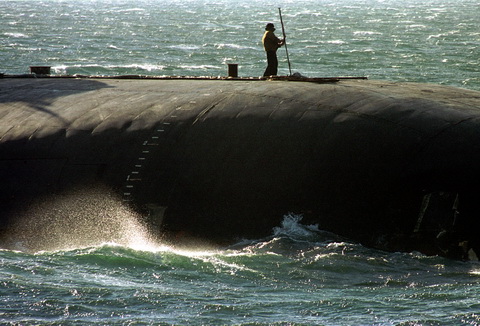
About a week ago, plowed in the networks of the second Russian multiplex, somewhere in the “Serving Russia” area I stumble in an interview with Yevgeny Velikhov. And the honored academician on a blue eye tells the whole country about the urgency of the creation of the fleet of underwater nuclear tankers-gas trucks, which must provide Russia with technological leadership in the important development of the resources of the Arctic.
I listen and do not believe my ears. It turns out that the idea has not died!
I’ll make a reservation right away: I have a great respect for the merits of Velikhov, not without the participation of which, expressed softly, we managed to avoid the complete collapse of the nuclear industry in general and the atomic underwater shipbuilding, in particular. It was Velikhov in 1992 who laid a program to President Yeltsin on the table for the organization of conversion production at Sevmash, which probably saved the main base for the production of Russian nuclear submarines from bankruptcy and destruction. After which it was he, Velikhov, managed to push (contrary to the fundamental objections of Yegor Gaidar) the project to build the Pri conzlomnaya platform (the same one that Greenpeace recently attacked), to which Gazprom managed to connect at Ram Vyakhirev.
Probably, at the same time, another bright conversion idea of the academician was born - to redo the written -off submarines to tankers for the transportation of oil, gas and other useful raw materials in the northern latitudes. Unlike surface vessels, Velikhov convinced, convertible submarines can deliver goods from Europe to America in the shortest way, all year round, not in need of the services of the icebreaker fleet.
And almost convinced.
At the beginning of the zero, the idea found an emotional response in the souls of Russian officials and businessmen. In the spring of 2000, in an interview with Vedomosti, the head of Interros Vladimir Potanin, who was seriously intended to carry Nickel submarines, admired the pleasure of what pleasure it was to surf the Russian flag somewhere in the Rotterdam area and welcome the amazed Aborigines from the Captain's bridge. But the pleasure turned out to be too expensive even for a billionaire - a dream had to be drowned.
But just three years later, the Governor of the Arkhangelsk Region Anatoly Efremov fenced Norwegian businessmen plans for the re -equipment of the Russian ADL of the Typhoon type into underwater tankers for the transportation of oil and gas. Nobody paid attention to panic, which the news caused in the ranks of local ecologists. On the ointment, there was already Shtokman, which, according to calculations, could need at least 50 underwater LNG-tankers-for gas export in the United States.
And again failure.
The American shale revolution put a fat cross on Shtokman - last summer Gazprom, Total and Statoil announced the freezing of the project for an indefinite time. Around the same time, the fate of the three (out of six) Typhuns remaining in afloat was also decided - they will not be redone (as offered at Sevmash), but they will be disposed of . Moreover, the Dmitry Donskoy Premier League, which participated in the tests of the long -suffering "maces", is more likely to be used as a live target for the new generation of boats of the "Borea" class - from unlearned.
Think now, Prince Dmitry (future Donskoy) would go on Kulikovo Field, knowing that they will then cut their own or shoot them.
And after all this, an academician of Velikhov appears on the TV with a stainless idea of invulnerable to northern ice and ubiquitous terrorists of atomic gas tankers that can give Russia world leadership in a new high -tech industry, which can extend the entire domestic economy.
As if there were no twenty years.
So, I personally have no complaints about academician Velikhov - promoting the idea of the underwater tanker fleet, he lobbies the interests of the wards of the enterprises (“Sevmash” and the Kurchatov Institute). In other words, behaves as a responsible leader. Although the very idea of converting combat submarines for my taste is very much like trying to attach a pencil pen to AKM - impractical, expensive and unsafe.
But the whole “Arctic initiative”, implemented under the flag of Gazprom, has many more questions.
First, ecology. There are already assessments of the potential consequences of the possible spill of oil in the northern seas, on the same "Prirazlomnoy". In short, they are catastrophic.
Another threat is the risk of an underwater tanker accident. Whatever they say about the perfection of technology, it is possible. If you remember, we had such a Severodvinsky building submarine. She drowned.
Secondly, the extremely non-obvious economy of oil and gas projects in the northern latitudes from their huge-on the verge of profitability-cost.
But all these reasons are not sufficient for Gazprom (and in general, any) the basis for refusing ambitions in the Arctic - this is a resolved thing. The company has already planned gigantic expenses for R&D, the lion's share of which will be associated with its plans for the development of the shelf of the northern seas.
And now it also sharply increases the investment program, using friction with Ukraine as a pretext - as it has repeatedly done earlier to justify monstrously wasteful infrastructure projects like the notorious “flows”. And when the old "construction sites" are coming to an end, the time has come for the Arctic. There is a pretext for opening a new gas front.
Photo by Vladimir Sayapin (ITAR-TASS)