
Translated material
Useful challenge
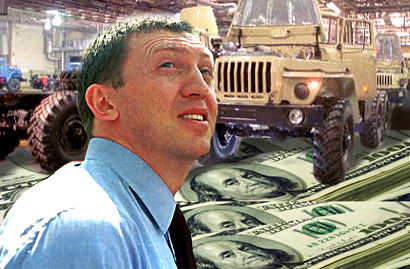
In early September, President Vladimir Putin criticized the policy of the Central Bank, which leads to the strengthening of the ruble. After that, at an expanded meeting of the government, Oleg Deripaska, the owner of the “Russian aluminum”, made a very similar statement. In fact, today it is possible to state significant activation of lobbying efforts from industrialists, whose enterprises suffer most of the strengthening of the national currency.
Moreover, if you discard all the beautiful words that accompany the discussion, you can state: to fight with the strengthening of the ruble is possible in only one way - increasing the money supply and dispersing inflation. If the Russian authorities turned at least some influence on the business climate, and did not destroy successful companies, the money supply could grow at a much higher pace-up to 50% per year, and there would be no inflation: the level of monetization of the Russian economy is still small. But we live with the business activity that we have, and no signals that the state will loosen the pressure on the business, so far. So, the Central Bank, it begins accelerated buying into the gold currency reserves of foreign currency in order to prevent the ruble to strengthen, will increase inflationary pressure on the economy. Thus, you have to choose a smaller of two evils.
Last year, inflation amounted to 10, 9 - almost 11%, that is, about the same as in 1997, when Anatoly Chubais for the first time in the post -Soviet years managed to stabilize the country's financial system. However, what was considered an achievement 9 years ago today has not been such for a long time. An acceptable level in the current conditions, even taking into account the fact that inflation plays a positive role, stimulating investments, and given that prices should still change - is 5% per year. In 2007, it most likely will not drop below 9.5%, and to stop the holding of inflation to the monetary authorities (Central Bank and the Ministry of Finance) is obviously early.
Strengthening the ruble with the payment balance that we have inevitable. It is difficult to even imagine what business activity should be to absorb the entire shaft of the money that goes to the country, thanks to high prices for raw materials. When we are talking about a real effective ruble course, we must understand that we are talking about the purchasing power of the national currency. It should not be forgotten that after the 1998 crisis, the ruble exchange rate was about three times lower than the purchasing power parity (PPS), while in developed countries it coincided with it. Today, trust in the ruble is much higher, few doubts about Russia's ability to serve external debt, the economy is growing. In the real effective course of the national currency, we are approaching the indicators of developed countries. And this is not the result of a particular policy of the Central Bank or the Ministry of Finance, this is an economic reality that can only be overcome by, uncontrollably printing money and ruining your own economy.
What is the claim of Deripaska? If you translate his speech into an understandable language, you can hear approximately the following: the strengthening of the real ruble course strikes my production - ruble costs inside the country grow faster than my income from export. Let's fight this, let's sacrifice inflation in this struggle. In other words, we sacrifice the least wealthy segments of the population, the price of the consumer basket of which is already the already existing inflation - about 12%. In my opinion, such a decision would be incorrect. The moderate growth of the course, it seems to me, even has a positive effect on the economy. Enterprises begin to work on the competitiveness of their own products, are forced to increase labor productivity, modernize production, introduce the latest technologies, and bring new products to the market.