
Translated material
Protect your interests
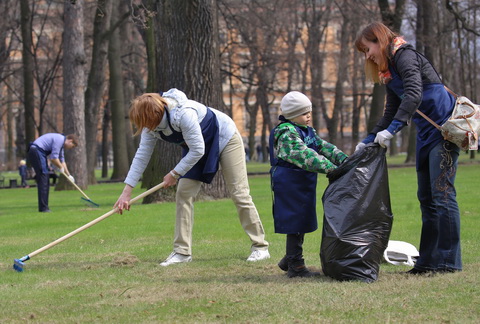
Each person is the concentration of many interests. He is a resident of the house, village or city, region, country, globe. He is a family member, an employee of the enterprise, he has friends. He needs an acceptable salary, personal security, medical care, the opportunity to teach children and receive a pension. We always have personal and collective interests, often not even aware of us.
Interests must be protected. But how to do it?
In developed countries, where democracy is not a props, not the election of the King President, but the mechanism of control over power and bureaucracy-there citizens defend their interests through various forms of self-organization. These are the advice of quarters and apartment buildings, school councils, trade unions, corporate industry unions, human rights, female, youth, charitable, environmental organizations. Finally, these are political parties that link the welfare of citizens with their political programs, defending interests throughout the country.
Somehow I happened to visit a meeting of the city council of San Francisco. In a specially designated time, representatives of the Soviets of a number of quarters raised the issue of poor -quality garbage harvesting on the streets, that the police did not prevent adolescents from hooligans, and the Council immediately instructed the manager of the city economy and the sheriff to eliminate the shortcomings in the work of the services managed. If a new quarter of private houses opens in some city of the United States or an apartment building is commissioned, residents will certainly create a quarter or at home. School councils created by parents actually lead the activities of schools. The power of trade unions can be judged by mass strikes that regularly take place in Western Europe - workers persistently defend their interests, as well as rights. The role of political parties is significant in all countries of Europe and North America. And the political struggle is real-this is shown by elections that do not guarantee a constant victory of any one party. Even in the United States, where only two main parties, a constant struggle between them goes with varying success.
Our rights stem from our interests. The same rights that are called inalienable human rights and which cause our citizens so many disputes. This is the right to receive all information about the activities of authorities and dispute their decisions, the right to freedom of speech, to freedom and independence of the media, the right to a fair independent court. This is finally the right, without asking the authorities, to gather for rallies and demonstrations, the right to create a variety of public organizations (of course, acting within the law), unite in the party and not depend on whether the Ministry of Justice will become mercy and register your party or not.
What prevents us from defending our rights and interests? We do not have the skill of self -organization. There are no advice of entrances, houses, and even more so quarters or areas - we are too lazy to do this. The parties are small, their members are focused on leaders rather than on party programs. Many parties are simply fictitious, created as supports of the current government. The trade unions are helpless. If anyone shows active activity, so only human rights and charitable organizations.
Why are we so passive and helpless? Our story contributed to this. The Russians have always been in the service of the Mongol khan or the commercial king, called themselves his slaves, hoped for his mercy. The oprichnina introduced by Ivan the Terrible gave the security forces the opportunity to rob both the boyars and the peasants. The looting undermined the basics of a shaky farm. The flight of peasants led to the need to forcibly hold them in the field - hence the institution of serfdom . From the defender and legislator, the king and the person who personified the state turned into a robber and rapist, which led to a weakening of moral guidelines in society. Oprichnina approved the unlimited power of the king - autocracy . Under Peter I, absolutism in Russia was strengthened and actually preserved until 1917. And the ability of society to protect its interests remained extremely low.
A curious example: in the 20s-30s of the last century in Riga, the capital of the then independent Latvia, lived approximately equally Latvians, Germans and Russians. But the number of public organizations aimed at protecting the interests of citizens, Latvians and Germans had ten times more than Russians. What is this talking about?
The coming to power of the Bolsheviks did not lead to the promised democracy. Terror, civil war, repression, gulag - everything was aimed at preserving the absolutism of the Secretary Generals of the CPSU and the authorities of the Party -MinoMode. We were afraid of new guardsmen from the NKVD-KGB. But at the same time they retained the psychology of serfs, they are accustomed not to rely on their own strength, but to the state: it will protect, feed, warm. We perceive people with special opinions that contradict the instructions of those in power, that is, the opposition, today we perceive the enemies of the people and foreign agents.
Democrates and repression of dissenters led to the fact that people have little confidence in both compatriots and power. Today we are the most atomized society in the world. Everyone knows about the general corruption in the ranks of officials. Everyone understands where the oligarchs come from. But they are silent. We are passive and not able to protect our interests. Our power and society live separately. At the same time, neither the authorities nor citizens have an understanding that such a state of society leads the country to disaster.
We can only defend our interests ourselves. Nobody will help us, neither God, nor the king or the hero. The famous Scottish thinker Adam Ferguson wrote the book "Experience of the History of Civil Society." Here is a quote from it: “People who have known the taste of freedom and sensed their own rights, not just convince to put up with encroachments on one and another ...” An important detail: the book saw the light in 1767!
We need to overcome our passivity and master self -organization. What prevents you from personally gathering friends of friends and, turning on the Internet, find a suitable site, view and discuss an actual political video? Consult with friends that it is time to change in your area, city, in our country? Or maybe it is necessary to hang out the announcement that it is time to create an initiative council of a house or quarter, appoint a place and time of the meeting, offer its agenda? Or create a new combat union at work? Enter the party close to you in spirit and encourage its members to activity? After all, our future and our children depends on each of us!