
Translated material
Pyrrhic victory

In society
 Pyrrhic victory
December 18, 2007 Boris Kolymagin
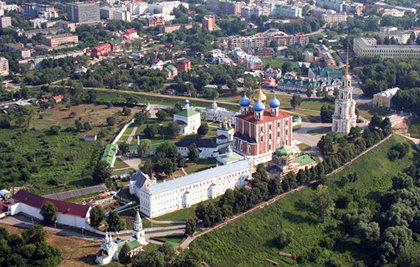 The head of the Federal Agency for Culture and Cinematography, Mikhail Shvydka, fired the director of the Ryazan Kremlin museum-reserve Lyudmila Maksimov because of "reluctance to conduct a dialogue with the church." Thus, he clearly demonstrated that officials from Roskultura are easily ready to give a popular treasure to the mercy of the Russian Orthodox Church.
Recall that the Ryazan diocese was the initiator of the transfer of the Ryazan Kremlin to the Church, from which in February 2006 the Patriarch of Moscow and All Rus' Alexy II asked a letter to the president V.V. Putin. Soon, the head of one of the departments of the Federal Property Management Agency demanded that the museum simply clean up a skewer.
Famous scientists and public organizations made the Kremlin defending the Kremlin , more than twenty thousand residents of Ryazan also protested. But the authorities ignored the opinion of the public.
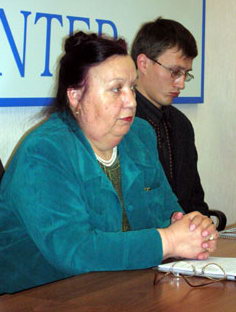 Honored Worker of Culture of Russia Lyudmila Maksimova, who worked in the museum of 44, was thrown out into the street for disagreing with the actual destruction of the museum complex. The wording of the head of the Roskulture sounds more than doubtful, because the museum workers went to a reasonable compromise with the Russian Orthodox Church. And the vast majority of temple buildings on the territory of the Kremlin have already been transferred to the Ryazan diocese. “A stumbling block was a monument that Rososhran culture does not consider the object of religious purpose - Oleg's Palace. This is one of the iconic buildings for the Ryazan Kremlin, the main exhibition building and the main stock. The loss of even part of it poses a threat to the stable functioning of the museum complex. The signing of such an act would be the beginning of the liquidation of the museum-reserve as an open-air museum and, at best, the issue of transferring it into the status of an ordinary museum of local lore, ”the statement of the scientific council of the Museum-Reserve, said.
The struggle to preserve the museum-reserve is not over yet. But, apparently, the siege of the Ryazan Kremlin will not last long, the days of the defenders of the fortress are numbered.
Alas, this is not the first time we are observing the fact that an attempt to prevent the country's cultural suicide is encouraging to counteract the Russian officialdom. Government officials exert pressure on the defenders of cultural values in their struggle with clericals and business structures standing behind them. And this pressure is directly related to political processes in the country. As the Church is superior, its turning into the “Orthodox Confession” department, the number of bureaucrats allegedly careing about its interests is growing. Another thing is how church interests are in principle.
And here there are already completely different, strategic issues. Do religious leaders understand that such actions are aimed at breaking the historically formed, but recently become so fragile unity of the Russian Orthodox Church and Russian culture? What is more important for the Church (with a capital letter) - to get into property, albeit expensive, but still stones or keep a good name among compatriots? Maybe it is better for the church to huddle in small temples and even in apartments, and to do Christ, as it was in emigrant Paris? Of course, external symbols (temples, monasteries, revered icons) are also important. But everything, apparently, should have its own measure. Moreover, there are examples of the normal coexistence of the church and the museum under one roof. Say, the Church of St. Nicholas in Tolmachi at the State Tretyakov Gallery is a unique example of cooperation between the Russian Orthodox Church and museum workers. Worships are performed here, believers have the opportunity to pray before honored icons. And at the same time, visitors to the gallery come here - as in one of the museum halls. Interestingly, the cultural component affects the spiritual life of the parish, and, as it is seen, for the better. Say, in the temple, S.V. Rachmaninov.
As an example of good relations, the Novodevichy Monastery in Moscow and the Nikolo-Zaretskaya Church in Tula are given (it is part of the Museum "Necropolis of the Demidovs").
Museums and the Church have a wide field for cooperation. But its fruitful development is hindered by the problems associated with property. Often the struggle for property has nothing to do with the real needs of the Church. Religious managers pursue mercantile goals, and the “victories” they have fed up with normal people from the church fence.
Ultimately, the assessment of the acts of church leaders within the church fence rests on the problems of ecclesiology - the theological understanding of what the church is, that is, first of all, to issues related to the structure of the life of communities and parishes and their activities, including in the “world of Sems”. It also rests on the very vision of the Church by church leaders (unfortunately, often in the secular and in the church sense illiterate) and laity. Experience shows that there is no consolidated church response to an “ecclesiological challenge” today. Boris Kolymagin
All rights to materials located on the EJ.ru website are protected in accordance with the legislation of the Russian Federation, including copyright and related rights. With any use of the site and satellite projects, hyperlink (Hyperlink) on EJ.ru is required.