
Translated material
Testing Khodorkovsky
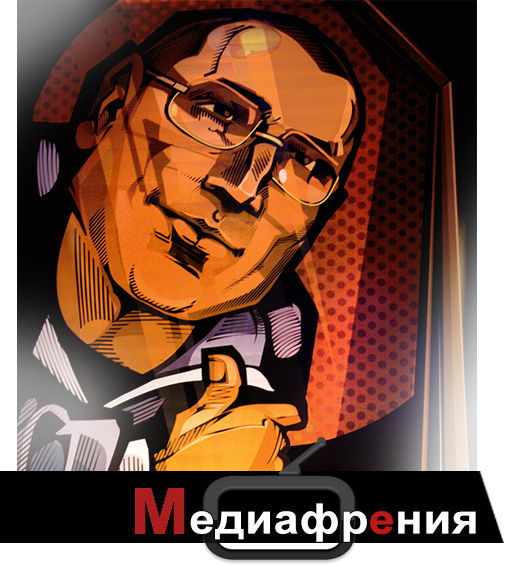
The last week of the outgoing 2013 made an interview with the most popular journalism genre, which was associated with the liberation of Khodorkovsky, Tolokonnikova and Alekhina. First of all, of course, Khodorkovsky.
Khodorkovsky and Pussy Ryot as an exam for journalists
Usually the interview is perceived as a kind of exam for someone who answers questions. In this case, everything looked opposite. The nature of the Yukos case, 10 years in prison and how Khodorkovsky suffered them, made an MBH a kind of constant, on the basis of which it is possible to build a coordinate system, including for journalists. It is by no means talking about the creation of an idol from the MBH or about the deliberate truth of his every judgment, but only about the obvious scale of this social figure.
Popying the well -known remark of Faina Ranevskaya about Mona Lisa, we can say that the MBH can now choose who and what impression to him to make and in an interview with whom to reveal from which side. Last week, a new meter appeared to classify journalists: “Khodorkovsky’s criterion” as a kind of measure of the qualities and quantities of journalism in the media and in separate journalists. And not everyone could meet this criterion.
The federal television channels tried to either not notice the liberation of Khodorkovsky or move this event away to the periphery of the news world. Irada Zeynalov in his last issue of Sunday time, summing up the results of the outgoing 2013, devoted several seconds at the very end of the program after a sports review and a list of criminal plots. Not a single federal television channel, except Ren-TV, sent a crew to a press conference of the MBH, which took place immediately after its release.
Separately, it is worth noting the replicas of the three iconic figures of the Russian State Propaganda: Vladimir Pozner, Vladimir Solovyov and Dmitry Kiselev. Posner said that Khodorkovsky was not interested in him and that he, Khodorkovsky, was only interested in money. Vladimir Soloviev recalled that Khodorkovsky had “hands on the elbow in the blood” and noticed that the widow of the mayor of Nefteyugansk Petukhov was hardly happy with Khodorkovsky's pardon. Dmitry Kiselev subjected Khodorkovsky a severe moral court: "He asked for his mother, and he flew to Germany."
Each of this trinity was just generously awarded for lies and meanness. Vladimir Solovyov Putin handed the Order of Honor. Dmitry Kiselev was presented with the country's largest propaganda holding. The fact of the continuation of his already completely meaningless, but well -paid existence on the First Channel of the country was a reward to Vladimir Pozner.
Those journalists to whom the MBH was interesting as a person and a public figure could be divided into “journalists - friends” and “journalists -journalists” last week. Among the first, for the better, Marianne Maksimov and Evgenia Albats stood out. They managed to be the main thing: to be able to be a background on which the MBH wanted to open up both as a person and as a public figure. E.M. Albats, who did not interview, was especially pleasantly, a plenipotentiary in her usual assertive style, but a classic interview in which Khodorkovsky brought to very important substantive statements, many of which clearly did not suit an albats-political scientist, but were the success of the albats-journalist. One readiness expressed by the MBH personally fight in the North Caucasus by the level of sensation (many journalists and political activists in 10 years blinded in their imagination the graternum image of Khodorkovsky, which he immediately dispelled) costs a dozen interviews. On the features of the political views of the MBH and about the compliance of the Russian intelligentsia as its species difference, we must speak separately, but here the conversation about journalism.
The peculiarity of Khodorkovsky as a participant in the interview is that he does not allow himself to drive himself into the Procrustean bed of the coordinate system that exists in the head of the journalist. He will reformulate questions not because he hides something, but because in his coordinate system they, these questions, are incorrectly asked. And to the honor of Albats, she, in contrast, for example, from Ksenia Sobchak, did not try to force the interlocutor to answer the initially designed question, but accepted the coordinate system in which this very interlocutor lives, in this case, the MBH.
Albats, for example, mentions in his question that "an alternative to Putin was sitting in Krasnokamensk." Khodorkovsky protests against the very formulation of the question: “But this is not true! The alternative is not to Putin, but to autocracy! "
From the category of “journalists-journalists” it is worth highlighting two: the host of the “difficult conversation” program on the BBC Stephen Sakura and Ksenia Sokolov, who published an interview with the MBH at Snob. Both interviews can be used as manuals for journalists. The exact questions of each of them allowed Khodorkovsky to speak out on a number of topics that are important for many in Russia. The most tough question about the past, asked by Ksenia Sokolova: the murder of the mayor of Nefteyugansk, Petukhov. The answer to the MBH demonstrates the extremely clear, I would say, calligraphic logic. He offers a mental experiment: replace the defendants of the past for today. Today, on the site of Khodorkovsky, at the head of the former Yukos stands Sechin. Can today's mayor of Nefteyugansk cause trouble to Sichin? Obviously, no. And then the rhetorical question from the MBH: "Then how could the mayor of Nefteyugansk be to attack me personally?" That is, a favorite in the recent past, Aria of Putin about “Bloody Veat on Khodorkovsky”, which by inertia continues to perform Soloviev, after impeccable logic, the MBH turns into a set of meaningless sounds.
Stephen Sakur asks an existential question about the moment when his interlocutor was thinking about suicide. MBH replies that if the regime wants to kill him, then he, Khodorkovsky, is not going to help the regime in this.
In a series of good interviews with Khodorkovsky mansion is a conversation with Dmitry Bykov, published in Novaya Gazeta. Bykov is not an interviewer, he clearly overloads each question with meanings and is not ready to be a “worker of the scene”, as the canons of journalism are ordered. But in this conversation, the quality of the MBH, which he repeatedly mentioned: “I am smart, with a stupid - stupid, was clearly manifested. Bykov’s intricate-literary question that in the absence of morality in society, the ascetic looks, first of all, a jester, an accurate answer of the MBH follows: “For me, such a problem does not exist, because for me the opinion of people that I do not put in anything and, on the contrary, the opinion of people who mean something to me.”
The return of Khodorkovsky stimulated improving the quality of journalism, in any case, some of it. Against the background of the above professional successes, which allowed viewers and readers to answer most of the questions related to the release of the MBH and with how he returned from the conclusion, the failure of Ksenia Sobchak looked especially contrast. She had everything for the triumph. Her interview was the second after Albats, which means that many journalistic questions have not yet been asked. “Rain” is one of those media that is grateful to the MBH for support, and he knows how to be grateful. Sobchak and Khodorkovsky had a correspondence when the MBH was in prison, which means that you can ask questions “in continuation”, which is always advantageous because it deepens the interview. As a result, with a full carte blanche, a complete failure: no new information, not a single turn of the topic that the interview with Sobchak was different from other numerous publications, the authors of which were far from such a privileged position as Sobchak. There were a lot of Sobchak and little Khodorkovsky.
The reasons for this failure will become clearer if you look at the interview with Sobchak with Tolokonnikova and Alekhina, which also came out last week at the rain. The interview lasted 40 minutes. Of these for 20 minutes, Sobchak found out three questions:
1. Why did Alekhina fly to Krasnoyarsk to Tolokonnikova, and not vice versa, Tolokonnikov to Alekhina in Moscow? (Imposed answer: Tolokonnikova - Home, Alekhina - Vedic.)
2. Why didn't they call Samutsevich? (The imposed answer: in the group "Pussy Ryot" the split, Samutsevich is torn and declared a traitor.)
3. Who owns the Pussy Rait trademark? (Imposed answer - to lawyers or Peter Verzilov.)
Tolokonnikova and Alekhina patiently tried to explain Sobchak that they were not at all in order to find out personal relations that Pussy Rait was never a commercial project for them and therefore they have no concepts to whom the brand belongs, and in general they now have completely different plans. Sobchak smiled knowingly and all the time tried to shove the women who had just left the camp hell into the business logic of the punk group.
Ksenia Anatolyevna clearly did not understand that she was not at all the same people. With the same success, she could have served in people who returned from the conclusion, what linen they preferred to wear before the sentence. Tolokonnikov and Alekhin returned to completely different people. What exactly and what society can expect from them, Sobchak did not answer these interviews. It seems that Sobchak gives all his interlocutors the personal characteristics and motivations of the inhabitants of “House-2”. In some cases, this leads to linguistic and cultural incompatibility.
Quarrel in Lake
Among the media scandals of the last week, the statement of the Governor of the Moscow Region Vorobyov is highlighted that the “Madly Ham” article by Minkin in “MK”, insulting, according to Vorobyov, the president, makes it impossible to further stay “MK” Pavel Gusev as the head of the public house of the Moscow Region. It is not interesting for me to find out why it was Vorobyov who decided to intervene for Putin’s honor, and what the Minkinsky Sovereign was touched by him like that, which in no way or tonality stands out of the cycle of this author called “Letters to the President”.
It is much more important for understanding the structure of our society and the journalistic community as its part of what development this scandal received. In the shout of Vorobyov Gusev, striving for the reputation of the brutal alpha male from journalism, he answered with a pose of slave humility: “If the article is“ gracious sovereign ”, which has already been removed from the MK website, allows ambiguous interpretations, especially in relation to the President’s personality, and this is the opinion of the person, whom I respect and value as a smart and experienced policy, I adopt Criticism and I consider it constructive. Therefore, I am deciding Andrei Yuryevich. ” The end of the quote.
But that's not all. Last week, journalist Georgy Jans, the author of the article by the article “Political prostitution changes gender” about the variability of the position of some “United Russia”, because of which a public scandal with the participation of State Duma deputies broke out, this very Janus was fired from the newspaper “Our Moscow Region”, which is part of the MK holding.
To be expressed by a refined political science language, then all this is both the instantaneous withdrawal of the article from the site in response to the boorish shout of the governor, and the dismissal of a journalist for an article in which the journalistic arbitration court did not find any signs of professional ethics - a vivid manifestation of a citizenship culture in journalism, which I wrote in a sufficient detail in the previous Media Frine. Actually, like the entire Minkin cycle, “Letters to the President” fits into the style of this culture, occupying a jester in it at the king. The jester can dare to the king, it can even call him a fool, for which sometimes there is a bit if the border of the permitted passes passes or just falls under a hot hand.
Does this whole story have any attitude to freedom of speech and its infringement? And yes, and no. Yes, because any violent restriction of the press is a violation of the constitution. No, because Gusev readily licked the governor's boot, who was daring him, and Minkin readily defended Gusev. Pavel Gusev is built into the Putin model of power with its chambers, tips and other things. Minkin, to whom God granted the remarkable talent of a publicist, at any moment can wrap his “golden feather” against any objectionable power. It is enough to recall how on time, exactly before the elections to the State Duma, he wrote a devastating pamphlet against Shenderovich, who for some reason gathered in deputies, which, given the popularity and independent nature of Viktor Anatolyevich, created a fair-headed headache for the authorities. The article by Minkin, whom many also consider to be a democrat and even an oppositionist, was then able to stop the candidate objectionable to the authorities. And this is far from the only case of using Minkin in the interests of the authorities. Not to mention the fact that “MK” is a stand for such an outstanding “drain tank” as Khinshtein. So, after all, this whole episode is to a greater extent a quarrel in Lakes than a clash of power and journalism.
I am aware that to release a newspaper in Putin's Russia is compromises. But the compromise point happens as a hoop below the gear waterline. After that, the ship changes its essence, turning from useful craft into a pile of underwater debris. At one time, Gusev, as a sign of reconciliation, shook his hand in Pavel Grachev, whom many people still consider the customer of the murder of the journalist MK Dmitry Kholodov. Now I passed Jans and removed Minkin's note. To save what? Hinstein?
Graphics of Alexander Kotlyarova