Date
Author
РУСТЕМ НУРЕЕВ; ЮРИЙ ЛАТОВ
Source

Preserved copy
Translated material
When and where the paths of Russia and Europe will converge
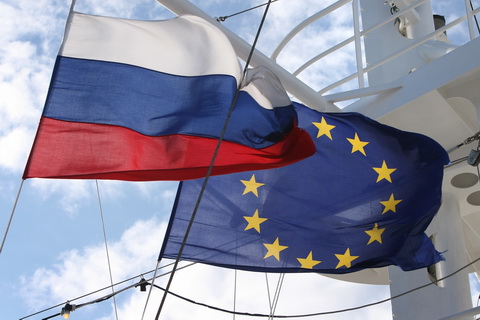
... The charm of history is that the searches never end.
Mark Block
Hey you, the rear! Do like me. This means - not for me. This track is only mine! Get out of your rut!
Vladimir Vysotsky
A look into the past
Modern Russia is Europe and non-Europe at the same time. Although our paths diverged for a long time, they constantly encounter and intertwine with each other. Perhaps at the early pre -state stage (more than two millennia ago) the late -first German and Eastern Slavic tribes almost nothing (from the point of view of the theory of economic systems) did not differ from each other, being a distant barbaric periphery of the ancient world. Then their paths began slowly but steadily diverging.
In the first centuries of our era, Germanic tribes began to actively contact with the Roman Empire - first as enemies, then as allies, then as a kind of “heirs”. In the era of the great relocation of peoples, when the Franks, Angles and the Germans “won their homeland”, the Eastern Slavs practically did not take part in the section of the “Roman inheritance”. The first states began to appear in Russia noticeably later than the “barbaric” kingdoms of Western Europe. If you believe the chronology of the “Tale of Bygone Years”, then the Rurikovich founded Kievan Rus more than half a century after the collapse of the empire of Charles the Great - the first attempt to create a united Europe.
The era of Kievan Rus is the time when our country was probably still Europe (more precisely, early feudal Europe), although, of course, it was “another Europe”. On the one hand, the baptism of the Orthodox (Byzantine) rite was slightly distant from Catholic Europe. On the other hand, the numerous marriages of European rulers with the daughters of Russian princes (let us recall at least Anna Yaroslavna - the Queen of France of the XI century) show that Europeans considered our distant ancestors more likely “their own” than “strangers”.
The turning point in the history of relations between Europe and Russia was the first bloody 37th year in our history. After the Tatar-Mongol invasion of 1237-1241 Rus' split. Northeast Rus', the Danger of the Golden Horde, turned from the outskirts of Europe to the outskirts of Asia, the periphery of the Asian production method. North-Western Rus' (Novgorod and Pskov) and the southern (more precisely, southeast) Rus' were able to remain “other Europe” for several centuries, showing, although specific, but still feudal institutions.
The unification of Russian lands in the XIV-XVII centuries. It has become a national revival, but also by the national tragedy (as far as we can talk about the “national” in relation to that era). We, modern Russians, study our native history from the "Moscow" point of view. It is difficult for us to even think that the conquest of Moscow in the 14th century. The richest development prospects would open before the Russian civilization than those that were realized in real history. Russia of the Gediminovichs would most likely be a much more European country than Russia Rurikovich. Unfortunately, the Moscow princes turned out to be more “passionate” than Lithuanian. As a result, by the XVII century. Western Russia as “other Europe” gradually disappeared, and Eastern Russia became the only Russia and-non-Europe.
Economists studying dependence on previous development indicate the “blocking effect”: after a certain choice that determines the essence of the system is made, further changes will easily go in the same direction, but very difficult - in the opposite. The history of Russia of the new and modern time perfectly demonstrates this effect. Awareness of the need to transition to private property institutions and their effective organization took place “with a creak”. But the planting of the redistributal community with circular guaranteeing somehow completely imperceptibly, so that even modern historians cannot completely understand the mechanism of this “quiet counter-revolution”. And in 1917, in general, for several months he eliminated the results of the construction of private property institutions, achieved for the previous two centuries.
In the Soviet period, Russia consistently positioned itself not just as non-Europe, but rather as a counter-Europe. True, the “export of communism” had to be limited to the eastern and partly central Europe. And then a new round of Europeanization began-at first implicit, and then (since the late 1980s) is quite conscious. But already in the early 2000s. It became obvious that Russia and Europe have too different models of the capitalist economy and remain at best strategic allies. In Russia, after the "wild capitalism" of the 1990s. Under the slogans of patriotic ethism, authoritarian institutions began to intensify (up to the regeneration of a single -party system). Of course, Russia is too great and diverse. Some Tyumen in terms of level and quality of life can be a paradoxical way more European than any Stavropol. And yet, in general, the post -Soviet Russia at the beginning of the XXI century. Again, it is more opposed to Europe than merges with it.
A look into the future
Will the development paths of Russia and Europe, which were dispersed more than two millennia ago, converge again?
Undoubtedly, they will converge! The whole question is when and where. After all, let's say, a long confrontation between Carthage and Rome also ended with the fact that their development paths, so to speak, agreed: at first, Rome crushed Carthage, and then fell under the onslaught of barbarians. Modern forecasts are aimed, as a rule, several decades ahead, and therefore their accuracy is not too great. But if you try to imagine the world in half a century, after a century, the accuracy in some aspects may significantly increase. After all, "face face to face."
There is no doubt that the world under the influence of industrial and post -industrial (Internet!) Technologies develops under the influence of the dominant tendency to unify. So the main vector of development unambiguously leads to the world "without Russia, without Latvia." The whole question is not even whether it will be a “single human hostel” by European or Russian. It is much more important whether it will be Islamic and/or Chinese. And, of course, it is very significant to what extent it will be human and simply.
In the next half a century, Europe, Russia and other world will have to somehow solve the two most acute problems. The first problem is the exhaustion of industrial energy sources (oil and gas). If you manage to cope with it - whether the transition to new (post -industrial) sources or to new (post -industrial) methods of using old sources - then a sparkling post -industrial world will become a common future for everyone. Previously, hopes were assigned to the development of space, but now these hopes have faded greatly. It turned out that the “space race” of the Cold War is running forward. Now humanity is further from flights to the moon than it was in the 1970s. (The old devices have outlived their term, the new ones are calculated almost exclusively for the near -Earth space). If the "energy revolution" does not occur, then the post -industrial world may be like pre -industrial. And not everyone will enter it. Nobody may not get into it at all if over the last drops of gasoline to fight to the last cartridge and to the last atomic warhead.
The second problem is a demographic imbalance between Western countries (including Russia in this case) and the countries of the East. The rich and medium (like Russia) nations (more precisely, the main ethnic groups of these nations) suffer to one degree or another from depopulation. At the same time, in the poor countries of Asia, Africa and Latin America, a demographic explosion continues, increasing the number of poor people who, in principle, cannot become “post -industrialists”. The problem, of course, is not that the “white race” is afraid to be destroyed by the “yellow race” and “black race”. Francis Fukuyama (ethnic Japanese), Ernando de Soto (Peruan), Arthur Lewis (Afro-British) and many people convincingly show that anyone can protect European values and develop European culture. The whole question is whether the decreasing handful of Europeans can convey their main values (primarily rationalism, individualism and democracy) of the huge mass of Muslims, Hindus and Confucians. The history of the late Roman Empire convincingly demonstrates how barbarians can overturn the old civilization by, first of all, a simple numerical superiority. And then a post -industrial society can acquire very unexpected shades. After all, the Internet can be used both for electronic referenda and for electronic jihad.
Both of these problems can be postponed in a “long box” for a decade or two, but by the middle of the XXI century. Their decision will become urgent. The main question is who will solve. The United States is still fulfilling its role as a “global policeman”. However, experts in world-system analysis, summarizing historical experience, argue that the military hegemony of any power (Spain in the 16th century, Great Britain in the second half of the 19th century) is often a symptom of the approach of its crisis. When an economically old leader begins to play new, the guns remain the "last argument of the kings." Moreover, they do not remain very long: new “kings” will sooner or later demonstrate more powerful “guns”. The “American age” is coming to an end, but it is not clear who will become a new leader. And on the question of who will solve, it depends on how they will decide.
The authors consider themselves moderate optimists. Humanity has good chances to provide the United States “soft landing” and form something like a world government based on a representation of all civilizations. The mechanism of active migration allows representatives of catching up civilizations to force them to reckon with themselves the without exclusively military and economic power of those countries where these civilizations dominate. For example, in the modern world there are no truly strong Islamic countries, but there are strong groups of Muslim citizens in France, in Russia, in the USA, etc. Therefore, the absolute leadership of the civilization (Western) Europe can be relatively painlessly replaced by polycyvilization leadership institutions. In this case, it will be possible to find energy for everyone, and provide everyone with the optimal level of demographic reproduction. The world will become more regulated, but less monopolized.
Europeans of the XXII century will apparently look like modern Americans, representing a mixture of white, black and yellow races. Having lost in the first half of the XX century. World leadership to Americans, Europeans will gradually become more active "players" of world politics, and speaking not only for civilization of Europe.
The Russian of the XXII century, of course, will also be on average more black -haired and dark -skinned than modern. Will he speak Russian? Or in English? Or in Chinese? .. Will the “unified and indivisible” Russia be, or will the Moscow Republic border the Russian Jamahiria and the Russian-Chinese People’s Republic on the world map? That is the Question.
The current XXI century will become bifurcation for both Russia and Europe. Do not ask for whom the bell calls ...
Look at the present: Tactical priorities
The current generation of Russians most likely will not live in a post -industrial society. The solution of energy and demographic problems is unlikely to occur earlier than the middle of the century. We live here - in the country of catching up. For us, the next goal is a social market economy. Although this model is not invented by us, Russia must be found to find its path to this development model. Focusing on the experience of more developed countries, it is never possible to go through a trace in the trail along their rut. We need to find our own - new! - River.
We will try to formulate tactical and strategic priorities for the coming years.
Modern Russia suffers from a "resource curse." To get rid of it, the means received from the sale of fuel and raw materials must be used to develop advanced technologies.
Money can be spent by focusing on the development of either the state or private sector. The authors of the “forecast of the innovative-technological and structural dynamics of the Russian economy for the period until 2030, taking into account world tendencies, are inclined to the first path” are inclined. They believe that in order to implement an innovative-erupted scenario of development, the share of the state structure should increase by 2030 to 34%, while large and average capital should be reduced to 38%, the share of foreign capital should be reduced to 6%. Their place will be partly occupied by a small -market sector, the share of which will grow from 8 to 14%. This means that academicians of the Russian Academy of Sciences assign the leading role in the implementation of the innovative scenario of the country's development. In their opinion, it should take on the bulk of the expenses (both in the production and social sphere), act as a strategic investor in key sectors of the economy . I
However, not everyone is so optimistic evaluate the tendency towards the state -ownedness of the economy. Say, Michael Porter and his colleagues, the authors of the conceptual report “Competitiveness at the crossroads: directions for the development of the Russian economy”, also agree that the strengthening of the state in Russia is inevitable. But they assign a different role to him. American scientists believe that the main role of the state is to strengthen the macroeconomic, political, legal and social components of the institutional environment. From their point of view, for the economic development of Russia, it is necessary:
- “Create an effective and independent system of legal institutions”;
- “Improve the functionality and professionalism of state institutions” and
- "Follow the principles of ensuring competition to improve the quality of utilities and social services."
This means that "the state needs to refuse to intervene in legal proceedings, even when it is not satisfied with the decisions made." Considering the vicious persistent practice of the excessive participation of the Russian state in enterprise management, they are enthusiastic that “it is necessary to increase the transparency, professionalism and effectiveness of administrative control” II .
Russia could win by establishing mutually beneficial economic ties with all nearby countries. The federal level is by no means mandatory to establish these connections. “The regions should be encouraged,” they write, “to cooperate with adjacent countries ... It is necessary to give regions and municipalities the opportunity to independently conclude mutually beneficial agreements without excessive intervention of federal authorities” III . However, it is not very similar that with a modern authoritarian regime this is possible.
The unconditional priority of the modern development of Russia is the strengthening of personal freedom and the development of initiative. “The people who are not accustomed to independent activity for the sake of general interest,” wrote John Stewart Mill, “among the people who expects the appropriate instructions and orders on all issues of common interest, the abilities are developed only by half” IV . It is necessary not only to raise material well -being (since the embodied scored person does not really understand what personal freedom is), but also the development of economic initiative.
A person is a real citizen only to the extent that he feels himself a member of society and makes his contribution to the realization of the general goal of the nation. It is necessary to form a national oriented leading layer of society. It is no secret that in the 1990s. In Russia, the so -called offshore aristocracy has developed, which transferred its capital to foreign countries. V, the trouble is not only in the flight of capital-the trouble is that our business elite does not turn into a national bourgeoisie and connects its future with foreign countries.
Another component of the national oriented leading layer of society is the bureaucracy, which only gradually turns from the Soviet nomenclature into competent civil servants - an integral part of modern Western society.
In the formation of the national elite, an important role should play an advanced system of education and culture. Unfortunately, there are many problems here. Currently, there is a stratification of Russian universities, which enhance and reproduce the differentiation of the post -Soviet society. Even in the Soviet Union there were more opportunities for representatives of regional centers to break to the top of the pyramid.
The extremely important task necessary for the preservation of Russian society as a whole (and not a mechanical aggregate of a rich pro -Western elite and poor “subjects”) is the realization of social justice. They will contribute to this:
• improvement of the housing conditions of Russians, a steady increase in their well -being, a developed system of long -term lending, consistent counteraction of economic crime in housing construction and measures to stimulate the competitiveness of housing construction;
•создание среднесрочной программы повышения доходов ряда работников государственной службы — учителей, врачей, работников правоохранительных органов (акцент надо делать не на немедленном скачкообразном повышении, а на стабильном росте доходов, связанном с показателями эффективности их работы);
•введение более строгих наказаний за коррупцию должностных лиц, внедрение принципа круговой поруки (при выявлении факта коррупции строго проверяются все ближайшие коллеги взяточника и задерживается их служебный рост);
•повышение прозрачности доходов. Высшим должностным лицам и ведущим предпринимателям предлагается публично (в Сети) размещать информацию о своем личном имуществе;
•поощрение меценатства. Государство предлагает предпринимателям заниматься меценатством в пользу организаций культуры и науки, гарантируя освещение этих PR-мероприятий в СМИ и налоговые льготы. Попытаемся теперь сформулировать стратегические приоритеты на ближайшее десятилетие (на 2010-е гг.).
Взгляд в настоящее: стратегические приоритеты
Попытаемся теперь сформулировать стратегические приоритеты на ближайшее десятилетие. Эти приоритеты должны указывать желаемые изменения самых общих «правил игры», которые воспринимаются и как цель, и как средство ее достижения.
Для развития личной свободы необходимо, прежде всего, укрепление доверия между субъектами. Современные экономисты и социологи называют фундаментальными институтами именно доверие между гражданами и доверие граждан к социально-экономическим организациям (государству, банкам и т.д.). Важную роль также играют гарантия частной собственности и систематическая экономическая политика, содействующая свободе.
Не следует воспринимать всякое усиление российского государства как покушение на личную свободу. Если государство создаёт равные для всех правила игры, защищает малообеспеченные слои населения, требует честной уплаты налогов, добивается своевременной выплаты пенсий и зарплат, то в этом трудно усмотреть покушение на демократию. Институциональные приоритеты в решении проблем социальной справедливости должны суммироваться каким-то емким и многозначным лозунгом, который был бы привлекателен для россиян разной идеологической ориентации.
Возможны, скажем, следующие варианты:
•«Поставить рыночное хозяйство на службу социальному».
•«Бедными можно быть поодиночке; чтобы достойно жить, мы должны действовать сообща».
•«Основа России — средний класс».
•«Сломать административные барьеры, создать общественный контроль».
•«Стимулировать «региональные локомотивы роста».
•«Осуществлять адресную поддержку уязвимых регионов и обеспечение в них условий для улучшения качества жизни населения как одного из критериев целостности России».
Для повышения экономической дееспособности можно предложить следующий набор институциональных приоритетов:
•Создание и поддержание конкурентного порядка, усиление антимонопольной деятельности.
•Переключение приоритетов хозяйственной деятельности с рентоискательной на производительную деятельность и повышение имиджа честного предпринимательства. В 1990-2000-е гг. доход предпринимателей (особенно высшего звена) сильнее зависел от их участия в «политических играх» и от элементарной коррупции, чем от совершенствования производства. В результате российские бизнесмены приобрели крайне негативную репутация «легальных преступников», рядовые россияне одобряют любые меры по «раскулачиванию». Чтобы бизнес завоевал уважение россиян, необходимо минимизировать коррупцию и ввести лоббизм в правовые рамки.
•Независимость страны от внешнего экономического давления. Следует добиваться независимости от «нефтедолларов» и от зарубежных кредиторов (типа МВФ). При этом категорически не следует отказываться ни от экспорта нефти и газа, ни от использования зарубежных кредитов. Речь идет о том, чтобы никакие зарубежные события и организации не могли оказывать существенного влияния на выбор россиянами путей развития своей страны.
•Проведение разумного протекционизма в переходный период. Защита национальной промышленности и в этой связи оправданность мер по защите внутреннего рынка, особенно в переходный период, пока хозяйственное развитие в стране не набрало необходимый темп.
•Рост привлекательности России для притока из-за рубежа работников. В ближайшие годы Россия обречена жить под дамокловым мечом «демографической катастрофы» — сокращения числа граждан в трудоспособном возрасте. Поэтому одним из важнейших приоритетов должно быть расширение использования иностранной рабочей силы, главным образом, из ближнего зарубежья.
•Развитие интеграционных отношений со странами ближнего зарубежья («экономическое восстановление единого постсоветского пространства»). Во всем мире укрепляются интеграционные блоки, экономически объединяющие страны с общими границами и с общими проблемами развития (ЕС, НАФТА, АТЭС). Дезинтеграция постсоветского пространства должна смениться интеграцией. Россия не собирается покушаться на политическую независимость Украины, Казахстана, Белоруссии и т.д., но должна твердо держаться курса на их экономическое объединение.
В качестве общих лозунгов возможны следующие варианты:
«Россия учится у Запада и Востока, с тем чтобы быть самобытной евразийской экономической державой.
«Немцы создали эффективную модель социального рыночного хозяйства ХХ века, россияне создадут эффективную модель социального рыночного хозяйства XXI века».
«Россия будет изменяться, не изменяя себе».
Статья печатается с сокращениями Подробнее: http://rustem-nureev.ru/wp-content/uploads/2011/01/359.pdf
i Источник: Прогноз инновационно-технологической и структурной динамики экономики России на период до 2030 года с учетом мировых тенденций. М.: Институт экономических стратегий 2006, С. 35.
ii Портер М., Кетелс К., Дельгадо М., Брайден Р. Конкурентоспособность на распутье: направления развития российской экономики. М.: ЦСР, 2007. С. 82.
iii Там же. С. 84.
iv Милль Д.С. Основы политической экономии. Т. 3. М., 1981. С. 348.
v В связи с этим не удивительно, что такая страна, как Кипр вышла в начале ХХI в. на одно из первых мест по вывозу капитала в Россию. На самом деле, в Россию после начала экономического роста возвращался российский же капитал, который находится в подобного рода оффшорных зонах.
Фото: ТАСС/Интерпресс/фото из архива