
Translated material
Dr. Aishat


Dr. Aishat  Lyudmila Pavlichenko I have known her for a long time. I admire it for a long time. The shore of memories of her, I sort out a lot of paintings, scattered, but ready to form a complex and captivating pattern. They want to share, retell: as I remember now, one day ... ... she danced. I saw this for the first time. Sick legs, almost constant mourning on relatives, leaving for another one by one by one, age - there are plenty of reasons not to dance. And yet ... straightening her shoulders, spreading her hands like two wings, she swam in a circle. And she stopped, not letting her dance with a miraculous dance. Such is she in everything. He speaks little, in hints, parables, you will not have time to listen, and she was already silent. She closed it, does not answer questions. ... She sang. She carried her beautiful ancient melody in a gentle voice, carefully, like a jug of water from a spring. And her song was like crying, like laughter, like life. ... She threw off her handkerchief. She was younger, flashed with a blue gaze, a waterfall of red hair. In response to my delighted look, she said: "My grandfather stole my grandmother from Georgia." "What nationality are you?" I asked. - "They think we are Avars." - "Who are they" they? " - I did not understand. But she has already plunged into her usual silence. Now I know, she is a year old, there are only two thousand of them, but they have their own language and their pride. The pride of the inhabitants of the highest, the most freedom -loving village. 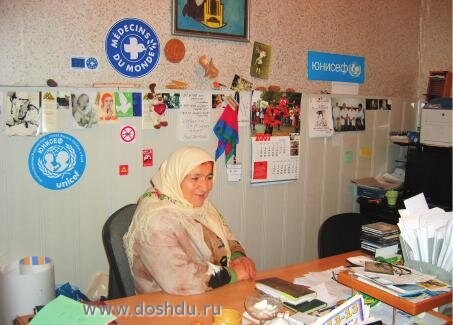 The doctrine was given Aishat not cheap. The first of the villagers, she, a young beauty, entered the institute. Happed: the family was so far and high that she could not help, and she herself lived in poverty. But Aishat Zubril Day and Night, determined to become not any, but a good doctor. By distribution, I hit. Kizlyarsky district. There, the young Dr. Aishat survived the fierce earthquake. Having no medical experience, she saved the lives of people. Only once she told in detail that she had to endure, helping the victims. She explained that stuttering with excitement was not innate, this is a trace of that long -standing test. And then another story began without a pause: about his Hajj in the terrible year, when a fire began in the tent camp. Aishat asked fate and the Almighty: "Why?" I wanted to understand why she had to see this ... Despite a long friendship, Aishat remains a mystery to me. I love her gesture before giving me a story about any event that significantly influenced her life: she slightly raises her voice and, letting his index finger to the middle of the forehead, strictly says: "Look here!" And I immediately fall asleep. No leading questions, not a word, otherwise it will shut up and will never return to the interrupted narrative. Before this gesture, I am like a child: I will not beg, I will not argue, I only listen ... Once Aishat talked for a long time about her first teacher, a girl who came to the distribution of a pedagogical school. About how she braided her pigtails, taught the Russian language, smoked into cheeks, showing tenderness unusual for the highlanders. And the time has come when it was Aishat that one of the first began the conversation about the great role of Russian teachers in Dagestan. I went to the authorities, wrote letters, planned and arranged meetings. And when a luxurious monument to the Russian teacher appeared in Makhachkala, she was rejoicing as her largest victory. ... Once Aishat was arrested. She was taken out of the office of armed people, and the patients of her gynecological department (and among them, helpless, fainting on the street and delivered here by compassionate passers -by), scaredly followed. Dr. Aishat ordered to return to beds, but we went to the square in a single impulse, to the government building and stood, silently, relying on each other, not succumbing to the persuasion of nurses to leave. We noticed our pregnant company from the windows or so coincided, but Aishat was soon released. True, after that there was a search, searched for weapons, accused the doctors of healing women of militants. Well, she really was not aware, whose wives were these women exhausted by the high -mountain conditions and the war of a woman. For her, they are all, both Dagestians and Chechenki, were her sick, equally suffering, exhausted. And their children died the same way: from explosions and shots. And they also wanted to give birth to all the horror, Aishat was their only hope. What is the childless in the Caucasus, not everyone knows. Caucasian republics are not enlightened Europe, where you can find comfort in work, in the development of your personality, the realization of a dream. The status of a Caucasian woman is determined by the number of children, the more high in the mountains, where they did not hear about emancipation. So such unfortunate people go to Aishat, because the hospital is free, qualified, kind staff (and how is Aishat to keep it a year after a year, despite the penny salaries?), Cleanliness everywhere, amenities. Then they bring children to show, rejoice together - do not count how many of them passed through her hands. And how many Aishats in the Dagestan, Chechen and Ossetian mountains have been born over the years! The Makhachkala medical world is nervous, does not understand: why not earn money to such an experienced surgeon, like Dr. Aishat, like Dr. Aishat? Not only colleagues, but also rich are nervous. Aishat charity hospital occupies a large piece of territory in the very center of Makhachkala. Ten years ago, receiving the skeletons of the ruined buildings of the former skin-venereological dispensary, recognized by the authoritative commission unsuitable for use, she could not imagine how much the land under them would cost, what a showdown she would have to survive because of this. At that time, having gathered a group of like -minded people and relatives, she set about repairs. They allocated a little budget money, she spent her and her everything, laid the apartment, occupied her relatives. As part of the Health Commission, Dr. Aishat drove through the highland villages and was once again convinced that medical care is almost not provided there. There are no maternity hospitals, children are born frail. Pregnant women are not observed among doctors, child mortality, infertility, illness caused by the overwhelming physical labor of the burdock - all this terrified her. She called women to come to her hospital. Now invitations do not need: pregnant women and those who want to recover from infertility are felled with a shaft. There are only 25 beds in the hospital, those who do not fit, Aishat takes to live with him. When I arrive, she transports me to my relatives at night, guiltily explaining that five girls already live in her house. The hospital functioned well until September 11, a sad date. And then the charitable foundation in Chicago, who helped the Makhachkala women's clinic, fell into disgrace, and Aishat itself, too, either because of the scarf and traditional Muslim clothes, or a new occasion appeared to take the land. A hassle, endless challenges to different instances, again the laying of an apartment and courts, which the quiet aishat won again. Then her public organization "League of Protection of Mother and Child" helped her in many ways. Civil society took the side of Aishat: either organizes the arrival of a famous lawyer, then share information about grants, then sponsorship investments. Supply of medicines has now taken upon themselves “doctors without borders”, admiring the nobility and selflessness of the clinic staff. Once we went together to a military Chechnya. In general, I was going alone, I wanted to support the hunger strike of Chechen refugees. But Aishat did not let me go. Although we drove together, but with different goals: it is to dissuade from a hunger strike, for it believes that it is not possible only to an uraza, and I - to starve with everyone. Holding hands, we were shaking in a small car, insulted again and again, humiliated by guards and traffic cops of different nationalities. And at the sight of the destroyed formidable and unfortunate inhabitants who were in the tents, they cried. Both. I will never forget her support and her tears. Aishat is lonely. Her whole life is a hospital, patients, children born by them. Indifferent officials show miracles of ingenuity, finding all new reasons to take away the hospital, the only one of its kind - the subject of envy and admiration not only in Russia, but also abroad. Several times, Dr. Aishat received invitations to work abroad. In the hearts I wanted to leave everything, to leave, but I could not. I'm afraid for her. The defending of the hospital has already brought her a lot of troubles, including the threat of life. Why is she not afraid? What makes her live the way she lives? Where does the forces draw strength from? I think about it, but I do not find an answer. Perhaps someday Aishat herself will explain it to me. Lyudmila Pavlichenko |