Translated material
Mosque and barracks VS Park and Ataturk
Around Russia
 Mosque and barracks VS Park and Ataturk
June 10, 2013 Alexey Makarkin
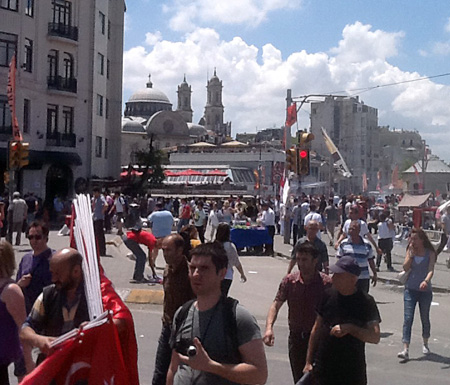
Any occasion could launch protests in Turkey. Their deep reason is a sense of a significant part of Turkish society, that the charismatic leader of the Islamist Party of Justice and the Development of Recep Tayyip Erdogan will remain in power until 2024. As the Moscow protests of December the year before last, they were connected not only with accusations of gross falsifications of election results, but also with a sense of the modernist part of society that Vladimir Putin would like to remain in power until 2024.
Next year, direct presidential elections will take place in Turkey for the first time - earlier the head of state was elected deputies. Moreover, the powers of the president are significantly expanding: from the parliamentary Republic, Türkiye becomes presidential parliamentary. Erdogan does not hide his desire to run and has every chance of success - taking into account the attractiveness for the majority of the population of the Turkish model, which includes the liberal economy, competitive democracy and Islamic piety. It is not surprising that Türkiye becomes a model for a number of countries, not only for the Arabs-Sunnis (for example, from Egypt), but also for part of the Iran of the Shiite establishment. A few days later, Iran will take place in Iran, in which one of the favorites is the mayor of Tehran Mohammad Bager Galibaf, professing similar views. Such a combination likes both successful businessmen and peasants from the province (and to the townspeople in the first and second generations, who has preserved loyalty to traditional values).
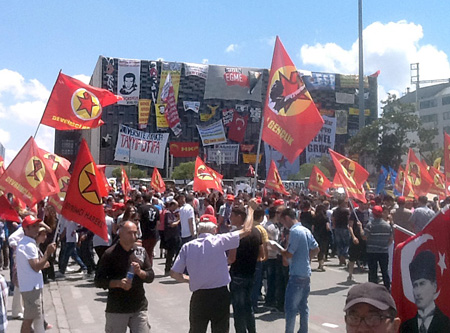
But if earlier the most active and dangerous opponents of Islamization were conservative military, considering themselves the guardians of the covenants of Kemal Ataturk, now the main opponents of the regime are modernist liberal groups (the military corporation is weakened by numerous residues and arrests on charges of conspiracies). Supporters of democracy, at the same time they appeal to a tradition associated with the name of “Turkish Peter I”, despite its authoritarian management methods-the main thing for them is the fundamental political and ideological choice of Atatur in favor of westernization. 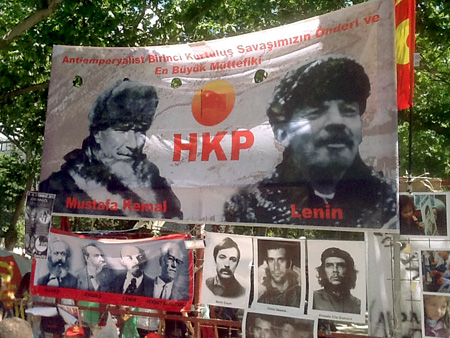
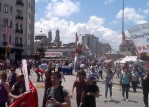
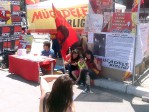
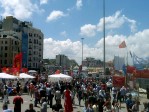
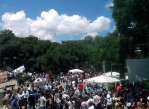
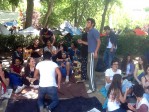
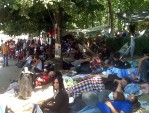
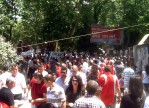
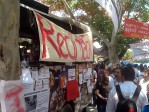
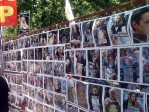
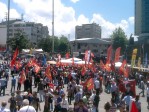
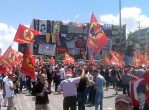
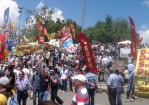
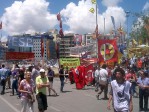
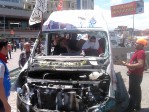
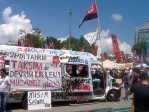
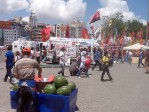
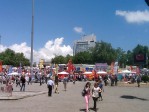
The Erdogan scenario, despite the preservation of the main democratic freedoms, is annoyed - and the further, the more. Islamization embedded in it is slow evolutionary, but it still inevitably separates society from another model, modern Western, to which the modernists are oriented. Such a gap is especially dramatic for Turkey, which since the time of Ataturk has been the most westernized Muslim country. Istanbul is Europe, and many of its inhabitants (as well as the European oriented part of the Asian Ankara population) do not want Islamic rules to regulate their personal life. If for theocratic Iran the Turkish model can become an incentive for a certain liberalization, then for secular Turkey - a sign of archaization, at least partial. Hence the strong emotion of people who went to Istanbul Square - they are afraid that if Erdogan is not stopped now, the process of Islamization can take not only a more radical, but also irreversible character.
Their fears are confirmed by the story with the well -known Russians of the series “The Magnificent Century”, which caused criticism from traditionalists, including Erdogan personally. As a result - the introduction of elements of self -censorship, from the toilets of the inhabitants of the harem to the appearance of a wise and deeply believing judge among the heroes, a certain traditionalist alternative to the Vizier Ibrahim, too carried away by Western influences. It would seem that there are trifles, but when there are many such trifles, it causes a conflict.
Now about the reason, which only at first glance is purely environmental in nature. The controversial park of Gezi appeared in Istanbul a few years after the death of Ataturk, but the plans for its creation belong to the last period of the life of the Father of the Turks. In addition, along with the cutting of the park, a demolition of the Ataturka cultural center is provided - of course, not the main symbol associated with its person, but still significant. And what instead? Firstly, the restoration of the old artillery barracks, who were on the site of the park and destroyed during Europeanization-that is, the emphasis of the symbolic connection with the time of the Sultanate and the Caliphate, abolished by Ataturk, who built the national state. Secondly, the construction of the mosque as one of the symbols of Islamization. And, thirdly, the shopping center is a symbol of growth in the context of economic liberalization (after the start of protests, the authorities, however, decided to abandon it). In general, the Erdoganovsky mainstream in the framework of a single Istanbul quarter. 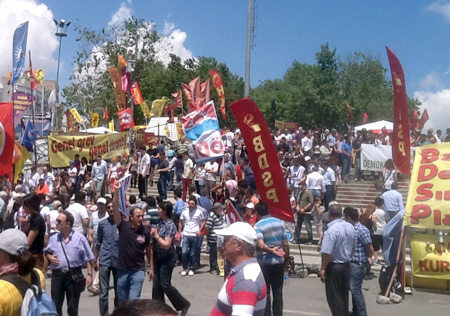
What will the Istanbul protest lead to? It seems that the Arab scenario is unlikely: the Erdogan party won the parliamentary elections, which the OSCE recognized as relevant international standards. This means that on her side the real majority of the population, although not as overwhelming as the Islamists would like (in 2011, the party of justice and development did not receive the expected two -thirds of the mandates). At the same time, the events of the Gezi Park showed that Islamization meets a serious resistance with which the ruling party will have to reckon. The parliamentary opposition (unlike the Russian situation, the Turkish opposition parties - levocentrists and nationalists are completely independent players), and the strengthening of the demarcation within the ruling party for radicals and moderate ones are possible. The former, like Erdogan, will actively promote Islamization, in spite of any protests of the modernists, the latter are already more careful now. Thus, the process that causes a sharp rejection of projuroral groups of society may be at least seriously slow.
Author - First Vice President of the Center for Political Technology
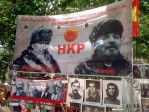
Photo report Utku Bülent, Istanbul