
Translated material
Resuscitator
In society
 Resuscitator
December 16, 2009 Alexander Ryklin
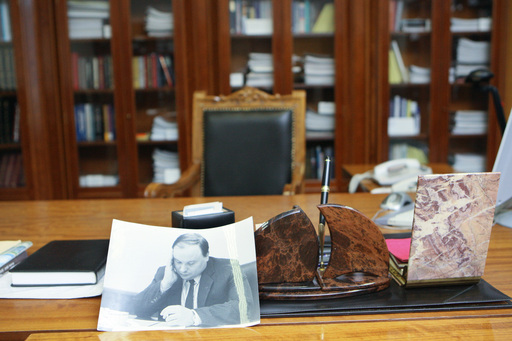
“A man whose scale is not yet able to appreciate ...” has gone out of life ... ” This, in general, a dry cloth phrase, will probably precede their story about Gaidar today. But it was precisely about the scale of this personality that I thought after our first meeting in 1997.
For an interview, forty minutes were released, and I sat in his office for almost two hours. And when Haidar’s assistant once again looked into the office with an unambiguous mine on his face, Yegor Timurovich said a phrase that raises a wave of pride in my soul today. Gaidar then said in an apologetic voice: “Well, nothing, nothing ... We have such a curious conversation here ...” That is, he was interested in talking to me! And I perfectly remember my feelings when, after the conversation, I left the building of his institute in Gazeta Lane. I thought how lucky I was with a profession that makes it possible to get acquainted and communicate with such people!
The time of attentive and impartial analysis of his life, political and scientific activity, of course, is ahead. And today it seems to us to just remember what kind of person it was. And maybe try to comprehend the role that he played in the latest history of our country.
The article that we bring to your attention is written more than ten years ago. But she seems to me, she meets the above request - she talks about Gaidar in the proposed circumstances. In the circumstances proposed by time. I have nothing to add to this description. And in Gali Kovalskaya - my amazing co -author - unfortunately, you can’t ask ...
Resuscitator
/Galina Kovalskaya; Alexander Ryklin/
Now it is difficult to imagine, but Gaidara could easily be in domestic history. They would have been overwhelming with Burbulis on August 20, 1991 in the White House, and would not lead Burbulis to Yeltsin, and Egor Timurovich would not be headed in the first government of democratic Russia, the “Economic Bloc”, and ... so, the supporters of historical determinism will say. Not he, so the other would let go of prices, not his government, so a different privatization would be another, etc. The reforms were rushed and overripe by that time, only the lazy did not say that it was time to finally start.
But that’s the thing-they said, to speak, but there were no people who wanted to do. “The figure of Gaidar arose relatively accidentally,” recalls the former Minister of Economics, and now the president of the Russian financial corporation Andrei Nechaev. “He was more known in the circles of professional economists, among the public, who was interested in political and economic problems and the brilliant articles that read him, first in the“ Communist ”, and then in Pravda. On the other hand, the economists of the new formation, which could have seriously develop and conduct in the way. Life of the radical economic transformation, the scale of the Gaidar, and he also had a team - not a single one ... We have such a tradition: on November 7 (on the anniversary of the appointment of our government), so two years ago, at the next meeting, Yegor, recalling those events, used such a metaphor: there were a kind of hot potatoes, which was something like a hot potatoes, which is a kind of hot potatoes, which is like a hot potatoes. They are transferred from hand to hand.
Indeed, Yegor Gaidar was far from the first to be offered to head reforms. The first was Grigory Yavlinsky. But the author of the sensational program with the loud title "500 days" refused to go to the quarrel. They offered the post of prime minister to the Russian ambassador to France to Yuri Ryzhov, a smart, democratically thinking and not timid person - he also refused. One by one, all eminent economists from the "surgery of perestroika" refused to work in the government. Only Ruslan Khasbulatov then achieved the post of prime minister, but he seemed to simply not understand what kind of loop he tried to stick his head.
There is no pulse
Those who today accuse Gaidar of "robbing the people" simply replaced from the memory of what this people lived in the autumn-winter 1991-1992. Here is a short excerpt from a government certificate of position in the regions in November 1991. “Perm region:“ In December, the animal is given an animal for 200 g per person. But there are no resources for them. They refuse to ship: Smolenskaya, Penza, Orenburg, Lipetsk, Tver regions and the Republic of Tatarstan. There is no vegetable oil ... There is no sugar on sale ... Bread in the presence of large queues. There are not enough flour for bread production in the amount of 15 thousand thousand Tons ... "In other places, things were no better. According to the most optimistic estimates, the stocks of bread were supposed to run out by mid -February, but there was nothing to buy, since the foreign exchange reserves were practically exhausted. The gold supply reached a record low level - 289.6 tons. (For example, the Provisional Government inherited from the "rotten" tsarist regime 1300 tons.) In the winter of 1991-1992, the country really stood on the threshold of hunger and imminent social explosion.
All this was a new government. It is not sacred that there was no competition for the vacant place of the prime minister in October-November 1991.
Without looking back
The influence of individual characters, formally not overwhelmed by the authorities, on Russian politics is a well -known fact. The term "oligarch", which has firmly entered our vocabulary, quite accurately reflects the essence of the phenomenon new for the post -socialist history - people who are so rich appeared in Russia that they can "order music."
But there is a person in Russia whose huge political weight is determined not by corporations, financial and industrial groups or oil companies, but exclusively a reputation. The reputation of a brilliant analyst - an economic guru - who needs power not to build his own career or enrichment. This is - Gaidar.
Egor Timurovich has a rare combination of qualities, without which it would be impossible to display the auto stables of the Soviet economy. Here is what the president of Alfa Bank Peter Aven, the Minister of External Economic Relations: “The professionalism of Gaidar is a parable of the tongue, and it doesn’t make sense to be about his former chef, and it makes no sense to discuss him ... Westerners feel very subtly when they are intelligent and very important, an honest person. Therefore, for the world political and economic elite, the appearance of Gaidar in the power of Gaidar became a shock. This person Even Gorbachev was fundamentally different ... "
Gaidar, of course, was lucky. His first place of work was the Institute of System Research. At that time, a man with relatively liberal economic views - Jermen Gvishiani, son -in -law of the All -powerful Alexei Kosygin, led them at that time. There, by the way, Gaidar met his future associate Peter Aven.
Then, by the end of the 70s, to the solid party bonz began to reach that some changes were needed. Agricultural resources were practically exhausted, it ceased to feed the economy. The purchase of food abroad (not only bread) has turned into ordinary practice. According to Gaidar, "the mutilated social structure of the village, as through the sand, missed the capital investments sent to this sector, their return was minimal, and in many directions - just zero." I had to patch financial holes due to the export of oil and gas of Western Siberia. Using the terminology of today's communists, we can say that, trying to extend the agony of the regime, the Soviet government "squandered the national treasure."
The Gwishian Institute was called upon, firstly, to supply the government with reliable information about the situation in the economy, and secondly, to look for a way out of a clearly impending crisis. Gaidar recalls that in VNIII they did not take according to the blat and there it was possible to do without a “cuckoo in your pocket”, discuss the most acute theoretical problems without regard to the ideological “purity of judgments”.
When, with the advent of Gorbachev, the party gradually began to give up positions on the ideological front, Otto Latsis, the then deputy chief editor of the magazine "Communist", invited Yegor Gaidar to head the economic department of the magazine. In 1989, a novice journalist (until that moment, Gaidar wrote nothing but scientific articles and books) to smell the cyclopean project to create five oil and gas complexes in Western Siberia, which in scale and the degree of absurdity far exceeded projects for the transfer of Siberian rivers to Central Asia. Suffice it to say that its implementation required investment in the amount of $ 40 billion. Gaidar nevertheless, not offending, went against the interests of very influential lobbyists. The reaction was not long in coming. The leaders of the six Union ministries wrote a letter to the CPSU Central Committee with a demand to hold accountable candidate of economic sciences, which "ignores the decisions of the Party for the Development of Western Siberia." The initiator of the action was the then Minister of the Oil and Gas Industry Viktor Stepanovich Chernomyrdin. Gaidar himself says that later they never remembered this incident.
And in the later times, Gaidar was not afraid to make his enemies among the powers. At the end of the winter of 1998, Moscow News published an article by Yegor Timurovich, in which he with numbers in his hands showed that Moscow should thank Luzhkov and his economic genius for his well -being, but an ugly taxation system. The largest all -Russian companies, such as Gazprom, RAO "UES" of Russia, Transneft, Rostelecom, pay taxes not where their enterprises are located, but where their central offices are located, that is, in the capital. In the article, Gaidar put forward other accusations against the omnipotent mayor: "Economic life in Moscow is terribly bureaucratic, regulated, and the result of this is the massive spread of corruption." Yuri Luzhkov sued Gaidar, but later, apparently, understanding the futility of this litigation, he withdrew the lawsuit.
The decision to "rush to the pool" was given to Gaidar in 1991 not easy. Perhaps the fear of chirping, the desire to test himself - his natural qualities, but education certainly played a role: “In general, in our family, cowardice, even a hint of it was considered the most terrible vice,” Yegor Gaidar writes in the book “Days of Lestations and Victories”. “Father jumps from the pool tower, offers me the same thing. I don’t give me the slightest pleasure. I spank my stomach about water, but I pretend that I get an unthinkable pleasure. "
The courage of this person, far from athletic addition, was fully manifested during the events of October 3-4, 1993. It is difficult to even imagine what the presidential conflict with the Supreme Council would result in, if it weren’t for Gaidar, who, incidentally, had nothing to do with power structures and formally answered the government only for the economic sector. That night, Yegor Gaidar, by no means the first person in the state, was actually the only man in the Kremlin who acted boldly and decisively from the very beginning. At 20 o’clock, when Makashov’s detachments were already stormed by Ostankino, he called Sergei Shoigu, Emergency Minister, and asked to cook a thousand machine guns - Gaidar was going to distribute them to the population. In the late evening, Yegor Timurovich spoke at Ekhu Moscow and television and called on Muscovites to gather on Sovetskaya Square. At night, he spoke at rallies at the Moscow City Council and the Spasskaya Tower. Constantly contacting the president, Prime Minister, Minister of the Interior Viktor Erin, Deputy Minister of Defense Andrei Kokoshin (Pavel Grachev could not be found that night), he encouraged them to active actions. It seems that it was the Gaidar’s actions that were not least spurred by the security forces: it was obvious that if the rebellion could be suppressed by the forces of the Gaidar militia, the real power in the country would have passed to him. The Klovortis, close to the president, did not want to allow. At two o’clock, Yeltsin told Gaidar that the troops were on the approach to the capital.
Shock therapy
At the first meeting with the president in 1991, Yegor Gaidar, having agreed to actually get up at the head of the office, predicted that Yeltsin soon or later will have to send the first government of reforms. Boris Nikolaevich then only dismissed - in October 1991, he still sacredly believed that no circumstances could force him to act against his own will.
The head of the Russian state signed the decree on November 5. Leaving the prime minister, the first deputy prime minister, the president appointed Gennady Burbulis. Egor Gaidar took the post of Minister of Economics and Finance, and from that day everything is any significant that happened in our economy was somehow connected with his name.
The idea of Gaidar was simple: to liberalize prices, that is, to stop artificially support the ruble. This was supposed to lead to the rapid filling of the market. In January, prices were released, and after a month it became clear that the calculation was justified. The shelves really began to be filled, but this, as expected, was accompanied by the rapid fall of the ruble, and with the equally rapid depreciation of the savings of the population. It was a survival fee, but go - explain to a person who, for example, won half -life in the north and drunk a certain amount to the house and the car that he lost not money, but empty pieces of paper.
Gaidar reforms were already called liberal. But it is unlikely that Gaidar mid 1992 was seriously concerned with ideology. The Gaidar government was technocratic. It did not suit the liberal revolution, did not crush the hated regime, did not even build capitalism. It proceeded from the fact that the only opportunity to survive is to quickly start the mechanisms of self -regulation of the economy. Of course, all Gaidar ministers (except Glazyev, but this will be found later) were convinced by the "marketers" and believed that the transition to a normal economy with private property has long been risen. However, none of them was going to turn into ideologists or politicians.
If Yegor Gaidar had guessed about ten years ago that he would be the leader of the liberal party, he would probably only laugh. The least he represented himself as a public politician. Even after appointing to the government, Gaidar sincerely continued to consider himself not a politician, but by a manager. At the 6th Congress of People's Deputies in April 1992, when reforms were in the country for six months, which no one called “Gaidar”, Gaidar sincerely was surprised at the issues of democrats, is he ready to head the government: “Is it really not clear that our reforms are only until we are behind Boris Nikolayevich’s broad back?”
Meanwhile, for the domestic intelligentsia of the Westernic sense, the symbol of the new Russia very quickly became not Yeltsin, but Gaidar. He bribed, among other things, the complete absence of populism, games in the nationality - all that repelled the intelligentsia from Yeltsin. And exactly the same features made Gaidar with a beuple for all the "anti -wizards": communists, "patriots", all kinds of "populists".
An indispensable participant in the consultation
He stubbornly did not notice that he had already ceased to be just a manager. Gaidar is generally not very inclined to notice social moods and impulses - such things are not interesting to him.
After resignation, he headed the Institute of Economic Problems of the Transition period. This is the only case in the latest Russian history when a person from the government returned to science (if you do not take into account scientists like the former chief EmVEDECHNIK Anatoly Kulikov). However, he left, as they say, not far. A significant part of his team remained near Chernomyrdin - if anything, they could call consult. The president himself consulted. At the 7th Congress, in December 1992, Yeltsin agreed very reluctantly, under the strongest pressure not to be included in the list of candidates for the post of Prime Minister Gaidar, he immediately asked the retired acting Prime Minister of the Council: Who to make, Skokov or Chernomyrdin? Then for the next and far from the last time the Gaidar Council largely determined the course of domestic history. From that day, the form of Gaidar’s participation in the political life of Russia has changed: he has become an expert for the highest leadership, to which in difficult times you can apply for advice, but who, when he considers it necessary, gives advice on his own initiative. Gaidar is almost the only one of the "retirees" to direct "access to the body": at almost any moment he had the opportunity to contact the president.
Like -minded people and fans expected another from Gaidar - an active presence in public policy. However, too much in his nature is resisting this. He is bored in public, it is boring to repeat the talked banalities again and again. For all that, he is quite decently controlled by the audience, with the exception of cases when he is simply not physically allowed to speak - they whistle, "slam." During the 1995 election campaign, it was possible to observe how calmly, without pressure, he talked with the hall, having a variety of people to himself.
Одному из друзей Гайдар как-то признался, что по-настоящему счастливым чувствует себя только за рабочим столом. За пять с лишним лет, что минуло с момента первого ухода Гайдара из правительства, многое изменилось и в стране, и в нем самом, но вот это противоречие никуда не делось: с одной стороны, есть в обществе силы, нуждающиеся в Гайдаре-знамене, Гайдаре-лидере, с другой - есть сам Гайдар, которому роль хоругви и лидера (кроме, разве что, научной школы) поперек горла.
Перед первыми выборами по партийным спискам стало ясно, что создание "гайдаровского движения" - это веление времени. Нет, он все равно не собирался в "начальники партии". Он считал, что лидером и знаменем демократических сил должен стать Сергей Ковалев. Однако на роль председателя партии претендовал еще и Бурбулис. Чтобы избежать раскола, Гайдар согласился возглавить "Выбор России".
"Выбор" получился образованием довольно нелепым: искусственное соединение собственно демократов и "партии власти". Правозащитники и либералы растворились среди набежавших под крышу "Выбора" глав администраций, карьерных чиновников и коммерсантов, льнущих к казенным деньгам. На учредительном съезде движения столько говорилось о "национальной идее" и "настоящем патриотизме", даже о "державности", что Сергей Юшенков не выдержал и заметил с трибуны: "Очевидно, большинство ораторов ошиблись адресом. Они собирались на какой-нибудь "патриотический" съезд". Однако не похоже было, чтобы Гайдара это коробило. По-видимому, он понял, что "Выбор" должен отличаться от скомпрометировавшей себя "ДемРоссии" как раз респектабельностью, чтобы на очередных выборах иметь шанс преодолеть пятипроцентный барьер.
От хирургии к гомеопатии
В январе 1994 года Гайдар направил президенту открытое письмо, в котором, в частности, говорилось: "Я не могу быть одновременно и в правительстве, и в оппозиции к нему. Я не могу отвечать за реформы ... не обладая необходимыми рычагами для последовательного проведения экономической политики, в правильности которой убежден".
Казалось, вот он долгожданный уход в публичную политику. Ничуть не бывало. Тем письмом и ограничилась общественная активность Гайдара. И вновь пошла "телефонная" политика. Ни разу гайдаровская фракция в Думе или сам Гайдар как лидер движения не выступил с публичной критикой тех или иных шагов правительства. Даже "черный вторник" не подвигнул его на публичное выступление. Слишком дорожил Егор Тимурович возможностью влиять на ситуацию по "вертушке". Чеченская война на время лишила его этого инструмента.
В один из ноябрьских дней 1994 года Гайдар впервые не смог дозвониться до президента. После резких выступлений лидера "Выбора", осуждавших чеченскую авантюру, Ельцин прервал с ним всякие отношения. Мало кто знает, как нелегко далось Гайдару решение выступить против войны. В сентябре 1994-го из Чечни вернулся встревоженный Анатолий Шабад (депутат Госдумы и один из руководителей "Выбора"). Он ясно видел, что Кремль готовится к военной операции, и прекрасно понимал, во что она выльется. Шабад попробовал уговорить Гайдара принять партийную резолюцию, осуждающую поддержку властями вооруженной оппозиции, выступающей против Дудаева. Гайдар, по словам Шабада, понял все с полуслова, но, подумав, отрезал: "Никаких публичных выступлений". Очевидно, тогда он еще думал, что может предотвратить войну с помощью телефона. Даже когда начались бомбежки Грозного и двинулись войска, Гайдар, в ответ на требование явившихся к нему соратников немедленно уйти в оппозицию, ответил, что ему "надо подумать". Думал, по гайдаровским меркам, долго, несколько часов. Жесткий прессинг ближайшего окружения, бескомпромиссная позиция Сергея Ковалева сделали свое дело: Гайдар решился. Решившись же, проводил антивоенную линию последовательно и неуклонно.
Те, кто видел в "Выборе" партию власти, ринулись прочь от Гайдара-оппозиционера. Оставшиеся выглядели хоть и не так респектабельно, как бежавшие, зато это было уже не аморфное образование с невразумительной программой, а либеральная партия. Оказавшись наедине с электоратом, без поддержки власти, либералы, разумеется, провалили выборы 1995 года: ДВР не прошла пятипроцентный барьер. Однако те, кто предрекал ей скорую гибель, просчитался. Партия выжила. В нынешней России только ДВР и КПРФ - организации с идеологией. У ДВР есть малюсенькие - три-четыре человека - партгруппы практически во всех крупных городах. Влияние их, как правило, ничтожно, зато, если нужна объективная информация о регионе, обращаться имеет смысл именно к местным дэвээровцам.
Гайдар утратил влияние на Ельцина, но приобретал все больше влияния на Черномырдина. В июне 1995-го во время буденновского кризиса двухчасовой телефонный разговор Егора Тимуровича с Виктором Степановичем рушил судьбу заложников. И не только их - Черномырдин тогда впервые выступил как самостоятельный политик. Уже объявлено о создании НДР, уже понятно, что черномырдинское движение - главный соперник Демвыбору, а Гайдар делает все, чтобы укрепить авторитет Виктора Степановича. Ради успешного разрешения кризиса Егор Тимурович пожертвовал и интересами партии и личной популярностью.
Всякий раз, когда приходится выбирать, Гайдар отдает предпочтение аппаратной, а не публичной политике. И весной 1997-го при правительстве "молодых реформаторов", и осенью, когда правительство стало пробуксовывать, и весной 1998-го, когда пришел Кириенко, - публичные заявления Гайдара были довольно расплывчаты. Сущностная, содержательная критика, рецепты и программы продвигались аппаратными методами. Гайдар со своим Институтом экономики проблем переходного периода участвовал в написании антикризисной "Программы стабилизации" правительства Кириенко. Об этом трубят левые - Гайдар молчит. Из скромности? Нет, просто он боится помешать правительству ее протолкнуть. В середине нынешнего мая Гайдару стало ясно, что правительство и Центробанк проявляют легкомыслие, не оказывая активного влияния на фондовый рынок. И снова никаких заявлений, а закрытое совещание в правительстве, инициированное все тем же лидером Демвыбора. Егор Гайдар так и застрял в той невыигрышной политической роли, от которой пытался уйти в начале 1994 года. У него нет реальной власти, но ведет он себя и соответственно воспринимается окружающими как человек правительственной команды.
А что прикажете ему делать, когда иначе как "сверху" проводить либеральные реформы в России невозможно? Российские политики либерального толка: Киселев, Чичерин, Лорис-Меликов, Витте - несли свои записки монархам, и только в крайних случаях апеллировали к общественному мнению. "Правительство в России - единственный европеец" - не сегодня сказано.
Друзья и ассистенты
Гайдар убежден, что его прошлогодние оптимистические оценки экономической ситуации в стране были совершенно правильными. Он и сегодня полагает, что "правительство молодых реформаторов" все делало как надо и результаты его деятельности вполне осязаемы: упрочились позиции России на фондовом рынке, начался промышленный рост. Почему сегодня все так плохо, если начиналось так хорошо? Егор Тимурович считает, что перелом наступил осенью 1997 года, когда "олигархам" удалось инспирировать скандал с чубайсовскими гонорарами и тем самым подорвать авторитет правительства. С того пошли все беды: кабинет потерял пространство для маневра, резко снизилась инвестиционная привлекательность России. Фондовый рынок отреагировал на это еще до того, как по-настоящему ударил азиатский кризис. Эту точку зрения Егор Тимурович сформулировал в своем докладе на недавнем (июньском) съезде Демвыбора. Он несколько раз повторил, что, конфликт был почти неизбежен: "олигархи" хотели диктовать кабинету свои правила игры, а правительство не могло с этим мириться. И ни слова о том, что при всей злокозненности "олигархов", скомпрометировать правительство им помогла труднообъяснимая слабость государственных мужей к высоким гонорарам, причем выданным авансом и, по странному совпадению, издателем, связанным с тем самым ОНЭКСИМом, в покровительстве которому обвиняли "молодых реформаторов". В таких случаях обычно проводится партийное разбирательство, ведь речь идет как минимум о преступной халатности, повлекшей за собой тяжкие для страны и общества последствия. Однако главный герой книжного скандала Чубайс стал и главным положительным героем недавнего съезда ДВР. Его встречали и провожали овациями.
Гайдар терпеть не может говорить о "деле писателей". При всем прагматизме он умеет быть верным другом. Даже в ущерб принципам и логике.
Так же, как друзьям, он предан семье. Все запомнили потасовку с участием Гайдара в Думе прошлого созыва - уж больно это не вязалось с образом Егора Тимуровича. Депутат Марычев сказал какую-то гнусность про семью Гайдара, про дедушку. Тот обидчика даже не стукнул - толкнул, но Марычев ничего такого не ожидал и потому летел долго и далеко. Товарищи по фракции потом с удивлением говорили, что "Егор, оказывается, все эти слова не только знает, но умеет употреблять их в самых замысловатых сочетаниях".
Наш реанимобиль стоит на запасном пути
Дважды уже про Егора Тимуровича говорили, что он из власти ушел навсегда. Кто-то с облегчением, кто-то с горечью. Но сегодня влияние Гайдара и его сподвижников на правительство Сергея Кириенко столь велико, что можно сказать - очередное возвращение этого человека в большую политику состоялось. И дело даже тут не в том, что в правительство вернулись люди, близкие ему по взглядам: Анатолий Чубайс и Борис Федоров. Петр Авен так оценивает нынешнюю роль лидера Демвыбора: "Не думаю, что влияние Гайдара надо связывать именно с переменами в правительстве. Например, в эпоху Черномырдина были периоды, когда Егор Тимурович играл очень большую роль в формировании экономической стратегии. Дело тут скорее в ситуации - ситуация сейчас пожарная и во многом напоминает 1991 год. Поэтому обращение к профессионалам выглядит вполне естественным. А что еще делать-то?"
На вопрос корреспондента "Итогов": "Возможно ли третье пришествие Гайдара?" Егор Тимурович ответил: "Я думаю, время еще не пришло - страна пока все-таки не в таком плачевном положении".
Текст Галины Ковальской и Александра Рыклина был опубликован в 31 номере журнала «Итоги» от 11.08.1998 г.
Photo by RIA Novosti